Gujarat to install 20,000 GOBARdhan biogas plants in 2026-27 at ₹25 crore
Synopsis
Gujarat is betting on cattle dung to power rural kitchens at scale — with 20,000 new GOBARdhan biogas plants planned for 2026-27 and a ₹25 crore state outlay, it is building on 14,000+ units already running. Backed by a ₹23,731 crore national scheme and dairy giants like Amul and GCMMF, this is one of India's most concrete circular-economy plays at the village level.
Key Takeaways
Gujarat plans to install 20,000 household biogas plants under the GOBARdhan scheme during 2026-27 at a cost of ₹25 crore .
More than 14,000 plants are already operational across 88 clusters in the state since 2023-24 .
Each beneficiary receives ₹25,000 in government assistance and contributes ₹5,000 themselves.
A single plant can save 8–10 LPG cylinders annually and reduce CO₂ emissions by approximately 834 kg , according to a UNICEF survey.
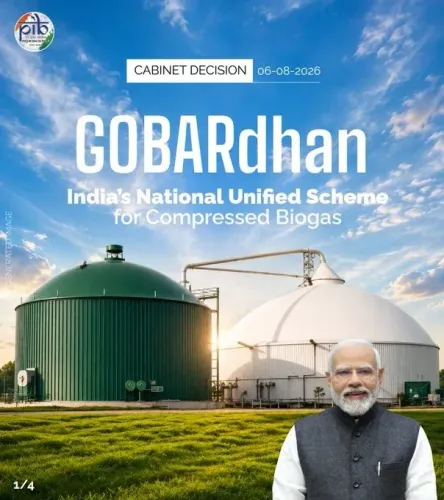
The scheme is backed nationally by the National Circular Bioenergy Scheme – GOBARdhan , approved with a ₹23,731 crore outlay by the Union Cabinet .
Key implementation partners include NDDB , Amul , Banas Dairy , Dudhsagar Dairy , and GCMMF .
Gujarat is set to significantly scale up its rural clean-energy footprint by installing 20,000 additional household biogas plants during 2026-27 under the GOBARdhan scheme, at an estimated cost of ₹25 crore. The push comes after more than 14,000 plants have already become operational across the state, converting cattle waste into cooking fuel and organic manure.
Scheme Background and Scale
Implemented under the Swachh Bharat Mission (Gramin), the GOBARdhan initiative has been rolled out across 88 clusters since 2023-24, targeting scientific management of livestock waste, rural sanitation improvement, and a shift toward circular economy practices. The expansion follows the Union Cabinet's recent approval — chaired by Prime Minister Narendra Modi — of the National Circular Bioenergy Scheme – GOBARdhan, with a total national outlay of ₹23,731 crore.
Phase-Wise Rollout in Gujarat
In the first phase, 7,423 individual biogas plants were installed across 38 clusters, with support from the National Dairy Development Board (NDDB), Amul, Banas Dairy, and Dudhsagar Dairy. The second phase, funded entirely by the state government, targeted 10,000 plants across 50 clusters. Working with the Gujarat Cooperative Milk Marketing Federation (GCMMF) and district milk unions, nearly 7,000 plants have been established under this phase, bringing the cumulative operational total to over 14,000.
Financial Assistance and Technology
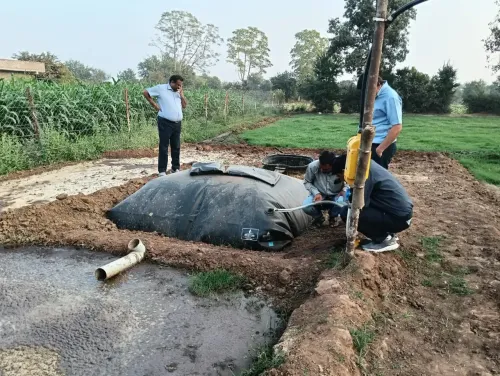
Each beneficiary receives financial assistance of ₹25,000 under the Swachh Bharat Mission (Gramin), contributing the remaining ₹5,000 themselves. The plants use modern two-cubic-metre flexible biogas units made from high-density polyethylene (HDPE), designed for easy installation and low maintenance. Every beneficiary kit includes a biodigester, geotextile sheet, gas pipe, hydrogen sulphide filter, two-burner gas stove, pressure regulator valve, lighter, and related accessories.
Environmental and Health Impact
According to a UNICEF survey cited by the state government, a two-cubic-metre biogas plant can save the equivalent of 8 to 10 LPG cylinders annually, enable the scientific management of around 18,250 kg of livestock waste per year, and reduce carbon dioxide emissions by approximately 834 kg. Officials also noted that eliminating smoke from traditional cooking methods directly improves the health of rural women, while bio-slurry use as organic manure reduces dependence on chemical fertilisers.
On the Ground: Beneficiary Experience
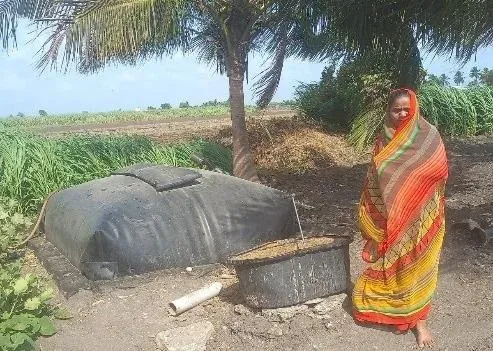
Among those who have already benefited is Manjula Barad of Rangpur village in Gir Somnath district's Sutrapada taluka, whose plant was installed during 2025-26 with support from Junagadh's Savaj Dairy on behalf of GCMMF. 'By using biogas for cooking and slurry in my fields, I have reduced the use of urea fertiliser. This initiative has provided my family with clean energy while encouraging other livestock rearers in the village to make better use of cattle dung and adopt cleaner sanitation practices,' she said. The initiative is being implemented under the leadership of Chief Minister Bhupendra Patel, with guidance from Rural Development Minister Kunvarji Bavaliya and Minister of State Sanjaysinh Mahida. The programme also supports the development of ODF Plus villages and wider adoption of renewable energy in rural Gujarat.
Point of View
Which solves the feedstock problem that has historically killed biogas programmes. The UNICEF-cited savings figure of 8–10 LPG cylinders per plant annually is significant, but the aggregate impact depends entirely on how many plants remain functional after year two; past biogas schemes in India have struggled with maintenance dropout. The ₹23,731 crore national outlay signals serious intent, yet the real test is whether slurry adoption as organic manure actually reduces chemical fertiliser use at scale — that data point, not plant installation counts, should be the headline metric.
NationPress
21 Sept 2026
Frequently Asked Questions
What is the GOBARdhan scheme in Gujarat?
The GOBARdhan scheme in Gujarat is a rural biogas initiative implemented under the Swachh Bharat Mission (Gramin) that converts cattle waste into clean cooking fuel and organic manure. The state has rolled it out across 88 clusters since 2023-24, with over 14,000 household biogas plants now operational and a target of 20,000 more in 2026-27.
How much financial assistance do beneficiaries receive under GOBARdhan in Gujarat?
Beneficiaries receive ₹25,000 in financial assistance under the Swachh Bharat Mission (Gramin) and contribute ₹5,000 themselves to install a two-cubic-metre HDPE biogas plant. The kit includes a biodigester, gas pipe, hydrogen sulphide filter, two-burner stove, and related accessories.
What is the national GOBARdhan scheme approved by the Union Cabinet?
The Union Cabinet, chaired by Prime Minister Narendra Modi, recently approved the National Circular Bioenergy Scheme – GOBARdhan with a total outlay of ₹23,731 crore. It aims to promote biogas and organic manure production from livestock waste at a national scale.
What are the environmental benefits of a GOBARdhan biogas plant?
According to a UNICEF survey cited by the Gujarat government, a two-cubic-metre biogas plant saves the equivalent of 8 to 10 LPG cylinders annually, manages around 18,250 kg of livestock waste per year, and reduces carbon dioxide emissions by approximately 834 kg. It also reduces rural women's exposure to cooking smoke and lowers dependence on chemical fertilisers.
Which organisations are implementing GOBARdhan in Gujarat?
The scheme is implemented through a cluster-based model in partnership with the National Dairy Development Board (NDDB), Amul, Banas Dairy, Dudhsagar Dairy, and the Gujarat Cooperative Milk Marketing Federation (GCMMF) along with district milk unions. It operates under the leadership of Chief Minister Bhupendra Patel.