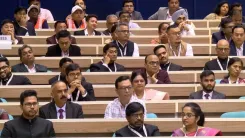
CM Bhupendra Patel Hails CGFMU Extension, ₹12.6L Cr Mudra Boost
Synopsis
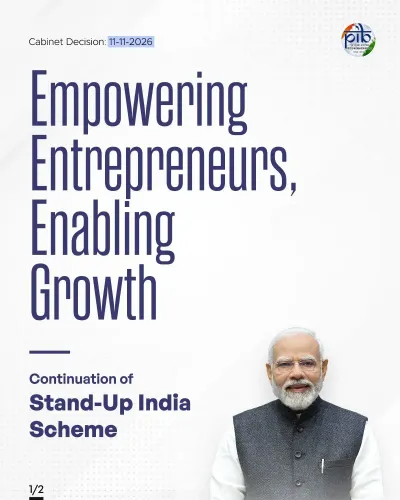
Gujarat CM Bhupendra Patel has praised the central government's decision to extend the Credit Guarantee Fund for Micro Units for five years to March 2031, with a ₹5,000 crore corpus unlocking ₹12.6 lakh crore in PMMY credit for micro-enterprises, Self-Help Groups, and Jan Dhan overdraft holders.
Key Takeaways
The CGFMU has been extended for five years , running through 31st March 2031 .
The fund is backed by a ₹5,000 crore corpus and is projected to unlock ₹12.6 lakh crore in PMMY credit.
Coverage now includes micro-enterprise loans up to ₹20 lakh and Self-Help Group loans between ₹10 lakh and ₹20 lakh .
PM Jan Dhan Yojana overdrafts up to ₹10,000 are also secured under the extended guarantee.
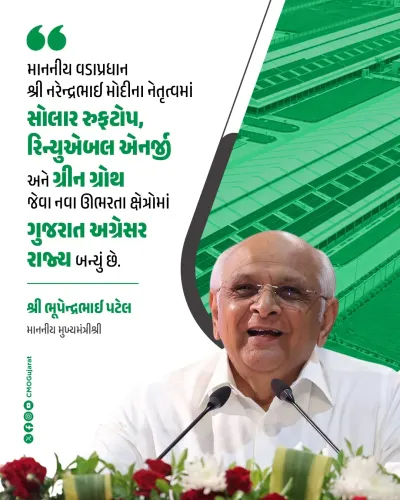
Gujarat CM Bhupendra Patel publicly credited PM Narendra Modi for the decision and highlighted its impact on collateral-free access to credit.
A five-year lifeline for India's smallest businesses just got official. Gujarat Chief Minister Bhupendra Patel on Wednesday, November 11, 2026, publicly welcomed the central government's decision to extend the Credit Guarantee Fund for Micro Units (CGFMU) through to 31st March 2031 — a move he called 'a massive boost for India's micro-enterprises.'
The extension, backed by a ₹5,000 crore corpus, is projected to unlock as much as ₹12.6 lakh crore in credit under the Pradhan Mantri Mudra Yojana (PMMY). CM Patel credited Prime Minister Narendra Modi directly, expressing 'sincere thanks' for a decision he said would 'remove collateral barriers, uplift small vendors, and accelerate grassroots prosperity.'
What the CGFMU Extension Actually Covers
The CGFMU was first established in 2015 alongside the launch of PMMY — itself rolled out in April 2015 — as a dedicated guarantee mechanism to de-risk Mudra loans for lenders and open formal credit channels to India's vast informal sector. Without collateral guarantees, most micro-borrowers simply cannot access bank loans. The fund plugs that gap. The refreshed mandate now covers three distinct layers. First, credit guarantee support for micro-enterprise loans up to ₹20 lakh. Second, extended coverage for Self-Help Groups (SHGs) borrowing between ₹10 lakh and ₹20 lakh — a cohort that has historically struggled to access formal credit in that bracket. Third, protection for overdrafts up to ₹10,000 under the Pradhan Mantri Jan Dhan Yojana (PMJDY), keeping the most financially vulnerable households inside the formal banking net.Gujarat's Stake in Mudra's Reach
For a state like Gujarat — home to a dense ecosystem of small traders, artisans, and home-based manufacturers — the CGFMU extension carries direct economic weight. CM Patel's post signals active state-level interest in channelling the extended guarantee capacity toward local beneficiaries. As PMMY credit flows scale up, state governments typically play a critical role in sensitising lenders and eligible borrowers, particularly in semi-urban and rural districts. The broader pattern here is consistent: successive enhancements to Mudra-linked guarantee funds have been the central government's chosen instrument for deepening formal credit penetration without requiring direct fiscal outlays of equivalent size. A ₹5,000 crore corpus that can theoretically support ₹12.6 lakh crore in lending is leverage at a scale few other policy tools can match. The test, as always, will come in implementation — in the loan disbursement numbers, the NPA trends among Mudra borrowers, and whether SHG coverage in the new ₹10–₹20 lakh band translates into real approvals on the ground. India's smallest entrepreneurs are waiting to find out.Point of View
Multiply fiscal impact through leverage, and generate a visible political dividend among the micro-entrepreneur and SHG voter base. CM Patel's prompt, effusive endorsement reflects the Gujarat government's interest in claiming credit for central schemes at the state level — a standard BJP inter-tier communication pattern ahead of any electoral cycle. The expansion of SHG coverage into the ₹10–₹20 lakh bracket is the most structurally significant new element, as it addresses a well-documented gap in formal credit access for women-led collectives. Whether disbursement volumes and asset quality hold up under the expanded guarantee net will ultimately determine whether the fiscal arithmetic justifies the headlines.
NationPress
11 Nov 2026
Frequently Asked Questions
What is the Credit Guarantee Fund for Micro Units (CGFMU)?
The CGFMU is a dedicated guarantee fund established in 2015 to back loans extended under the Pradhan Mantri Mudra Yojana, allowing banks to lend to micro-enterprises without demanding collateral from borrowers.
How long has the CGFMU been extended and what is its corpus?
The CGFMU has been extended for five years up to 31st March 2031 , supported by a ₹5,000 crore corpus designed to unlock up to ₹12.6 lakh crore in Mudra credit.
Who benefits from the CGFMU extension?
The extension benefits micro-enterprise borrowers seeking loans up to ₹20 lakh, Self-Help Groups borrowing between ₹10 lakh and ₹20 lakh, and account holders with overdrafts up to ₹10,000 under PM Jan Dhan Yojana.
What is Pradhan Mantri Mudra Yojana (PMMY)?
PMMY is a central government scheme launched in April 2015 to extend collateral-free credit to non-corporate small and micro businesses across India.
Why did Gujarat CM Bhupendra Patel comment on the CGFMU extension?
As Gujarat Chief Minister, Patel highlighted the scheme's direct impact on micro-enterprises and small vendors in the state, while publicly thanking Prime Minister Narendra Modi for the decision.