Odisha CMO: Mining regions gain from 2 years of welfare push
Synopsis
The Chief Minister's Office of Odisha marked two years of governance by highlighting expanded education, healthcare, skill development and livelihood programmes in mining-affected regions, framing the state's mineral wealth as a tool for community welfare rather than extraction alone.
Key Takeaways
The Chief Minister's Office of Odisha posted on 14 July 2026 marking two years of the current state administration.
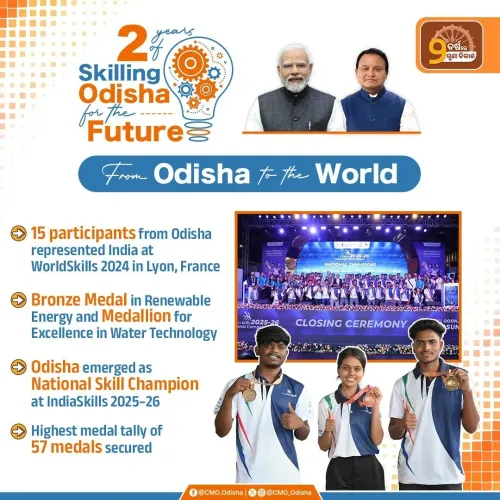
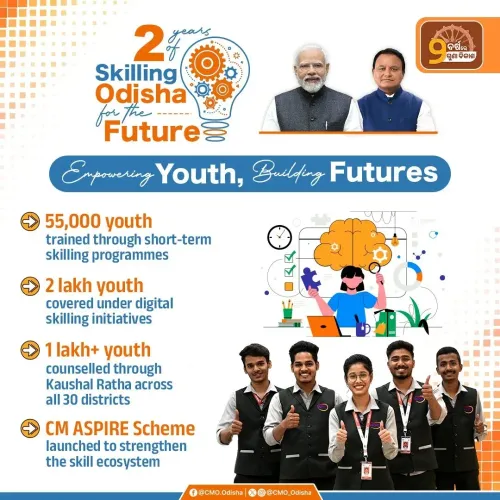
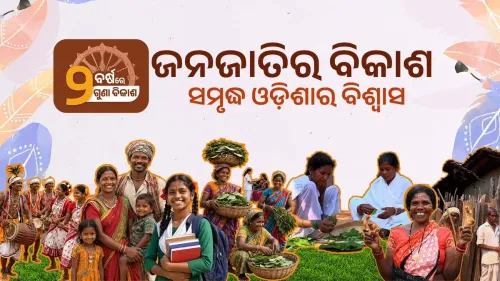
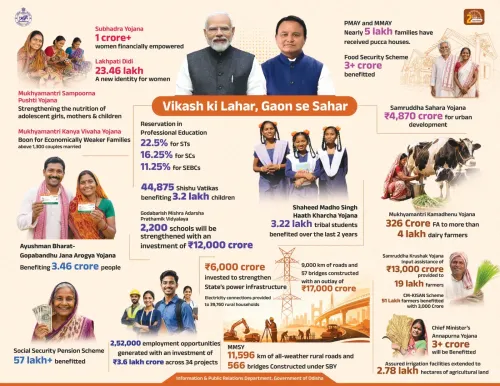
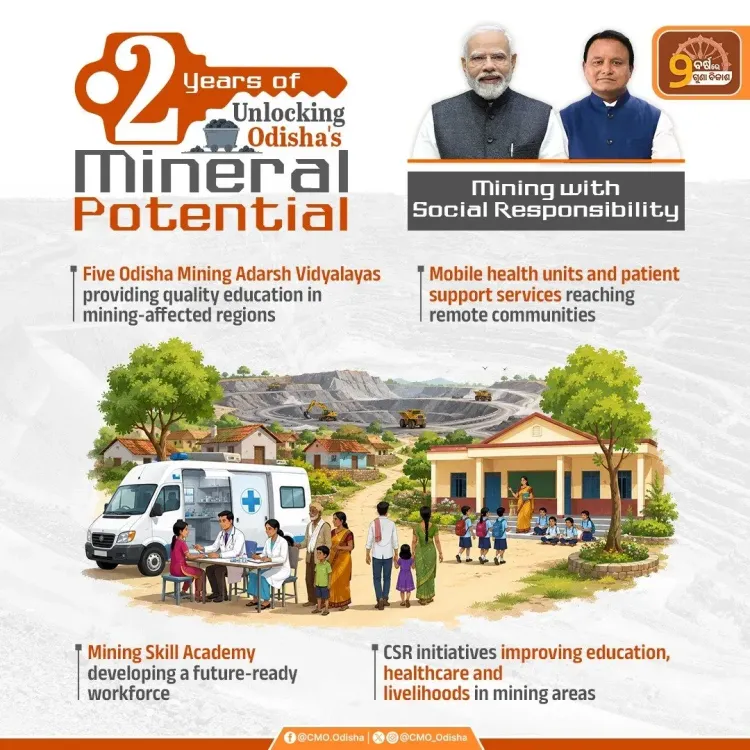
The post highlights expansion of education, healthcare, skill development and livelihood initiatives in mining-affected regions.
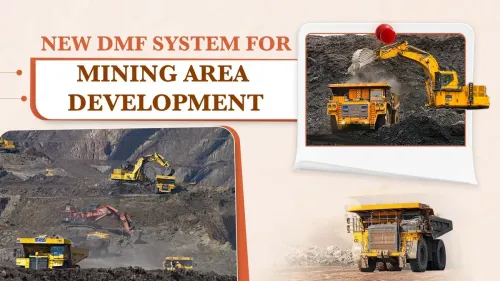
The District Mineral Foundation (DMF) framework, created under the MMDR Amendment Act 2015 , mandates that 10-30 per cent of mining royalties fund local community welfare.
Odisha is among India's largest mineral producers, with tribal-dominated districts such as Keonjhar at the centre of both extraction and welfare debates.
The government's messaging signals a policy emphasis on human-development indicators over aggregate growth metrics in mineral-rich areas.
DMF utilisation reports and scheme rollout data for 2025-26 will be the next key accountability benchmark.
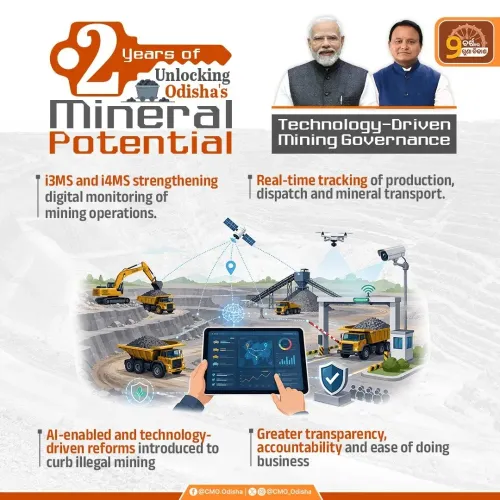
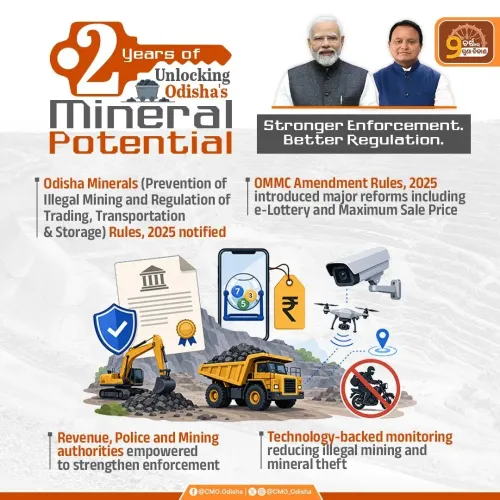
The Chief Minister's Office of Odisha on Tuesday, 14 July 2026 reaffirmed the state government's two-year record of directing education, healthcare, skill development and livelihood initiatives toward communities living in mining-affected regions, asserting that the benefits of mineral wealth must reach local people.
Posting under the hashtags #2YearsofLokankaSarakar and #BikasharaDharaOdishaSara, the official account stated: 'Development is meaningful only when it improves people's lives. Over the last two years, Odisha has expanded education, healthcare, skill development and livelihood initiatives across mining-affected regions, ensuring that the benefits of mineral wealth are shared with local communities.'
Context
Odisha is one of India's most mineral-rich states, with significant reserves of iron ore, bauxite and coal concentrated in tribal-dominated districts such as Keonjhar. For decades, high revenue generation from these belts coexisted with socio-economic challenges for Adivasi communities — displacement, inadequate schools and limited healthcare access. The two-year mark referenced in the post coincides with the anniversary of the current state administration, which took office following the 2024 state assembly elections.Policy Backdrop
The institutional foundation for channelling mining revenues into community welfare was laid by the Mines and Minerals (Development and Regulation) Amendment Act, 2015, which created statutory District Mineral Foundations (DMFs) across mineral-producing districts. Under this framework, mining lease holders are required to contribute between 10 and 30 per cent of royalty payments into DMF pools, which are then earmarked for local development — covering drinking water, health, education, skill development and infrastructure. Odisha has been among the leading states in DMF corpus accumulation, given the scale of its mining operations. The state's approach mirrors similar efforts in Jharkhand and Chhattisgarh, where governments have progressively linked royalty revenues to measurable human-development outcomes in mining belts.Stakeholders and Impact
The primary beneficiaries cited in the post are communities in mining-affected regions — a population that includes a significant share of tribal and Scheduled Tribe households in districts such as Keonjhar, Sundargarh and Jharsuguda. Expansion of education infrastructure and healthcare facilities in these areas addresses long-standing demands from civil society and tribal rights groups for equitable sharing of resource wealth. Skill development and livelihood programmes are particularly significant given that mining-belt communities have historically faced limited economic diversification beyond extraction-linked employment. The post's framing — 'development is meaningful only when it improves people's lives' — signals a deliberate shift in the government's public communication from aggregate growth metrics toward human-development indicators.What's Next
Attention will now turn to DMF utilisation reports and independent audits for 2025-26, which will provide verifiable data on fund disbursement and project completion rates across the major mining districts. The rollout status of skill and livelihood schemes in Keonjhar and other high-extraction districts will serve as a key benchmark for evaluating whether the two-year record translates into durable improvements in community welfare. Analysts and civil society groups are likely to scrutinise whether programme expansion has kept pace with the rhetoric of inclusive, area-based development.Point of View
Healthcare and livelihoods rather than infrastructure alone, the government is signalling alignment with the national policy shift toward human-development-led growth in mineral-rich states. The DMF framework provides institutional credibility to these claims, but the absence of specific programme data leaves the assertion open to scrutiny from opposition parties and civil society. The broader pattern — visible in Jharkhand and Chhattisgarh as well — suggests that mineral-state governments increasingly see inclusive mining-belt development as both a governance imperative and an electoral asset.
NationPress
13 Oct 2026
Frequently Asked Questions
What is the District Mineral Foundation and how does it help mining communities in Odisha?
The District Mineral Foundation is a statutory body created under the Mines and Minerals (Development and Regulation) Amendment Act 2015. Mining lease holders must contribute 10-30 per cent of royalty payments into DMF pools, which fund welfare, education, healthcare and infrastructure projects in mining-affected districts across Odisha.
Which districts in Odisha are most affected by mining and benefit from welfare schemes?
Keonjhar, Sundargarh and Jharsuguda are among Odisha's most significant mining districts. These areas, home to large tribal and Adivasi populations, are the primary targets for education, healthcare and livelihood programmes funded through DMF and state budgets.
What does '2 years of Lokan ka Sarkar' mean in the Odisha CMO post?
The hashtag #2YearsofLokankaSarakar translates broadly to 'two years of the people's government,' marking the second anniversary of the current Odisha state administration that came to power after the 2024 assembly elections.
How does Odisha compare with other states in using mining royalties for community welfare?
Odisha is considered one of the leading DMF corpus states given the scale of its mineral output. Its approach of linking royalties to education, healthcare and skill development mirrors similar programmes in Jharkhand and Chhattisgarh, reflecting a broader national trend toward inclusive, area-based development in mining belts.
What will determine whether Odisha's mining welfare claims hold up to scrutiny?
DMF utilisation reports and independent audits for 2025-26 will be the key accountability documents. Analysts will examine fund disbursement rates, project completion status and measurable improvements in human-development indicators in the major mining districts.