CM Himanta Reviews Capital Investments, Afforestation in Assam
Synopsis
Assam Chief Minister Himanta Biswa Sarma on 14 July 2026 chaired a series of review meetings on capital investments, afforestation, and revenue collection, declaring his administration's philosophy of meticulous planning and disciplined execution with no room for errors in delivering on promises.
Key Takeaways
CM Himanta Biswa Sarma chaired multiple review meetings on 14 July 2026 covering three policy domains: capital investments, afforestation, and revenue collection.
Sarma articulated a zero-error governance philosophy: 'plan everything to the T and execute with discipline.' The review mechanism has been a fixture of the Sarma government since 2021 , with stricter capital expenditure monitoring formalised in the 2022-23 budget .
Assam's afforestation efforts are tied to CAMPA mandates, linking development activity to forest cover restoration obligations.
Streamlined revenue mobilisation is central to reducing the state's dependence on central transfers and sustaining capital outlay.
Detailed outcomes — including targets and figures — are expected to emerge in the next assembly session or state budget disclosures.
Assam Chief Minister Himanta Biswa Sarma on Tuesday, 14 July 2026, chaired a series of high-level review meetings covering capital investments, afforestation programmes, and revenue collection, reaffirming his administration's commitment to disciplined, error-free execution of governance priorities.
Context
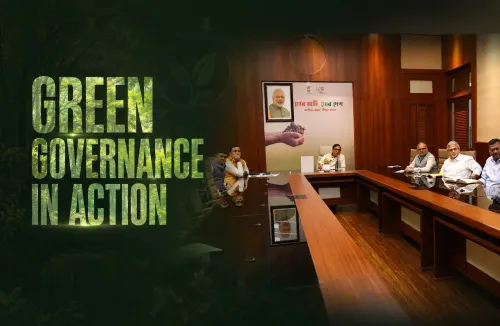
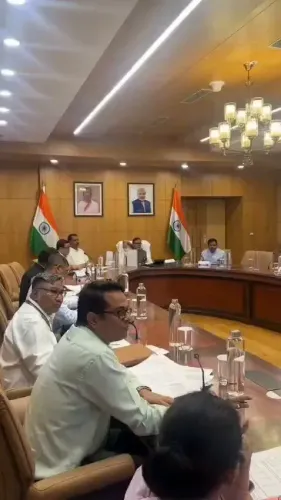
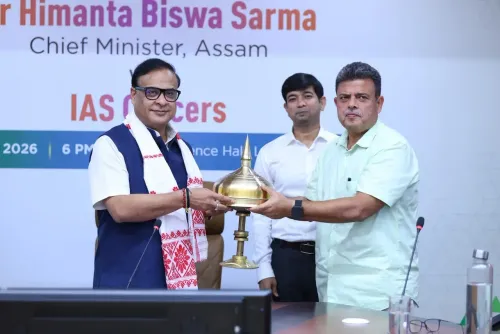
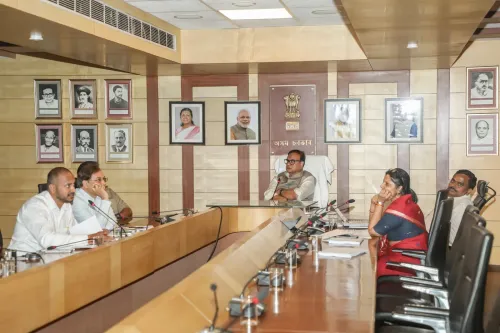
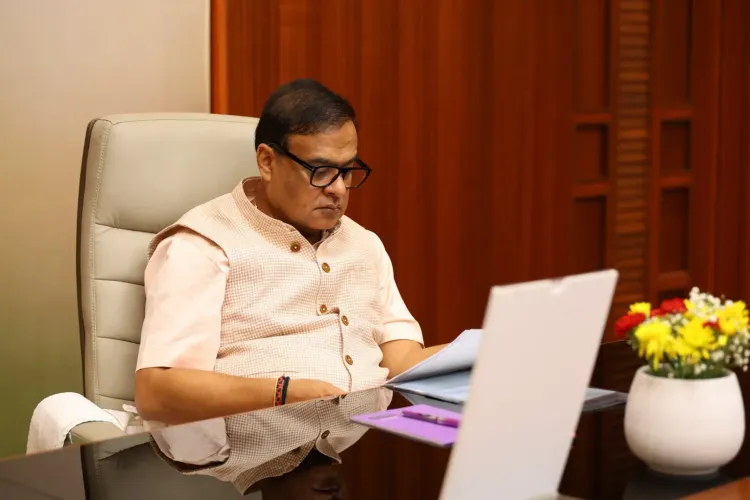
Posting on X, CM Sarma stated his administration's governing philosophy plainly: 'plan everything to the T and execute with discipline; there is no room for errors when it comes to delivering on our promises.' The statement accompanied three images from the review sessions, signalling the breadth of issues covered in a single day's deliberations.
The meetings spanned three distinct policy domains — capital expenditure on infrastructure, state afforestation targets, and the streamlining of revenue collection — reflecting the Sarma government's practice of bundling fiscal and environmental accountability into unified review cycles.
Policy Backdrop
Since assuming office in 2021, the Sarma government has institutionalised regular high-level review meetings on flagship projects and fiscal targets. Assam's 2022-23 budget introduced stricter monitoring frameworks for capital expenditure and own-revenue growth, establishing a template that subsequent budgets have built upon.
The state's afforestation efforts are linked to CAMPA (Compensatory Afforestation Fund Management and Planning Authority) guidelines, which mandate forest cover restoration as a counterweight to development activity. Tighter revenue mobilisation, meanwhile, has been a consistent administrative priority to reduce dependence on central transfers and expand the state's fiscal headroom for capital spending.
This approach mirrors a broader pattern across BJP-led northeastern states, where combining infrastructure push with environmental commitments and tighter fiscal collection has become a signature governance style aligned with the national emphasis on outcome-oriented administration.
Stakeholders and Impact
Assam's citizens stand as the primary beneficiaries of improved capital investment delivery, which directly affects road, bridge, and urban infrastructure projects across the state. Forest communities and environmental stakeholders have a direct stake in afforestation outcomes, given the ecological sensitivity of the northeastern region.
State revenue officials and infrastructure investors are the immediate operational audiences of such reviews, as the meetings set accountability benchmarks and course-correct implementation timelines. Streamlined revenue collection also has downstream implications for the state's credit profile and its ability to sustain capital outlay without fiscal stress.
What's Next
Concrete outcomes from the 14 July meetings — including updated capital outlay figures, afforestation hectare targets, and revised revenue collection projections — are expected to surface in forthcoming assembly session disclosures or the next state budget document.
The regularity of such reviews under CM Sarma suggests that performance data from these sessions will feed into mid-year fiscal corrections and potentially inform Assam's pre-budget consultations later in the year. Observers tracking northeastern governance will watch whether the stated zero-error philosophy translates into measurable improvements in project completion rates and forest cover indices.
Point of View
Afforestation, and revenue collection into a single review day signals an integrated fiscal-environmental approach rather than siloed departmental management. This aligns with the BJP's broader northeastern strategy of projecting disciplined, outcome-oriented governance as an electoral differentiator. The 'no room for errors' framing is notably assertive and sets a public benchmark against which future project completion rates and revenue figures will inevitably be measured.
NationPress
15 Jul 2026
Frequently Asked Questions
What did Assam CM Himanta Biswa Sarma review on 14 July 2026?
CM Himanta Biswa Sarma chaired a series of review meetings on 14 July 2026 covering capital investments, afforestation programmes, and the streamlining of revenue collection in Assam.
What is Himanta Biswa Sarma's governance philosophy?
CM Sarma has stated his philosophy as planning 'everything to the T and executing with discipline,' with no room for errors in delivering on government promises.
What is CAMPA and how does it relate to Assam's afforestation?
CAMPA, the Compensatory Afforestation Fund Management and Planning Authority, provides funds and mandates for restoring forest cover lost to development; Assam's afforestation programmes are linked to these guidelines.
How long has the Sarma government been holding such review meetings?
Since taking office in 2021, the Sarma government has held regular high-level review meetings on flagship projects and fiscal targets, with stricter monitoring frameworks formalised in the 2022-23 budget.
Where can I find the outcomes of Assam's July 2026 governance review meetings?
Detailed outcomes, including capital outlay figures and revenue targets, are expected to be disclosed in forthcoming Assam assembly session documents or the next state budget.