PM Modi inaugurates ₹3,000 crore tribal projects in Gadchiroli on Janjatiya Gaurav Diwas
Synopsis
On Birsa Munda's 151st birth anniversary, Modi used Gadchiroli as the stage for a ₹3,000 crore tribal-welfare push spanning 246 projects across the country — from residential schools in multiple states to a freedom fighter museum in Mizoram. It is both a governance statement and a political one, arriving on the final day of the government's own Janjatiya Gaurav Pakhwada fortnight.
Key Takeaways
PM Modi inaugurated and laid the foundation stone of 246 projects worth ₹3,000 crore at Gadchiroli, Maharashtra on 15 November 2026 .
173 projects were inaugurated, including 38 Eklavya Model Residential Schools and 100 Multi-Purpose Centres under PM-JANMAN .
Foundation stones were laid for 19 new EMRS and 12 Tribal Multi-purpose Marketing Centres (TMMCs) .
The Tribal Research Institute at Itanagar and the Ropuiliani Tribal Freedom Fighter Museum at Aizawl were among the inaugurated projects.
The event marked the culmination of Janjatiya Gaurav Pakhwada , observed from 1–15 November across India.
Modi also reiterated his government's decision to repeal the colonial-era classification of bamboo as a 'tree', restoring tribal rights over the resource.
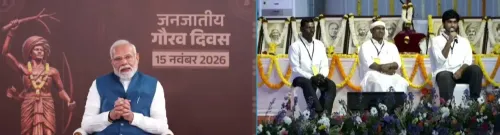
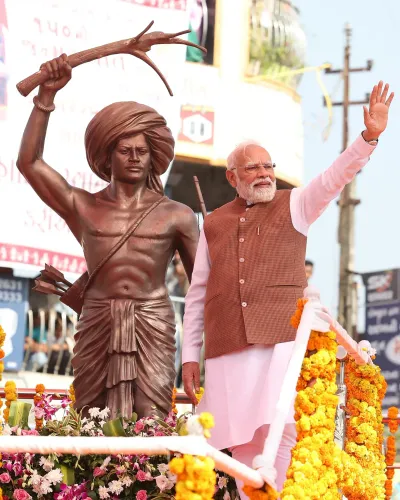
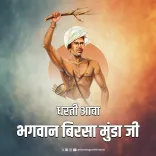
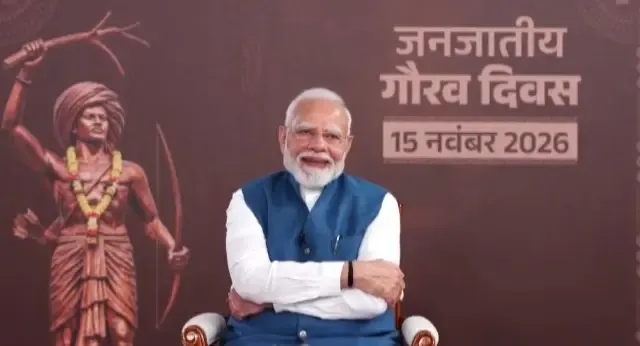
Prime Minister Narendra Modi on Sunday, 15 November 2026 virtually interacted with tribal community members from across India during the Janjatiya Gaurav Diwas programme held in Gadchiroli, Maharashtra, marking the 151st birth anniversary of tribal freedom fighter Birsa Munda. During the event, he inaugurated and laid the foundation stone of 246 development projects worth approximately ₹3,000 crore, aimed at bolstering education, healthcare, livelihood opportunities, and community infrastructure for tribal populations across the country.
Key Projects Inaugurated
Of the total 246 projects, the Prime Minister inaugurated 173 initiatives, including 38 Eklavya Model Residential Schools (EMRS) for tribal students and 100 Multi-Purpose Centres under the Pradhan Mantri Janjati Adivasi Nyaya Maha Abhiyan (PM-JANMAN). Additional inaugurations included the Tribal Research Institute (TRI) building at Itanagar in Arunachal Pradesh and the Ropuiliani Tribal Freedom Fighter Museum at Aizawl in Mizoram, both aimed at preserving tribal culture and heritage.
Modi also laid the foundation stone of 19 new Eklavya Model Residential Schools and 12 Tribal Multi-purpose Marketing Centres (TMMCs) to strengthen market access for tribal producers, alongside 42 other projects under PM-JANMAN and the Dharti Aaba Janjatiya Gram Utkarsh Abhiyan (DAJGUA).
Voices From the Community
Krishna Nagorao Teka, a PM-JANMAN beneficiary from Yavatmal, Maharashtra, described the tangible change in his living conditions. 'Earlier, we faced many difficulties. During the rainy season, living in our house was very difficult, and we also faced problems with insects and pests. Now, under the PM-JANMAN scheme, we have received a permanent house, a toilet and other facilities. We no longer face those difficulties. We are very grateful to you,' he said.
Responding, Modi said, 'I am very happy to learn that the PM-JANMAN Mission has brought changes to the lives of you and the people in your village. Nothing gives me greater satisfaction than this.'
Vajir from Hathakundi village in Netrang tehsil, Bharuch district, Gujarat, spoke about the New Gujarat Pattern Yojana, under which he received bamboo-craft training in 2004 and subsequently benefited from multiple PM-JANMAN schemes. Sabavat Anvesh from Hyderabad thanked the Prime Minister for the PM SHRI Schools (Pradhan Mantri Schools for Rising India), crediting the initiative for enabling higher education access.
Modi's Remarks on Bamboo Law and Past Governments
Taking aim at earlier administrations, Modi noted that the British had classified bamboo as a 'tree', making its cutting a punishable offence. 'This law should have been abolished after independence. However, regrettably, some individuals in the previous governments neither understood the tribal communities nor cared about them,' he said. He added that his government had repealed that provision and restored full rights over bamboo to tribal communities.
Significance and Broader Context
The event marks the culmination of Janjatiya Gaurav Pakhwada, observed across India from 1 November to 15 November. Janjatiya Gaurav Diwas has been observed annually on 15 November — Birsa Munda's birth anniversary — since the Centre designated it in 2021, signalling a sustained political and policy focus on tribal welfare. The ₹3,000 crore outlay spans multiple states and schemes, reflecting an attempt to consolidate scattered tribal-welfare programmes under flagship umbrella missions. With tribal communities comprising roughly 8.6% of India's population according to Census data, the scale of infrastructure gaps — from housing to education — remains significant, and the government's ability to deliver on these project timelines will be closely watched.
Point of View
000 crore outlay is real, but its impact will hinge on project completion rates — a persistent weak link in government infrastructure drives, particularly in Left-Wing Extremism-affected districts like Gadchiroli. The consolidation of welfare delivery under PM-JANMAN and DAJGUA is a sound administrative instinct, but the tribals-first narrative also arrives with evident electoral packaging given the dense tribal voter base across central and northeastern India. The bamboo-law reference is a legitimate policy achievement but its repeated invocation risks overshadowing the harder questions: how many of the 246 projects today will be functional, fully staffed, and financially sustained three years from now? That is the accountability question mainstream coverage tends to skip.
NationPress
15 Nov 2026
Frequently Asked Questions
What is Janjatiya Gaurav Diwas and why is it observed on 15 November?
Janjatiya Gaurav Diwas is a national day dedicated to honouring tribal communities and their contribution to India's freedom struggle, observed every year on 15 November — the birth anniversary of tribal icon Birsa Munda. The Centre designated the day in 2021 to institutionalise recognition of tribal heritage.
What projects did PM Modi inaugurate at Gadchiroli on 15 November 2026?
PM Modi inaugurated 173 projects including 38 Eklavya Model Residential Schools, 100 Multi-Purpose Centres under PM-JANMAN, the Tribal Research Institute at Itanagar, and the Ropuiliani Tribal Freedom Fighter Museum at Aizawl. He also laid the foundation stone of 19 new EMRS and 12 Tribal Multi-purpose Marketing Centres, among other initiatives.
What is the PM-JANMAN scheme?
PM-JANMAN, or the Pradhan Mantri Janjati Adivasi Nyaya Maha Abhiyan, is a central government programme targeting Particularly Vulnerable Tribal Groups (PVTGs) with housing, healthcare, education, and livelihood support. Beneficiaries at the Gadchiroli event described receiving permanent housing, toilets, and other basic facilities under the scheme.
Why did Modi criticise past governments over bamboo laws?
Modi reiterated that the colonial-era classification of bamboo as a 'tree' — which criminalised its felling — was not repealed by post-independence governments, depriving tribal communities of rights over a traditional livelihood resource. His government amended the Indian Forest Act in 2017 to remove bamboo from the definition of 'tree', a move he credited with restoring tribal economic rights.
What is Janjatiya Gaurav Pakhwada?
Janjatiya Gaurav Pakhwada is a fortnight-long national programme observed from 1 to 15 November each year to celebrate tribal culture, achievements, and welfare schemes. The Gadchiroli event on 15 November 2026 marked its culmination, with PM Modi's virtual interaction and project inaugurations as the centrepiece.