PM Modi on Janjatiya Gaurav Diwas: Past govts ignored tribal communities
Synopsis
On Birsa Munda's 151st birth anniversary, Modi used Janjatiya Gaurav Diwas to do two things at once — attack decades of Congress governance over tribal neglect, and unveil ₹3,000 crore in development projects. The bamboo-law reference was pointed: a colonial relic that survived 60-plus years of post-independence rule, repealed only under the BJP. The optics and the politics were inseparable.
Key Takeaways
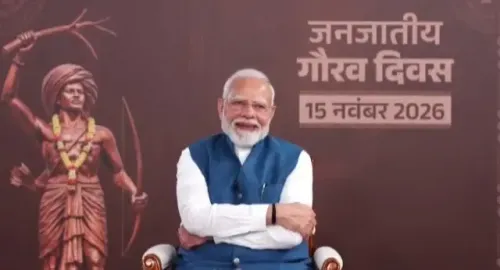
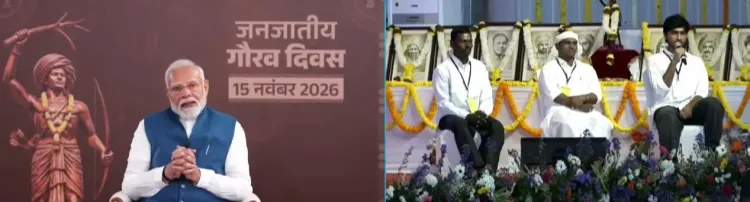
PM Modi addressed Janjatiya Gaurav Diwas virtually from Gadchiroli, Maharashtra on 15 November 2026 , marking Birsa Munda's 151st birth anniversary .
Modi accused previous governments of failing to repeal a British-era law classifying bamboo as a tree, which criminalised bamboo-cutting by tribal communities.
He inaugurated and laid the foundation stones of 246 development projects worth approximately ₹3,000 crore .
Inaugurations included 38 Eklavya Model Residential Schools , 100 PM-JANMAN Multi-Purpose Centres , and cultural institutions in Arunachal Pradesh and Mizoram .
Foundation stones were laid for 19 new EMRS and 12 Tribal Multi-purpose Marketing Centres .
The event marked the close of Janjatiya Gaurav Pakhwada , observed from 1–15 November .
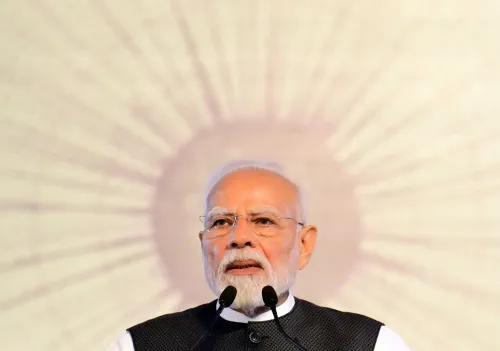
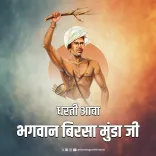
Prime Minister Narendra Modi on 15 November 2026 sharply criticised previous governments, saying they 'neither understood the tribal communities nor cared about them', while virtually addressing tribal community members from across the country at the Janjatiya Gaurav Diwas programme held in Gadchiroli, Maharashtra. The event was organised to mark the 151st birth anniversary of tribal freedom fighter Birsa Munda.
Modi's Attack on Previous Governments
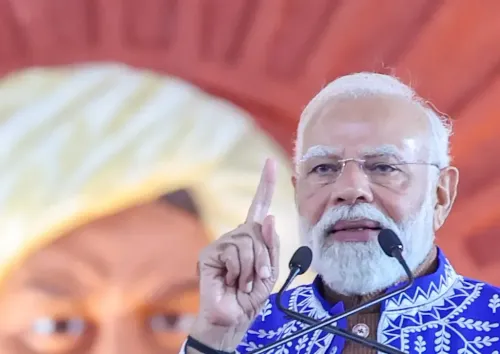
Speaking to Vajir, a beneficiary from Hathakundi village in Netrang tehsil, Bharuch district, Gujarat, Modi highlighted the colonial-era classification of bamboo as a 'tree' — a provision that criminalised bamboo-cutting by tribal communities. 'The British devised a major ploy by classifying bamboo as a tree; consequently, anyone who cut bamboo would be thrown into jail. This law should have been abolished after independence,' Modi said, adding that the UPA-led government failed to repeal it.
'However, when we came to power, we ended that law and made sure that the tribals have full rights over bamboo,' he added. The remark was a pointed jab at Congress-led administrations that governed for much of the post-independence period.
Beneficiaries Share Their Stories
Vajir, trained under the New Gujarat Pattern Yojana in 2004 in bamboo work, told the Prime Minister how multiple Central schemes, including PM-JANMAN, had improved his livelihood. Krishna Nagorao Teka, a PM-JANMAN beneficiary from Yavatmal, Maharashtra, described how the scheme provided his family a permanent home, a toilet, and other basic amenities. 'Earlier, we faced many difficulties. During the rainy season, living in our house was very difficult… Now, under the PM-JANMAN scheme, we have received a permanent house, a toilet and other facilities,' he said.
Sabavat Anvesh from Hyderabad credited the PM SHRI Schools (Pradhan Mantri Schools for Rising India) with enabling tribal youth to access higher education.
Development Projects Launched
During the event, Prime Minister Modi inaugurated and laid the foundation stones of 246 development projects worth approximately ₹3,000 crore, targeting education, healthcare, livelihood, and community infrastructure for tribal communities nationwide.
Of these, he inaugurated 173 initiatives, including 38 Eklavya Model Residential Schools (EMRS) and 100 Multi-Purpose Centres under the Pradhan Mantri Janjati Adivasi Nyaya Maha Abhiyan (PM-JANMAN). Additional projects were inaugurated under the Dharti Aaba Janjatiya Gram Utkarsh Abhiyan (DAJGUA).
Notable among the inaugurations were the Tribal Research Institute (TRI) building at Itanagar, Arunachal Pradesh, and the Ropuiliani Tribal Freedom Fighter Museum at Aizawl, Mizoram — both aimed at preserving tribal culture and heritage.
Foundation Stones and Forward Commitments
Modi also laid the foundation stone of 19 new Eklavya Model Residential Schools, 12 Tribal Multi-purpose Marketing Centres (TMMCs) to strengthen market access for tribal producers, and 42 additional projects under PM-JANMAN and DAJGUA.
The programme marked the culmination of Janjatiya Gaurav Pakhwada, observed across India from 1 to 15 November. With these launches, the Centre has signalled that tribal welfare will remain a legislative and electoral priority ahead of upcoming state elections in tribal-heavy regions.
Point of View
Making the BJP the agent of tribal emancipation. But the ₹3,000 crore in projects, spread across 246 initiatives nationwide, also invites scrutiny on delivery: PM-JANMAN was launched only in late 2023, and independent assessments of saturation coverage in Particularly Vulnerable Tribal Groups (PVTGs) remain limited. The Janjatiya Gaurav Pakhwada itself is a relatively recent construct — institutionalised in 2021 — suggesting a deliberate effort to build a tribal-identity political architecture ahead of elections in states with significant Adivasi constituencies. The question is whether the annual spectacle translates into measurable outcomes in forest rights, healthcare, and education attainment — metrics that tribal advocacy groups say have moved slowly.
NationPress
15 Nov 2026
Frequently Asked Questions
What is Janjatiya Gaurav Diwas and why is it observed on 15 November?
Janjatiya Gaurav Diwas is a national day dedicated to honouring the contributions of tribal communities to India's freedom struggle. It is observed on 15 November to coincide with the birth anniversary of tribal freedom fighter Birsa Munda; the 2026 edition marked his 151st birth anniversary.
What did PM Modi say about previous governments and tribal communities?
Modi said previous governments 'neither understood the tribal communities nor cared about them,' specifically citing the failure to repeal a British-era law that classified bamboo as a tree, thereby criminalising bamboo-cutting by tribal people. He said his government ended that law and restored full bamboo rights to tribal communities.
What development projects did PM Modi inaugurate at Janjatiya Gaurav Diwas 2026?
Modi inaugurated and laid the foundation stones of 246 projects worth approximately ₹3,000 crore, including 38 Eklavya Model Residential Schools, 100 PM-JANMAN Multi-Purpose Centres, the Tribal Research Institute building in Itanagar, and the Ropuiliani Tribal Freedom Fighter Museum in Aizawl.
What is the PM-JANMAN scheme?
PM-JANMAN, or the Pradhan Mantri Janjati Adivasi Nyaya Maha Abhiyan, is a Central government scheme aimed at improving living conditions for Particularly Vulnerable Tribal Groups (PVTGs), providing housing, sanitation, and community infrastructure. Beneficiaries at the Gadchiroli event described receiving permanent homes and toilets under the scheme.
What is Janjatiya Gaurav Pakhwada?
Janjatiya Gaurav Pakhwada is a fortnight-long national observance held from 1 to 15 November each year to celebrate tribal culture, heritage, and contributions. The 2026 Gadchiroli event marked its culmination, with Prime Minister Modi interacting with tribal beneficiaries from across the country.