Shekhawat: PM Modi pays floral tribute to Birsa Munda at Parliament
Synopsis
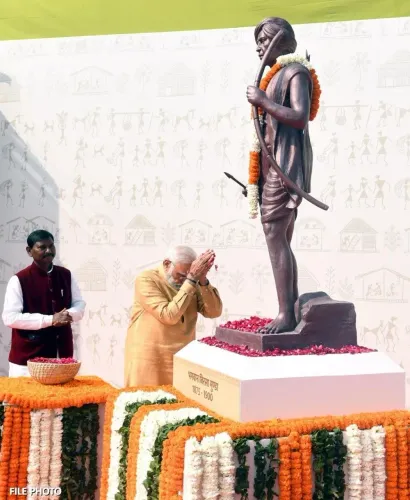
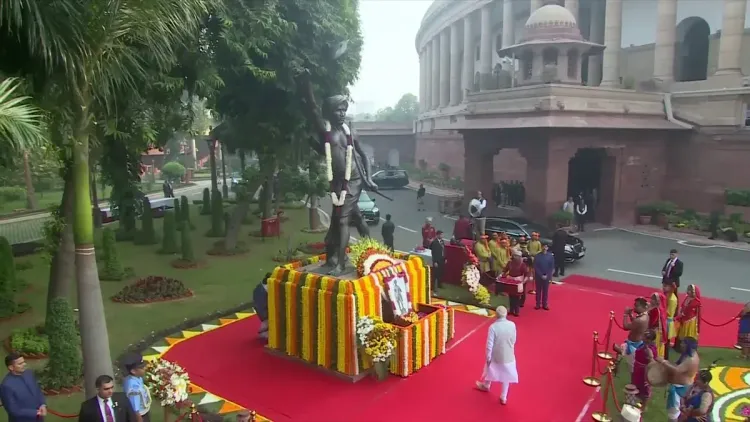
Prime Minister Narendra Modi paid a floral tribute to Birsa Munda's statue at the Parliament complex on 15 November 2026, the tribal leader's birth anniversary and Janjatiya Gaurav Diwas, as highlighted by Union Minister Gajendra Singh Shekhawat on X.
Key Takeaways
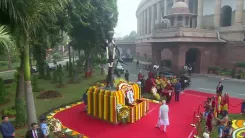
PM Narendra Modi offered pushpanjali at Birsa Munda 's statue in the Parliament complex, New Delhi on 15 November 2026 .
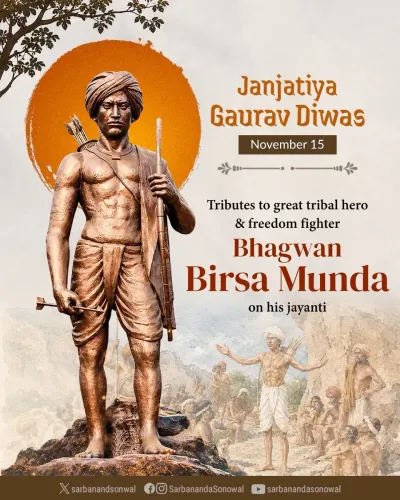
Janjatiya Gaurav Diwas is observed every year on 15 November , Birsa Munda's birth anniversary, instituted by the Ministry of Tribal Affairs in 2021 .
Birsa Munda (1875–1900) led the Ulgulan uprising against British colonial land-seizure in present-day Jharkhand .
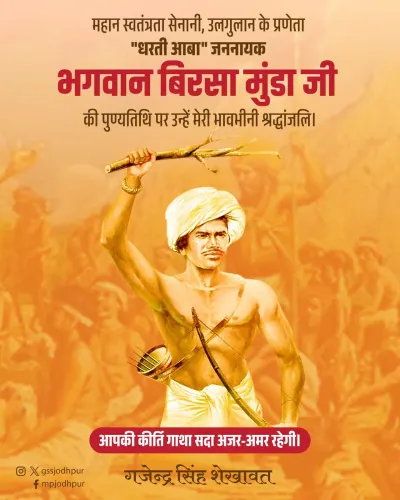
Union Culture and Tourism Minister Gajendra Singh Shekhawat shared the tribute on X with the hashtag #JanjatiyaGauravDiwas .
The observance is part of a broader effort to integrate Adivasi contributions into India's mainstream national narrative.
On the 150th birth anniversary of Birsa Munda — the Munda tribal leader who took on the British Empire with nothing but conviction and a bow — Prime Minister Narendra Modi paid a floral tribute to his statue in the Parliament complex in New Delhi on Sunday, 15 November 2026, marking the national observance of Janjatiya Gaurav Diwas. Union Culture and Tourism Minister Gajendra Singh Shekhawat posted about the moment on X, drawing attention to the tribute.
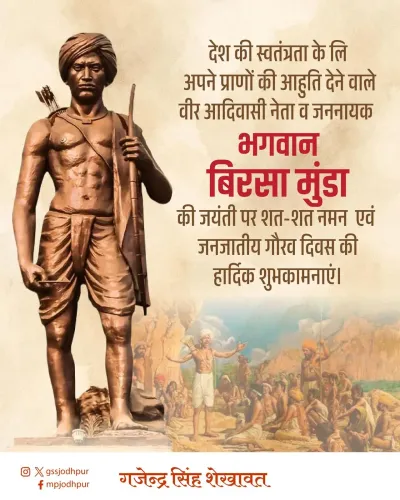
Shekhawat's post, written in Hindi, noted that the Prime Minister offered pushpanjali (floral tribute) at Birsa Munda's statue on the occasion of the tribal icon's birth anniversary and Janjatiya Gaurav Diwas, tagging Prime Minister Modi's official handle with the hashtag #JanjatiyaGauravDiwas.
Who was 'Dharti Aaba' Birsa Munda — and why Parliament
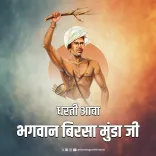
Birsa Munda, born on 15 November 1875 in the region that is today Jharkhand, led the Ulgulan — the Great Tumult — a fierce uprising against British colonial land-seizure policies and the displacement of Munda communities. He died in British custody in 1900, aged just 25, but left behind a legacy so powerful that generations of Adivasi movements drew from it. The honorific Dharti Aaba — 'Father of the Earth' — captures exactly how tribal communities remember him: not merely as a rebel, but as a protector of land, identity, and dignity.
Installing his statue in the Parliament complex — the seat of India's democracy — was itself a statement: that the history of India's freedom struggle is incomplete without its Adivasi chapters.
Janjatiya Gaurav Diwas: from policy decision to national calendar
The observance is not accidental. In 2021, the Ministry of Tribal Affairs formally instituted Janjatiya Gaurav Diwas on 15 November each year — Birsa Munda's birth anniversary — to honour tribal contributions to India's independence movement and to integrate Adivasi history into the national mainstream. The annual ritual of a Prime Ministerial tribute at Parliament has since become a fixture of that observance.
The broader pattern reflects a deliberate effort by successive administrations — accelerated under the BJP-led government — to install statues of tribal leaders in national spaces and anchor indigenous icons within the republic's official memory. For India's Adivasi populations, who have historically seen their freedom fighters overlooked in mainstream historical narratives, the gesture carries real resonance.
Birsa Munda's birth anniversary now sits alongside other national commemorations, a marker of how far Adivasi history has travelled from the margins to the centre of India's public life.
Point of View
Visibly anchoring Adivasi icons within the republic's ceremonial calendar. For a party that has invested heavily in outreach to tribal constituencies — a substantial electoral bloc across Jharkhand, Odisha, Chhattisgarh, and Madhya Pradesh — the symbolism of a Prime Ministerial tribute at Parliament is both historical acknowledgement and political messaging. The institutionalisation of this day in 2021 represented a deliberate policy choice to elevate tribal freedom fighters who had long remained peripheral in textbook history. As India's Adivasi communities continue to assert cultural and land rights, the state's official embrace of figures like Birsa Munda shapes the terms on which that conversation unfolds.
NationPress
15 Nov 2026
Frequently Asked Questions
What is Janjatiya Gaurav Diwas and when is it observed?
Janjatiya Gaurav Diwas is a national observance held every year on 15 November to mark the birth anniversary of tribal leader Birsa Munda and honour the contributions of tribal communities to India's freedom struggle. It was instituted by the Ministry of Tribal Affairs in 2021 .
Who was Birsa Munda?
Birsa Munda (1875–1900) was a tribal leader from the Munda community in present-day Jharkhand who led the Ulgulan uprising against British colonial land-seizure policies. Revered as Dharti Aaba ('Father of the Earth'), he died in British custody at the age of 25.
Why is Birsa Munda's statue at the Parliament complex?
A statue of Birsa Munda was installed in the Parliament complex in New Delhi to formally recognise his role in India's freedom struggle and integrate Adivasi history into the nation's official memory and democratic heritage.
What did PM Modi do on Janjatiya Gaurav Diwas 2026?
Prime Minister Narendra Modi offered a floral tribute — pushpanjali — at Birsa Munda's statue in the Parliament complex on 15 November 2026 to mark his birth anniversary and Janjatiya Gaurav Diwas .
Who is Gajendra Singh Shekhawat?
Gajendra Singh Shekhawat is India's Union Minister of Culture and Tourism , a senior BJP leader and Lok Sabha MP from Jodhpur, Rajasthan . He posted about PM Modi's tribute to Birsa Munda on X on 15 November 2026 .