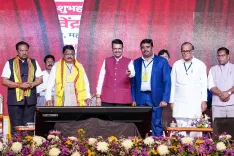
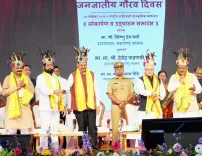
CM Fadnavis at Gadchiroli: Birsa Munda's 151st Birth Anniversary
Synopsis
Chief Minister Devendra Fadnavis led Janjatiya Gaurav Diwas in Gadchiroli on 15 November 2026, honouring Birsa Munda's 151st birth anniversary, announcing PESA-backed tribal funding, Swyam scholarships of up to ₹60,000, and declaring Gadchiroli 100% Naxal-free with a Steel City vision.
Key Takeaways
Janjatiya Gaurav Diwas was observed in Gadchiroli on 15 November 2026 , marking Bhagwan Birsa Munda's 151st birth anniversary .
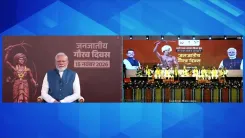
PM Modi joined online; Governor Jishnu Dev Varma and CM Devendra Fadnavis led the event in person.
Under the PESA Act , tribal gram panchayats receive direct funds and locals have reservations in 11 service categories .
The Swyam Yojana offers eligible tribal students up to ₹60,000 annually plus abroad-study scholarships.
CM Fadnavis declared Gadchiroli 100% Naxal-free and announced plans to develop it as India's 'Steel City' .
Tributes were paid to Tantya Mama Bhil , Raghoji Bhangre , and Rani Durgavati alongside Birsa Munda.
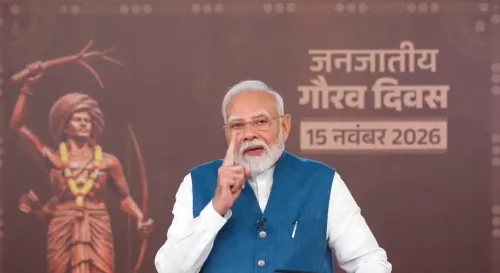
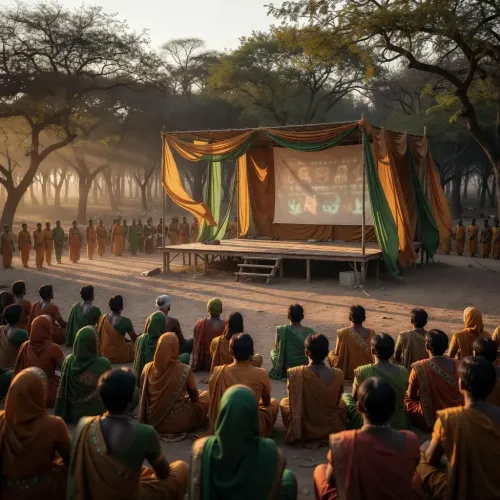
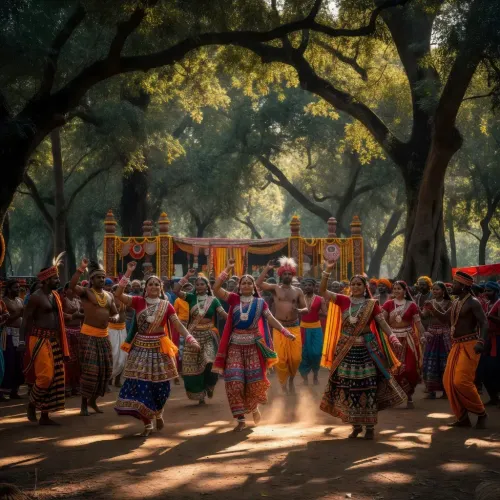
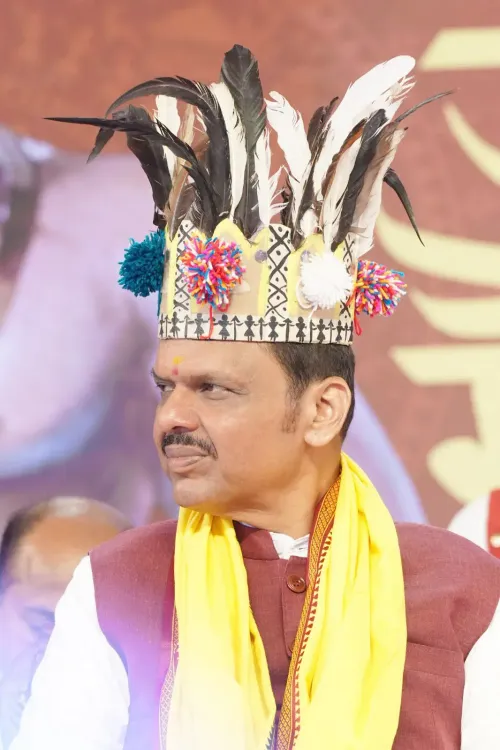
A district once synonymous with insurgency became the stage for a sweeping tribal tribute on Sunday, 15 November 2026, as Gadchiroli hosted the state's Janjatiya Gaurav Diwas celebrations marking the 151st birth anniversary of Bhagwan Birsa Munda. The Chief Minister's Office of Maharashtra announced that Prime Minister Narendra Modi joined online, while Governor Jishnu Dev Varma and Chief Minister Devendra Fadnavis led the event in person — turning one of India's most conflict-scarred tribal districts into a declaration of a new developmental chapter.
Birsa Munda's legacy reclaimed from 'the margins of history'
Speaking at the ceremony, CM Fadnavis drew a pointed contrast between the depth of the tribal freedom struggle and its thin representation in mainstream historical memory. 'The contribution of tribal warrior-leaders who fought foreign invasions was lost in the tide of time,' he said, attributing the ongoing effort to restore that record to PM Modi's leadership at the Centre. He paid tribute to Bhagwan Birsa Munda — revered as Dharti Aaba (Father of the Earth) — alongside Tantya Mama Bhil, Raghoji Bhangre, and Rani Durgavati, honouring their resistance to colonial rule and landlord exploitation.
Birsa Munda's story is extraordinary in its compressed intensity: he launched his mass movement — the Ulgulan, or 'Great Tumult' — against British encroachment on tribal water, forest, and land rights when he was barely 15 years old. Janjatiya Gaurav Diwas, observed nationally on 15 November every year since its declaration in 2021, marks his birth date as a moment of collective reckoning with that legacy.
PESA, Swyam scholarships, and the architecture of tribal empowerment
Beyond the tribute, Fadnavis outlined a concrete policy scaffold. Under the PESA Act — the Panchayats (Extension to Scheduled Areas) Act, 1996 — tribal gram panchayats are receiving direct funds, and reservations have been secured for local candidates across 11 service categories. The Act was designed to devolve real governance power to scheduled-area gram sabhas; Fadnavis framed its implementation as the institutional backbone of tribal self-determination.
On the education front, the CM highlighted the Swyam Yojana, under which eligible tribal students receive up to ₹60,000 annually, with scholarships also available for higher education abroad. The Dharti Aaba Abhiyan — a saturation-mode outreach campaign — was cited as the delivery vehicle to ensure welfare benefits physically reach tribal households.
Gadchiroli's pivot: from Naxal stronghold to 'Steel City'
The most consequential claim of the event concerned Gadchiroli itself. Fadnavis declared the district 100% Naxal-free — a dramatic assertion about a region that spent decades as one of India's most active Maoist conflict zones. He went further: Gadchiroli, he said, would be developed as the country's 'Steel City', leveraging its vast mineral wealth, and would be 'not Maharashtra's last district but its first' in driving state-level growth. The ambition crystallises the broader central-Indian tribal belt playbook — convert hard-won security gains into resource-based industrial corridors.
The gathering drew an extensive cross-government presence: Union Minister Jueal Oram, Deputy CM Eknath Shinde, Deputy CM Sunetra Ajit Pawar (online), Union Minister of State Durgadas Uike, ministers Dr. Ashok Uike and Narhari Zirwal, along with governors and chief ministers of other states joining online, and local parliamentarians and legislators from the region.
A symbol on the map — and a signal to watch
Hosting Janjatiya Gaurav Diwas in Gadchiroli is not incidental geography. It places India's tribal cultural renaissance precisely at the intersection where identity, security, and industrial ambition converge. Whether the Steel City vision translates from the dais to the district will be the real measure of the pledge made here today.
Point of View
Welfare delivery through PESA and the Swyam Yojana, and industrial repositioning of a resource-rich district newly freed from insurgency. The 'Steel City' pledge signals that security gains in Naxal-affected zones are now being converted into an economic pitch — consistent with the Centre's approach across the tribal belt of central India. For the Fadnavis government, Gadchiroli as a development engine would validate both its security record and its tribal-welfare credentials simultaneously, ahead of a dense electoral calendar.
NationPress
15 Nov 2026
Frequently Asked Questions
What is Janjatiya Gaurav Diwas and why is it observed on 15 November?
Janjatiya Gaurav Diwas is observed on 15 November every year to honour tribal freedom fighters and icons, with the date chosen because it marks the birth anniversary of Bhagwan Birsa Munda . It was declared a national observance in 2021 .
Who was Bhagwan Birsa Munda?
Bhagwan Birsa Munda was a 19th-century tribal leader from the Munda community who launched the Ulgulan movement against British colonial rule and landlord exploitation of tribal land and forests in the Chota Nagpur region, beginning from age 15.
What is the Swyam Yojana for tribal students in Maharashtra?
The Swyam Yojana is a Maharashtra government scheme that provides eligible tribal students with up to ₹60,000 annually in financial assistance, along with scholarships for pursuing higher education abroad.
What is the PESA Act and how does it help tribal communities?
The PESA Act (1996) extends panchayati raj provisions to scheduled tribal areas, empowering gram sabhas with self-governance rights and enabling direct fund transfers to tribal gram panchayats, reducing administrative intermediaries.
Is Gadchiroli really 100% Naxal-free?
CM Devendra Fadnavis declared Gadchiroli 100% Naxal-free at the Janjatiya Gaurav Diwas event on 15 November 2026. The exact current status of this claim requires verification against the latest official security assessments.