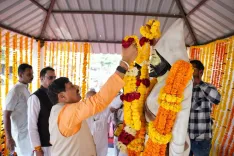
CM Hemant Soren Honours Birsa Munda on Jayanti
Synopsis
The Chief Minister's Office of Jharkhand marked Birsa Munda Jayanti on 15 November 2026 as a day of national and Adivasi pride, invoking the 19th-century tribal leader whose Ulgulan rebellion against British rule reshaped land law in what is now Jharkhand.
Key Takeaways
Jharkhand CMO posted a tribute on 15 November 2026 marking Birsa Munda Jayanti , calling it a day of pride for the nation and Adivasi society.
Birsa Munda was born on 15 November 1875 and led the Ulgulan uprising against British land policies in the Chota Nagpur plateau.
His rebellion directly contributed to the enactment of the Chota Nagpur Tenancy Act of 1908 , which still protects tribal land rights in Jharkhand.
November 15 doubles as Jharkhand Foundation Day , the state's creation anniversary since 2000 , making the date symbolically layered.
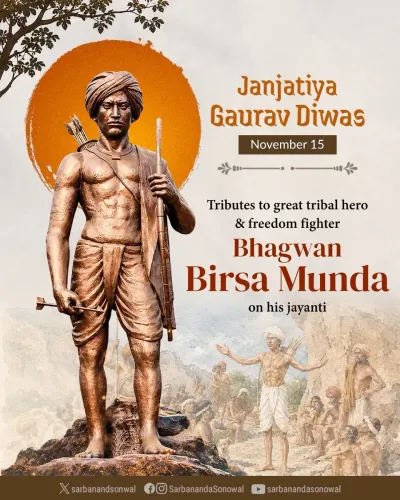
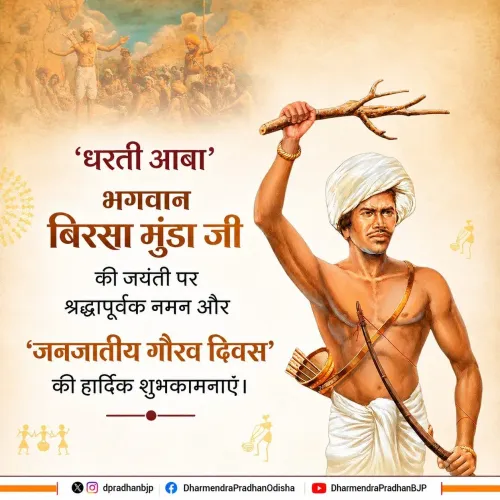
The Centre designated 15 November as Janjatiya Gaurav Divas (Tribal Pride Day), giving Birsa Munda's legacy a national institutional footing.
Birsa Munda's portrait now hangs in the Central Hall of Parliament , marking his recognition as a national icon.
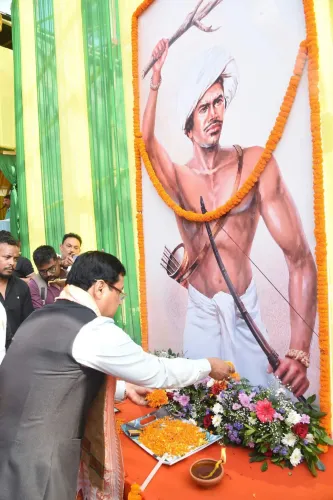
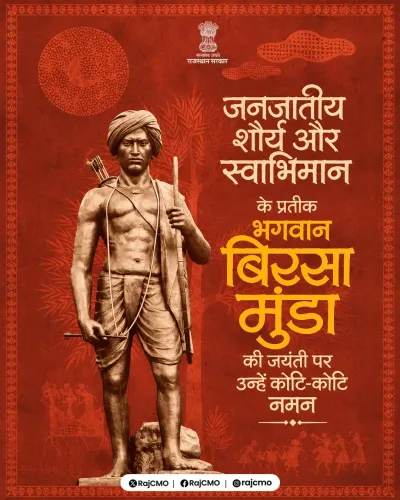
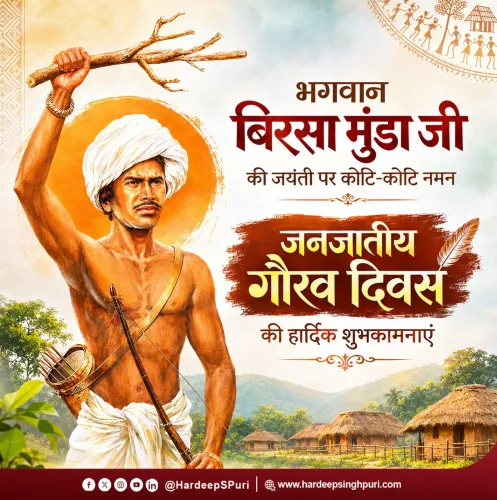
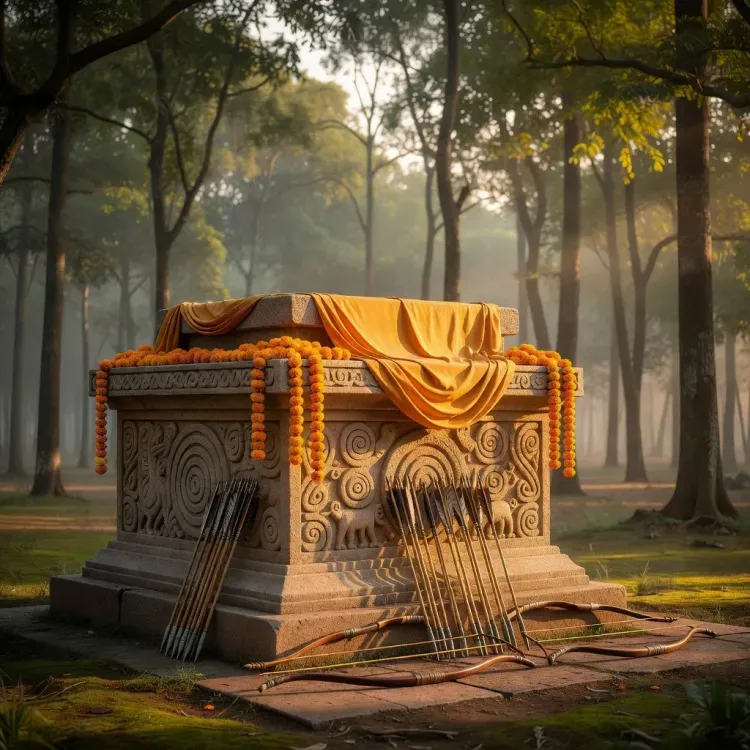
On the birth anniversary of Birsa Munda — the Munda tribal leader who took on the British Empire with nothing but courage and a bow — the Chief Minister's Office of Jharkhand marked 15 November 2026 as a day of pride for the entire nation and the Adivasi community, calling it out as a day of immense honour.
The post, shared on behalf of Chief Minister Hemant Soren, declared the occasion 'pūre deś aur ādivāsī samāj ke lie gaurav kā din' — 'a day of pride for the entire country and tribal society.' Short in words, enormous in resonance.
Who Was Birsa Munda — and Why Jharkhand Never Forgets
Birsa Munda, born on 15 November 1875 in present-day Jharkhand, led what history records as the Ulgulan — the Great Tumult — a fierce uprising against British land-grab policies and the colonial dismantling of Munda customary rights. He rallied thousands of Adivasis across the Chota Nagpur plateau at a time when indigenous land rights had no legal shield and armed resistance meant almost certain death.
Birsa died in British custody in 1900, aged just 25. Yet his rebellion forced the colonial administration to pass the Chota Nagpur Tenancy Act of 1908, a landmark statute that continues to protect tribal land ownership in Jharkhand to this day. Few freedom fighters of that era extracted such a concrete legal concession from the empire at such a young age.
Jharkhand Statehood, November 15, and the Symbolic Convergence
November 15 carries a double weight in Jharkhand: it is simultaneously Birsa Munda Jayanti and Jharkhand Foundation Day, the anniversary of the state's creation in 2000. The deliberate alignment of statehood with Birsa's birth date was itself an act of political and cultural assertion — a statement that the new state's identity is inseparable from its Adivasi heritage.
For the Hemant Soren-led government and the Jharkhand Mukti Morcha, invoking Birsa Munda is not ceremonial filler. It is core to a governing philosophy that frames tribal land rights, forest rights, and self-governance as the living legacy of the Ulgulan. State messaging on this date therefore carries policy subtext as much as historical tribute.
Adivasi Icons and India's Expanding National Narrative
The Centre designated 15 November as Janjatiya Gaurav Divas (Tribal Pride Day) nationally, underscoring a broader, cross-party acknowledgement that tribal contributions to India's independence story deserve a permanent place in the mainstream. Regional governments in tribal-heavy states have been consistent drivers of this recognition — often well ahead of the national consensus.
Birsa Munda's portrait now hangs in the Central Hall of Parliament, and his name graces airports, universities, and stadiums across the country. The arc from colonial-era rebel to national icon, completed within a little over a century, is one of independent India's quieter but more striking acts of historical restitution.
One hundred and fifty-one years after his birth, Birsa Munda's rebellion continues to shape the law, the land, and the politics of the state he never lived to see created — and that is the most enduring tribute of all.
Point of View
Birsa Munda is not a historical footnote but the ideological anchor for policies on tribal land rights and forest governance. Marking the Jayanti alongside Jharkhand Foundation Day reinforces the state's founding premise: that its political existence is an extension of the Adivasi self-determination Birsa fought for. The Centre's parallel institution of Janjatiya Gaurav Divas signals that this framing has migrated from regional assertion to national consensus-building, even as state and central governments may differ on the substance of tribal welfare policy.
NationPress
15 Nov 2026
Frequently Asked Questions
Why is 15 November celebrated as Birsa Munda Jayanti?
15 November is the birth anniversary of Birsa Munda , the Munda tribal leader born in 1875 who led the Ulgulan rebellion against British rule in the Chota Nagpur region of present-day Jharkhand.
What is the Ulgulan uprising associated with Birsa Munda?
The Ulgulan — meaning 'Great Tumult' in Mundari — was a late 19th-century armed rebellion led by Birsa Munda against British land-grab policies and the erosion of Munda customary rights, mobilising thousands of Adivasis across the Chota Nagpur plateau.
What is Janjatiya Gaurav Divas and when is it observed?
Janjatiya Gaurav Divas (Tribal Pride Day) is observed on 15 November every year, designated by the central government to honour the contributions of tribal freedom fighters and communities to India's independence movement.
What law did Birsa Munda's rebellion help bring about?
The pressure of the Ulgulan rebellion contributed to the enactment of the Chota Nagpur Tenancy Act of 1908 , which placed legal protections on tribal land ownership in the Chota Nagpur plateau and remains in force in Jharkhand today.
Why is 15 November also Jharkhand Foundation Day?
Jharkhand was carved out as a separate state on 15 November 2000 , with the date chosen deliberately to coincide with Birsa Munda's birth anniversary, cementing his legacy as the symbolic father of the state's Adivasi identity.