Shivraj Singh Chouhan Pays Tribute to Birsa Munda on Jayanti
Synopsis
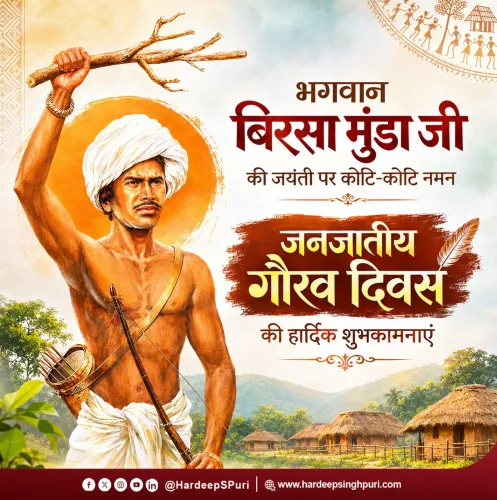
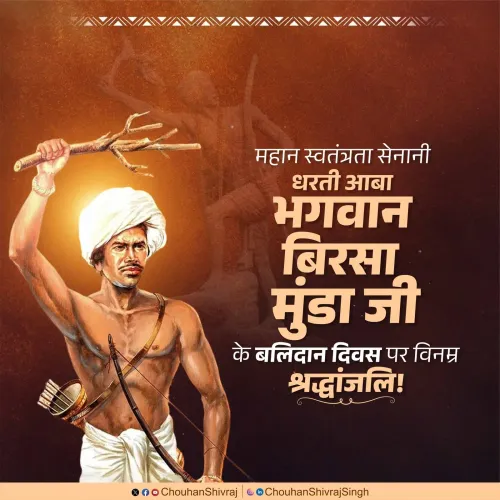
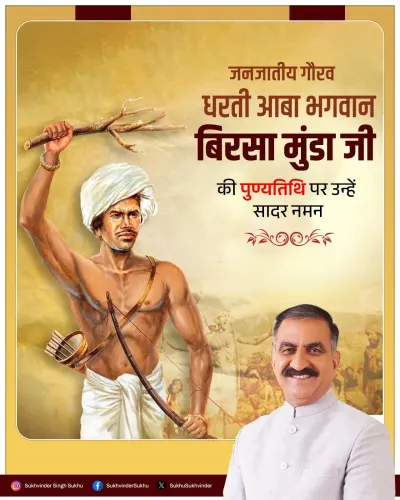
On Birsa Munda's birth anniversary and Janjatiya Gaurav Divas, Union Agriculture Minister Shivraj Singh Chouhan hailed the tribal icon as 'an institution and an idea,' invoking his famous defiance of British rule and his lifelong fight for Adivasi rights over water, forests, and land.
Key Takeaways
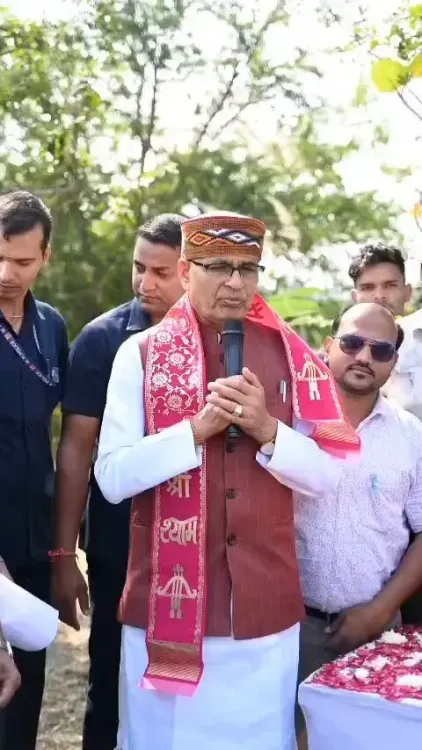
Union Agriculture Minister Shivraj Singh Chouhan paid tribute to Birsa Munda on 15 November 2026 , his birth anniversary.
Chouhan described Birsa Munda as 'not merely a person but an institution and an idea' who dedicated his life to Adivasi rights.
Birsa Munda led the Ulgulan movement in the Chota Nagpur region, demanding tribal sovereignty over water, forests, and land.
He died in Ranchi Jail in 1900 at the age of 25 , becoming a permanent symbol of Adivasi resistance.
The Government of India designated 15 November as Janjatiya Gaurav Divas (Tribal Pride Day) in 2021 .
Birsa Munda's portrait is displayed in the Central Hall of Parliament , recognising his place in India's freedom struggle.
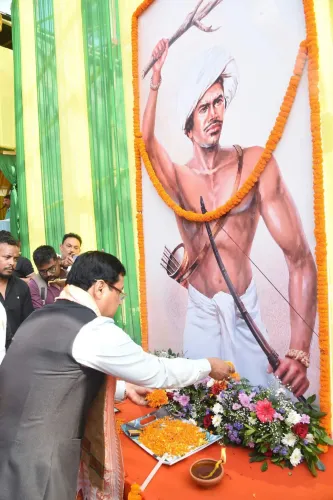
A freedom fighter who never held a government post, never commanded a modern army — yet his name echoes across India's tribal heartland more than a century after his death. On Sunday, 15 November 2026, Union Agriculture Minister Shivraj Singh Chouhan paid tribute to Birsa Munda on the tribal icon's birth anniversary, calling him not merely a person but 'an institution and an idea.'
Who Birsa Munda Was — and Why He Still Matters
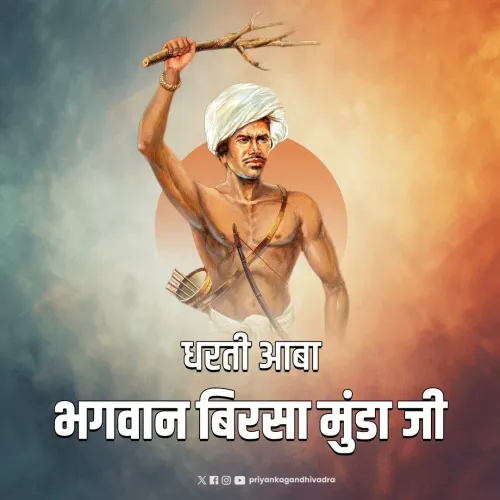
Birsa Munda was born on 15 November 1875 in the Chota Nagpur region of present-day Jharkhand — a land of dense forests, iron-rich earth, and communities whose relationship with the land predated colonial rule by centuries. He grew up watching British land policies and missionary influences steadily erode the Munda people's control over their forests and fields. He chose defiance over accommodation.
His movement, known as the Ulgulan — meaning 'the great tumult' — mobilised Adivasi communities across the Chota Nagpur plateau against both British land grabbers and local intermediaries. At its heart was a simple, thundering demand: jal, jungle, zameen — water, forest, land — belonged to those who had always lived there. He was arrested, imprisoned, and died in Ranchi Jail in 1900, aged just 25. The British had silenced the man. They could not silence the idea.
Chouhan's Words — and the Quote That Still Reverberates
In his post, Chouhan quoted Birsa Munda directly: 'Angrezon, tum mujhe maar sakte ho, mere vichaar ko nahin' — 'British, you can kill me, but not my ideas.' He also invoked Birsa's declaration that tribal communities hold sovereign rights over their water, land, and forests — a claim that remains a living legal and political contest in India today.
Chouhan wrote that Birsa Munda 'lives today in the hearts of every person, in the mountains, in the forests, in the minds of our Adivasi brothers and sisters, and in the hearts of us Indians.' He closed with shat-shat naman — a hundredfold bow of reverence.
A Jayanti That Cuts Across Party Lines
15 November has become one of the most widely observed birth anniversaries on India's political calendar. Leaders from virtually every major party issue tributes, reflecting how thoroughly Birsa Munda's legacy has been absorbed into the mainstream freedom-struggle narrative — a recognition that the colonial-era fight was fought on many fronts simultaneously, not just in legislative halls and courtrooms.
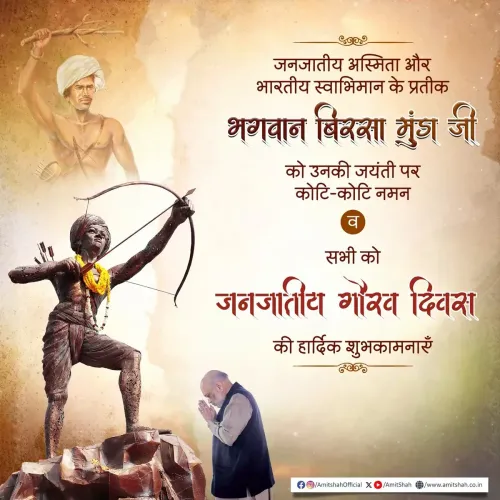
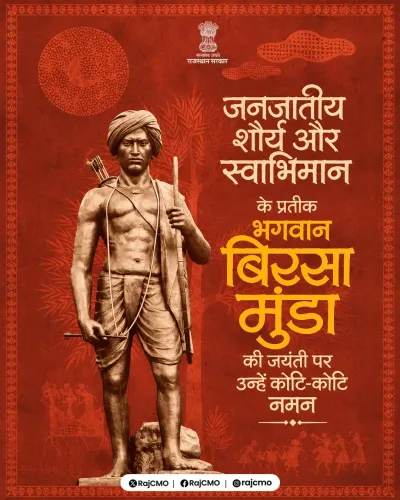
The day also carries institutional weight: the Government of India designated 15 November as Janjatiya Gaurav Divas (Tribal Pride Day) in 2021, a formal acknowledgment that Adivasi contributions to India's independence movement deserved a dedicated national observance. Birsa Munda's portrait hangs in the Central Hall of Parliament — a rare honour for a figure who never lived to see the republic he helped inspire.
The underlying tension he embodied — tribal communities' constitutional rights over forests and land versus development pressures — has not dissolved. It plays out every year in debates over the implementation of the Forest Rights Act, in court hearings over land acquisition in tribal districts, and in the everyday lives of millions of Adivasi families. Birsa Munda's Ulgulan did not end in 1900. It changed form.
Point of View
Jungle, zameen rights is symbolically potent but lands against an unresolved backdrop: implementation of the Forest Rights Act remains contested, and tribal land disputes continue to generate legal and political friction. Chouhan's framing of Birsa Munda as 'an idea that cannot be killed' aligns the government's Janjatiya Gaurav Divas project with a longer arc of emotional mobilisation. Whether tribute translates into accelerated forest-rights settlements will be the measure activists and Adivasi communities watch most closely.
NationPress
15 Nov 2026
Frequently Asked Questions
Who was Birsa Munda and why is he celebrated on 15 November?
Birsa Munda was a Munda tribal leader born on 15 November 1875 in the Chota Nagpur region who led the Ulgulan movement against British land policies and exploitation of Adivasi communities. 15 November is observed as his birth anniversary and, since 2021 , as Janjatiya Gaurav Divas (Tribal Pride Day) by the Government of India.
What is the Ulgulan movement associated with Birsa Munda?
The Ulgulan — meaning 'the great tumult' — was a late 19th-century armed uprising led by Birsa Munda across the Chota Nagpur plateau demanding that Adivasi communities retain sovereign rights over their water, forests, and land, and resisting British land-grab policies and local intermediaries.
What is Janjatiya Gaurav Divas?
Janjatiya Gaurav Divas (Tribal Pride Day) is observed on 15 November every year. The Government of India formally designated the date in 2021 to honour the contributions of tribal freedom fighters, with Birsa Munda's birth anniversary anchoring the occasion.
What did Shivraj Singh Chouhan say about Birsa Munda?
Union Agriculture Minister Shivraj Singh Chouhan described Birsa Munda as 'not merely a person but an institution and an idea,' quoting his declaration that the British could kill him but not his ideas, and saluting his lifelong fight for Adivasi rights over water, forests, and land.
Is Birsa Munda's portrait in the Indian Parliament?
Yes. Birsa Munda's portrait is displayed in the Central Hall of Parliament in New Delhi , recognising him as a significant figure in India's broader freedom struggle.