CM Yogi Pays Tribute to Birsa Munda on Janjatiya Gaurav Divas
Synopsis
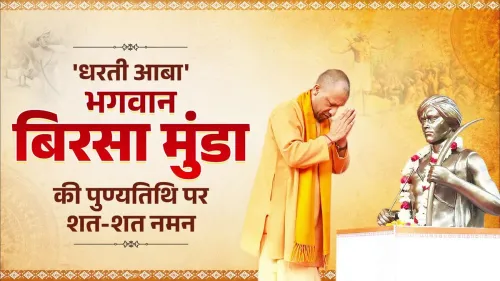
On Janjatiya Gaurav Divas, the UP Chief Minister's Office shared CM Yogi Adityanath's tribute to Bhagwan Birsa Munda, connecting the 19th-century tribal leader's anti-colonial Ulgulan rebellion to the vision of building a New India today.
Key Takeaways
15 November is observed as Janjatiya Gaurav Divas , declared by the Union Government in 2021 to mark Birsa Munda's birth anniversary.
Bhagwan Birsa Munda led the Ulgulan rebellion against British land policies in present-day Jharkhand and died in Ranchi Jail in 1900 , aged 25.
CM Yogi Adityanath linked Birsa Munda's sacrifice directly to the ongoing mission of building a 'New India' in his official statement.
The Chotanagpur Tenancy Act , won in part through the pressure of the Ulgulan, remains a foundational legal protection for tribal land rights.
Tribal communities constitute roughly 8.6 per cent of India's population, making their historical recognition both culturally significant and politically consequential.
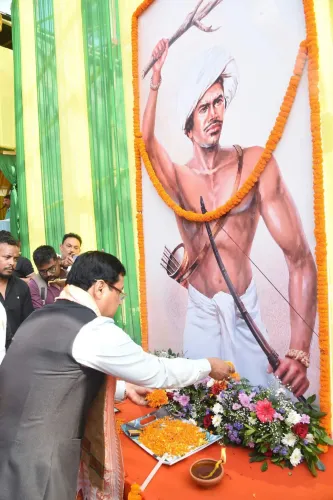
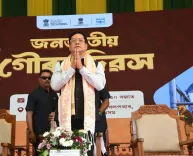
A freedom fighter who died at just 25 yet shook the foundations of colonial rule gets his due today. The Chief Minister's Office of Uttar Pradesh shared a statement from Chief Minister Yogi Adityanath on Sunday, 15 November 2026, marking the birth anniversary of Bhagwan Birsa Munda — the tribal icon whose rebellion against British land dispossession remains one of the most defiant chapters in India's independence story.
CM Yogi's statement, posted in Hindi, declares: 'Aaj ka din atyant mahatvapurn hai' — 'Today is an extraordinarily important day.' He invokes Birsa Munda's struggle for the honour and self-respect of the motherland, linking it directly to the present mission of building a 'New India' in the era of freedom.
Who Was Bhagwan Birsa Munda — and Why the Title 'Bhagwan'?
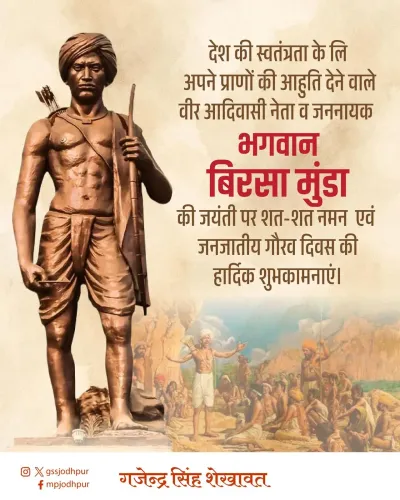
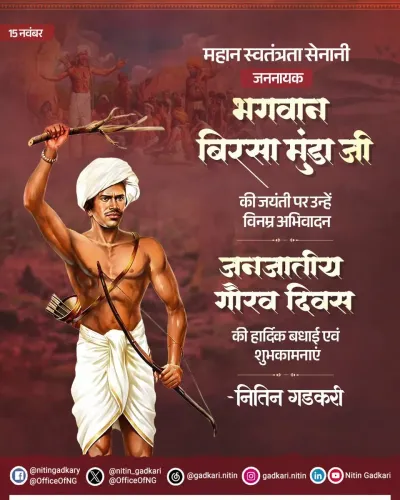
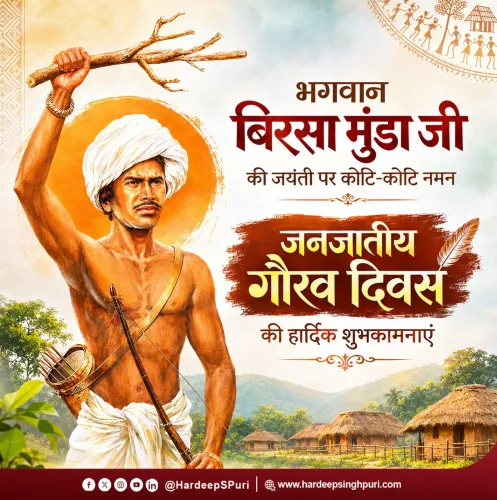
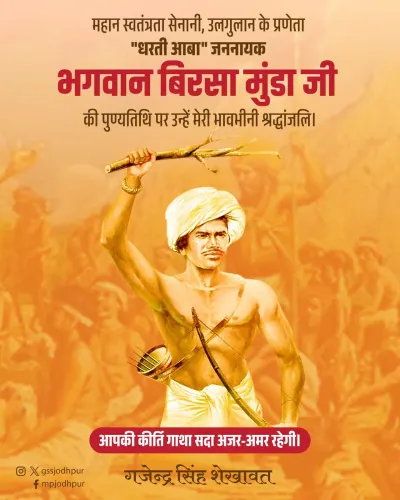
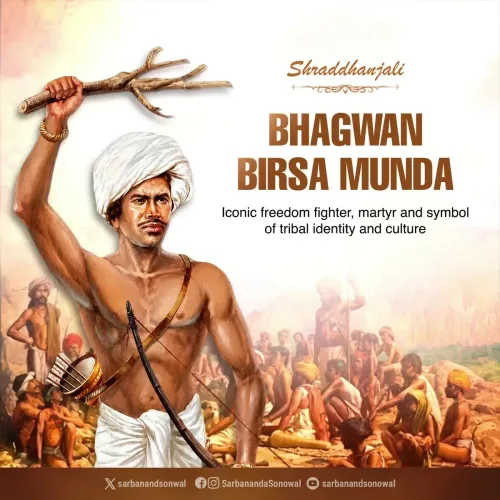
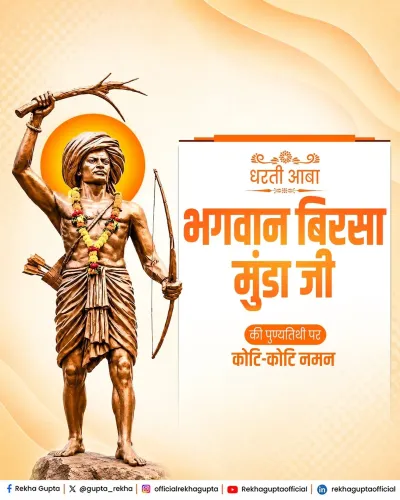
Born in 1875 in what is today the state of Jharkhand, Birsa Munda led the Ulgulan — 'The Great Tumult' — a movement that mobilised the Munda tribal community against British-imposed land policies that were systematically stripping Adivasi communities of ancestral forests and farmland. His followers called him Dharti Aaba, 'Father of the Earth.' He was arrested by colonial authorities and died in Ranchi Jail in 1900, aged 25, yet his rebellion had already forced the British to pass the Chotanagpur Tenancy Act, a landmark legal protection for tribal land rights. His short life earned him the rare honorific 'Bhagwan' among his people — a god-like reverence that has only grown with the decades.Janjatiya Gaurav Divas: From Folk Memory to National Calendar
In November 2021, the Union Government formally declared 15 November as Janjatiya Gaurav Divas — Tribal Pride Day — to honour Birsa Munda's birth anniversary and to institutionalise recognition of tribal communities' contributions to India's freedom struggle. The move was significant: it placed Adivasi resistance movements on the same commemorative plane as better-known episodes of the 1857-1947 independence arc, broadening the national narrative beyond its historically urban and elite-centric retelling. BJP-led state governments across the country have since made 15 November a regular occasion for public tribute, using it to draw a continuous line between 19th-century tribal resistance and 21st-century nation-building — precisely the rhetorical move CM Yogi's statement makes today.The Bigger Pattern: Reclaiming Adivasi Memory
CM Yogi's framing — that it is because of Birsa Munda's sacrifice that Indians today can pursue the vision of a New India — is a deliberate act of historical incorporation. For generations, Adivasi freedom fighters occupied the footnotes of mainstream history textbooks. The annual observance of Janjatiya Gaurav Divas is a policy-level effort to move those figures to the chapter headings. With tribal communities making up roughly 8.6 per cent of India's population and concentrated in states that are electorally significant — Jharkhand, Chhattisgarh, Odisha, Madhya Pradesh — this politics of memory carries real weight beyond the symbolic. The kicker writes itself: a 25-year-old who never saw independence is still, 126 years on, being invoked to define what independence means.Point of View
Countering a long-standing critique that mainstream history marginalised tribal resistance. By framing Birsa Munda's sacrifice as the foundation of contemporary nation-building, the statement performs a dual function: cultural restitution and political outreach to tribal communities in electorally important states. The institutionalisation of Janjatiya Gaurav Divas in 2021 gave state governments a formal annual hook for this messaging. What matters most long-term is whether the commemorative energy translates into substantive tribal welfare policy — land rights, forest access, education — or remains in the register of symbolic tribute.
NationPress
15 Nov 2026
Frequently Asked Questions
Why is 15 November celebrated as Janjatiya Gaurav Divas?
15 November is Janjatiya Gaurav Divas (Tribal Pride Day) because it is the birth anniversary of Bhagwan Birsa Munda , the tribal freedom fighter who led the Ulgulan rebellion against British rule. The Union Government declared the observance in November 2021 .
Who was Bhagwan Birsa Munda and what did he fight for?
Bhagwan Birsa Munda was a 19th-century tribal leader from the Munda community in present-day Jharkhand who led the Ulgulan movement against British land dispossession policies. He died in Ranchi Jail in 1900 , aged just 25, but his resistance forced the British to enact tribal land protections.
What is the Ulgulan rebellion?
The Ulgulan , meaning 'The Great Tumult,' was an uprising led by Birsa Munda in the late 19th century that mobilised Munda tribal communities against British colonial land policies stripping Adivasis of ancestral forests and farmland. It is considered one of the most significant tribal resistance movements in Indian history.
What did CM Yogi say about Birsa Munda?
CM Yogi Adityanath called 15 November an 'extraordinarily important day' and said that because of Birsa Munda's struggle for the honour and self-respect of the motherland, Indians today are able to advance the vision of building a New India in the era of freedom.
What law resulted from Birsa Munda's rebellion?
The pressure of the Ulgulan uprising contributed to the enactment of the Chotanagpur Tenancy Act , a landmark legislation that provided legal protections for tribal land rights in the region that is now Jharkhand .