Giriraj Singh hails sericulture SHG drive in Ganderbal
Synopsis
Union Textiles Minister Giriraj Singh on 15 November 2026 highlighted a joint JKRLM and Central Silk Board sericulture awareness programme for Self-Help Group women in Ganderbal's Wakura block, calling it a key step toward rural women's economic self-reliance through silk production.
Key Takeaways
A sericulture awareness programme for SHG women was held in Wakura block, Ganderbal, Jammu and Kashmir on 15 November 2026 .
The event was jointly organised by JKRLM (J&K's arm of the National Rural Livelihoods Mission) and the Central Silk Board , a statutory body under the Ministry of Textiles.
Union Textiles Minister Giriraj Singh described it as a 'splendid step' toward making rural women economically self-reliant through silk-based self-employment.
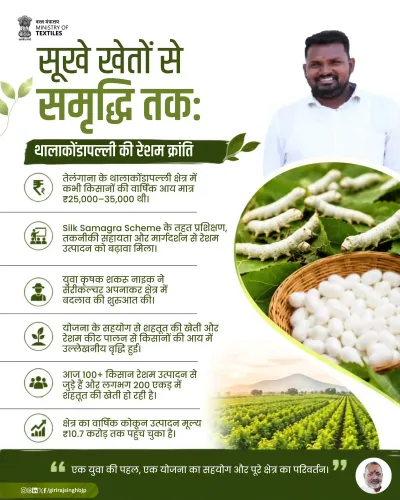
J&K's traditional mulberry and oak-tussar sericulture base makes it a natural fit for the Central Silk Board's Silk Samagra-2 expansion priorities.
The convergence of NRLM's SHG network with Central Silk Board technical support is the established national model for scaling rural silk livelihoods.
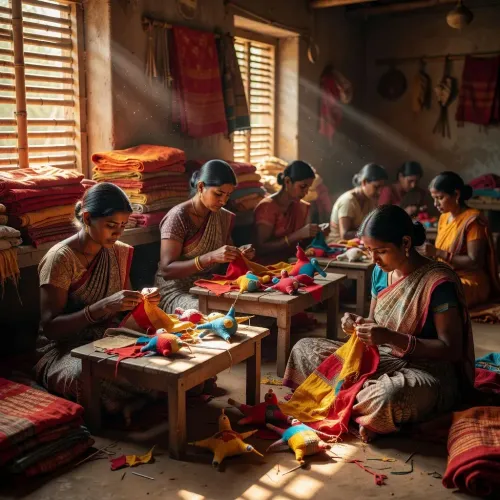
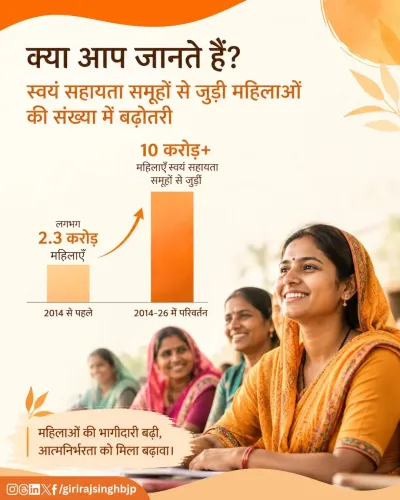
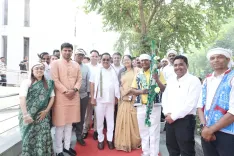
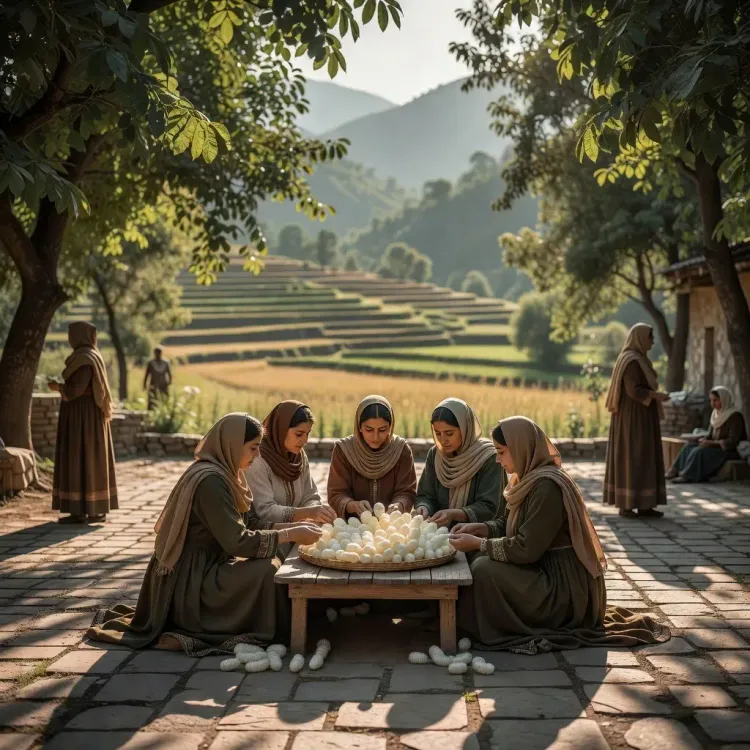
A quiet block in Ganderbal district, Jammu and Kashmir, became the site of a pointed economic intervention on Sunday, 15 November 2026, when women from Self-Help Groups gathered for a sericulture awareness programme organised jointly by JKRLM and the Central Silk Board (CSB) — with Union Textiles Minister Giriraj Singh flagging it as a defining step toward rural women's self-reliance.
Posting on X, Minister Singh wrote: 'गांदरबल के वाकुरा ब्लॉक में JKRLM और Central Silk Board द्वारा Self-Help Groups की महिलाओं के लिए सेरीकल्चर जागरूकता कार्यक्रम आयोजित किया गया!' — 'A sericulture awareness programme for Self-Help Group women was organised in Wakura Block, Ganderbal, by JKRLM and the Central Silk Board!' He called it 'a splendid step' toward making rural women economically self-reliant and opening new self-employment avenues through silk production.JKRLM, Central Silk Board, and the convergence model
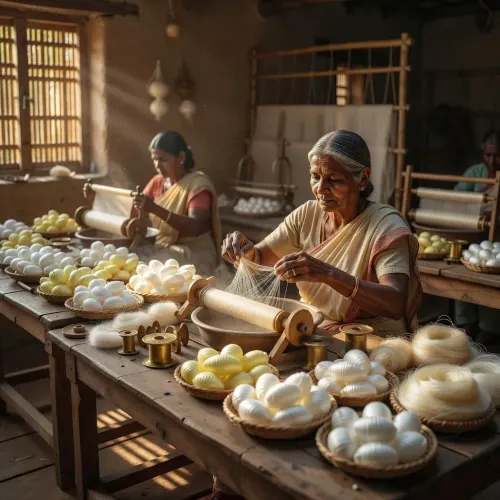
The event follows a well-established playbook. JKRLM — the Jammu and Kashmir arm of the National Rural Livelihoods Mission (NRLM), launched in 2011 — organises rural women into SHGs and links them to livelihood options explicitly including sericulture. The Central Silk Board, a statutory body under the Ministry of Textiles, provides technical extension, research support, and market linkage. When the two agencies run a joint awareness camp, the template is convergence: government credit channels meet sector-specific expertise at the village level.
Jammu and Kashmir has historically anchored its sericulture identity in both mulberry and oak-tussar varieties, giving it a natural base that most other states lack. Wakura block in Ganderbal sits in the Kashmir Valley, where the climate and existing knowledge of silk-rearing make women-led SHG adoption a credible — not aspirational — goal.
Why Wakura, why now
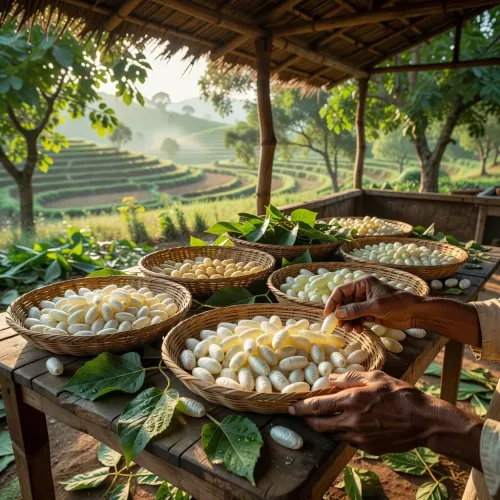
Successive central governments have pushed to merge textile-sector schemes with rural livelihood missions to create supplementary income for women in silk-producing belts. The current administration's Silk Samagra-2 scheme — the flagship Central Silk Board programme for end-to-end sericulture development — has identified J&K as a priority expansion zone. An awareness camp is the first rung: it introduces women to cocoon rearing cycles, costing, and market pathways before any credit or equipment linkage follows.
The question now is whether Wakura stays a showcase event or becomes the prototype for a district-wide — and eventually J&K-wide — rollout. Follow-up credit linkage, reeling-unit installation, and buyback agreements are the metrics that will separate a one-day programme from a durable livelihood chain.
Point of View
Where post-reorganisation development optics carry political weight, sericulture offers a non-controversial, employment-intensive showcase. The real test, however, is whether one-day awareness camps translate into sustained credit linkage and market access under Silk Samagra-2 — the gap where previous iterations of this model have stalled.
NationPress
15 Nov 2026
Frequently Asked Questions
What is the sericulture awareness programme held in Ganderbal?
It is a joint initiative by JKRLM and the Central Silk Board to introduce Self-Help Group women in Wakura block, Ganderbal, to silk-rearing techniques, costing, and self-employment opportunities in sericulture.
What is JKRLM and what does it do?
JKRLM is the Jammu and Kashmir Rural Livelihoods Mission, the state-level implementation arm of the National Rural Livelihoods Mission (2011). It organises rural women into Self-Help Groups and connects them to livelihood options including sericulture.
What is the Central Silk Board's role in J&K sericulture?
The Central Silk Board is a statutory body under the Ministry of Textiles that provides technical extension, research, and market support for silk production. In J&K, it works alongside JKRLM to build capacity among rural women's SHGs.
What is Silk Samagra-2?
Silk Samagra-2 is the Central Silk Board's flagship scheme for end-to-end sericulture development, covering seed production, extension, quality certification, and market linkage. Jammu and Kashmir is identified as a priority zone under this scheme.
Why is Jammu and Kashmir significant for sericulture in India?
J&K has a traditional base in both mulberry and oak-tussar silk varieties, giving it a natural climate and knowledge advantage for sericulture expansion compared to many other states.