Tejashwi Yadav pays tribute to Birsa Munda on his birth anniversary
Synopsis
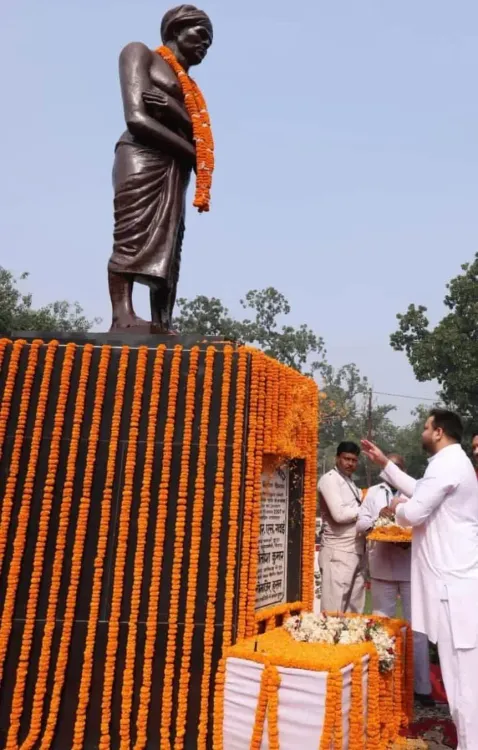
RJD leader Tejashwi Yadav honoured tribal icon Birsa Munda on his birth anniversary on 15 November 2026, calling him 'Dharti Abba Jannayak' and saluting his revolution for jal, jungle, zameen — a tribute echoed across India's political spectrum on Janjatiya Gaurav Diwas.
Key Takeaways
Tejashwi Yadav posted a Hindi tribute to Birsa Munda on 15 November 2026 , his birth anniversary.
Birsa Munda (1875–1900) led the Ulgulan movement on the Chota Nagpur plateau against British land and forest dispossession.
He died in custody at Ranchi jail at the age of 25 , becoming a permanent symbol of Adivasi resistance.
His rallying cry — jal, jungle, zameen — remains central to tribal-rights debates in Bihar, Jharkhand and beyond.
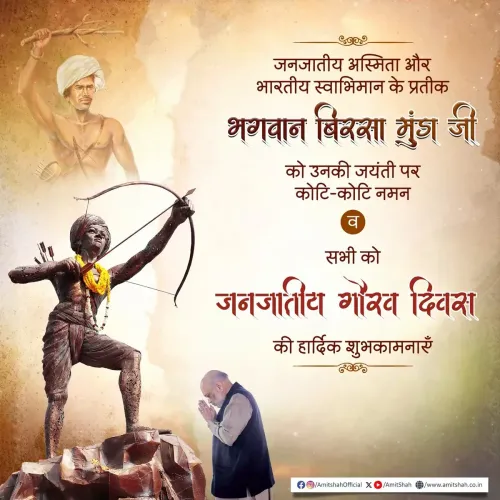
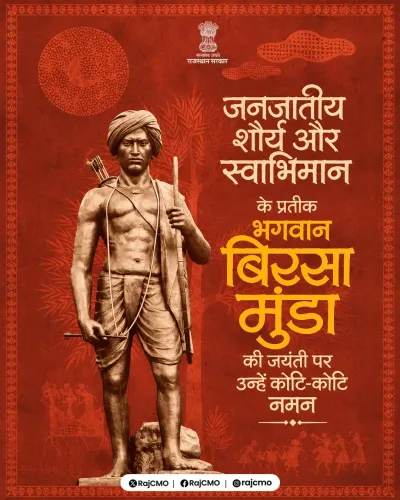
November 15 is now observed nationally as Janjatiya Gaurav Diwas .
Birsa Munda's portrait is enshrined in the Central Hall of Parliament , marking his recognition as a founding figure of India's freedom struggle.
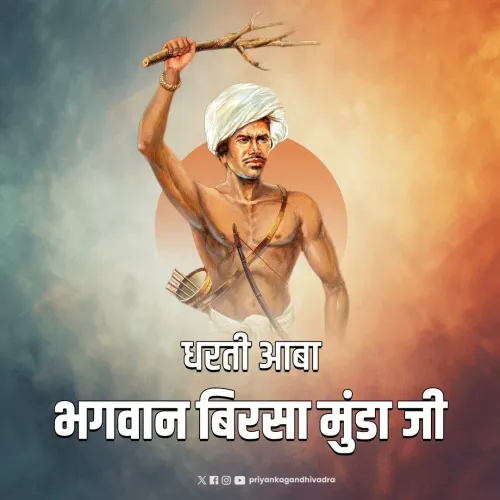
A young revolutionary who died at 25 but reshaped the conscience of a nation — RJD leader Tejashwi Yadav on Sunday, 15 November 2026, offered a heartfelt tribute to tribal icon Birsa Munda on his birth anniversary, saluting him as 'Dharti Abba Jannayak' — the father of the earth, the people's hero.
Posting on X, Tejashwi wrote in Hindi: 'Aadivaasiyon ke adhikaaron ke ladaka, angrezon ki nirankushata ke viruddh jal, jungle, zameen bachaane... kranti ka bigul bajaane waale' — 'the fighter for tribal rights, who sounded the bugle of revolution against British tyranny to save water, forests and land, and to awaken the pride of Adivasi identity.' He signed off with 'kotishah pranaam, shat-shat naman' — a hundredfold reverence, a thousandfold bow.
Who Birsa Munda was — and why the battle cry still echoes
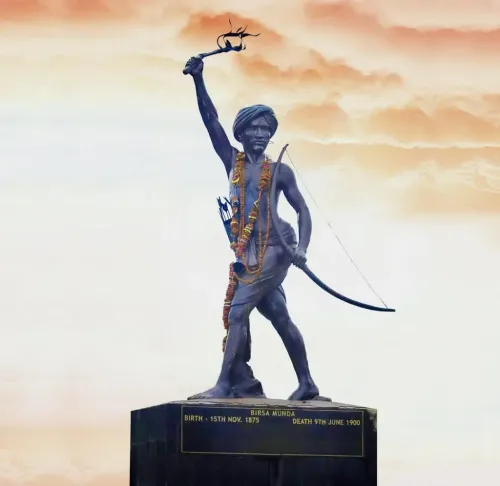
Birsa Munda (1875–1900) was born in the Chota Nagpur plateau, in what is today Jharkhand. He led the Ulgulan — 'the great tumult' — a movement of Munda tribal communities against British colonial dispossession of land, forest access, and bonded labour. The British feared him enough to imprison him; he died in custody at Ranchi jail before his revolution could be fully crushed. He was 25 years old.
His slogan — jal, jungle, zameen (water, forest, land) — did not die with him. It became the founding grammar of Adivasi rights movements across India and continues to animate debates over the Forest Rights Act, displacement around infrastructure projects, and land acquisition laws in both Bihar and Jharkhand today.
Janjatiya Gaurav Diwas and the annual political moment
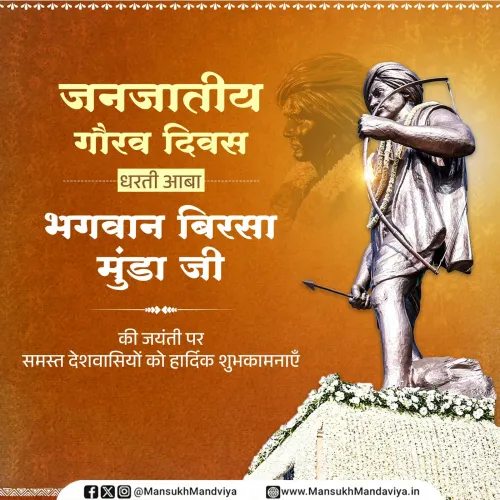
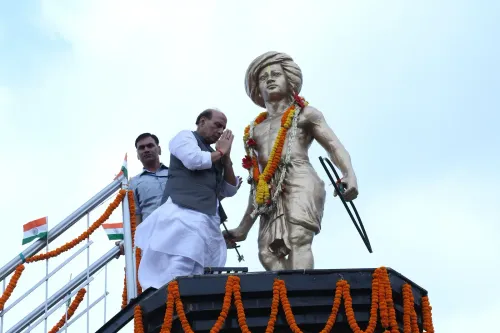
November 15 — Birsa Munda's birth anniversary — is now observed nationally as Janjatiya Gaurav Diwas, a day the central government designated to honour tribal heritage. Across the political spectrum, leaders from virtually every party issue tributes on this date, recognising the dense symbolic weight Birsa Munda carries for Adivasi communities who make up significant voter blocs in Jharkhand, Bihar, Odisha, and Chhattisgarh.
For the RJD, rooted in the social coalition of Bihar's backward classes and marginalised communities, invoking Birsa Munda is both historical duty and political continuity — a reminder that the party positions itself as a shield for those communities still fighting for the rights Birsa died defending.
More than a century on, the man colonial authorities dismissed as a 'troublemaker' is officially enshrined in the Central Hall of Parliament. The fight he started, however, is very much alive — in forest-rights tribunals, in legislative debates, and in the annual flood of tributes that his name still commands every November 15.
Point of View
Particularly around jal, jungle, zameen — an idiom that resonates from Bihar's Santhal Parganas to Jharkhand's forest belts. For the RJD, whose coalition depends on margins from Extremely Backward Classes and tribal communities, Birsa Munda is not merely a ceremonial symbol but an argument: that land rights, forest access, and community sovereignty are unfinished business from the colonial era. The timing — Janjatiya Gaurav Diwas — also signals that the Opposition is contesting the BJP's ownership of the tribal-pride narrative at the national level. In a Bihar and Jharkhand where tribal constituencies can decide close contests, such tributes double as political positioning.
NationPress
15 Nov 2026
Frequently Asked Questions
Why is 15 November celebrated as Janjatiya Gaurav Diwas?
15 November is the birth anniversary of tribal freedom fighter Birsa Munda (1875–1900) . The Indian government designated it Janjatiya Gaurav Diwas to honour the contributions of tribal communities to India's history and freedom struggle.
Who was Birsa Munda and what did he fight for?
Birsa Munda was a Munda tribal leader from the Chota Nagpur plateau who led the Ulgulan (great tumult) movement against British colonial dispossession of tribal land, forests, and labour. His slogan jal, jungle, zameen remains a cornerstone of Adivasi rights movements.
What did Tejashwi Yadav say about Birsa Munda?
Tejashwi Yadav posted in Hindi calling Birsa Munda 'the fighter for Adivasi rights' who 'sounded the bugle of revolution against British tyranny to save water, forests and land,' and addressed him as 'Dharti Abba Jannayak' — the father of the earth, the people's hero.
How old was Birsa Munda when he died?
Birsa Munda died in Ranchi jail in 1900 at the age of 25 , while in British custody.
Is Birsa Munda honoured in Parliament?
Yes. Birsa Munda's portrait is enshrined in the Central Hall of Parliament in New Delhi, recognising him as a major figure in India's freedom struggle.