CR Paatil attends Janjatiya Gaurav Diwas in Surat
Synopsis
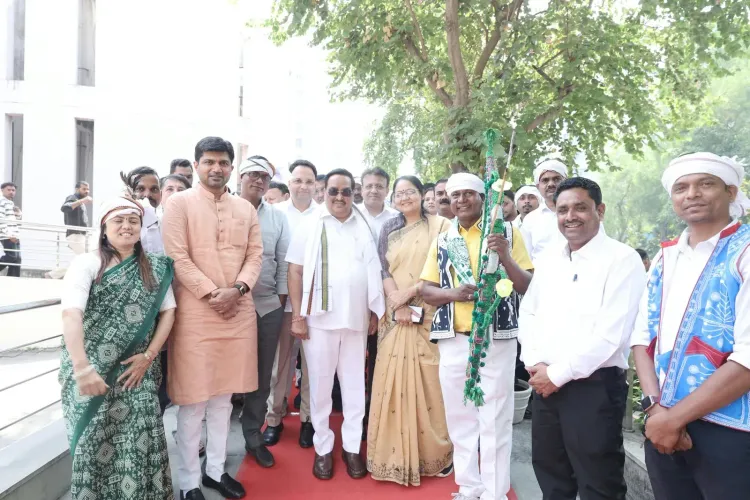
Union Jal Shakti Minister C. R. Paatil attended Janjatiya Gaurav Diwas at Pal, Surat, on 15 November 2026, marking Bhagwan Birsa Munda's 151st birth anniversary and honouring tribal culture and contributions to India's freedom struggle.
Key Takeaways
Paatil attended Janjatiya Gaurav Diwas celebrations at Pal, Surat on 15 November 2026 .
The event was co-organised by the Tribal Development Department, Gujarat Government and the Surat Municipal Corporation .
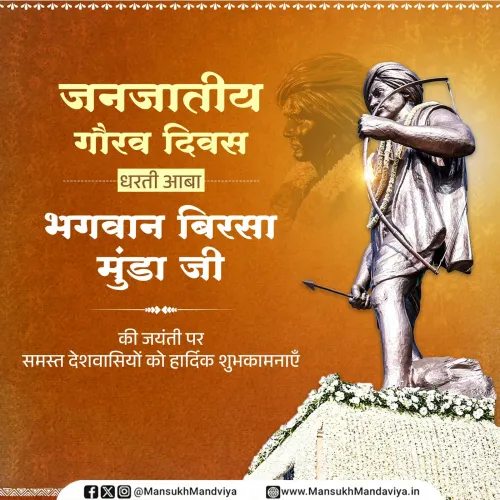
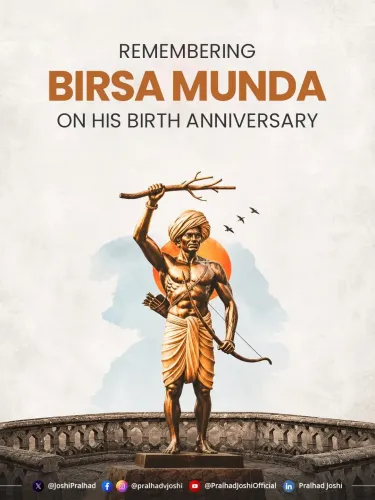
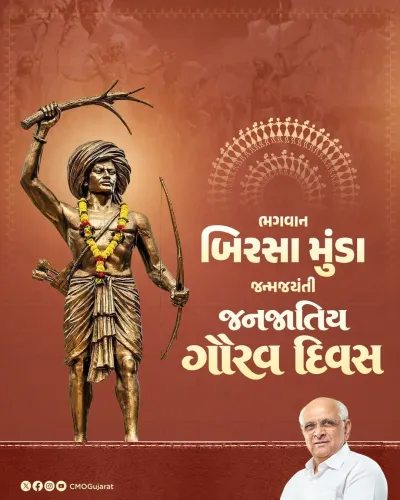
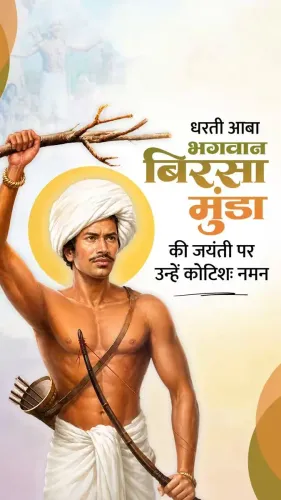
The occasion marked the 151st birth anniversary of Bhagwan Birsa Munda , revered as Dharti Aaba (Father of the Earth).
Janjatiya Gaurav Diwas was formally instituted by the Government of India in 2021 to honour tribal contributions to the freedom movement.
Paatil linked tribal welfare efforts to PM Narendra Modi 's 'Sabka Saath, Sabka Vikas, Sabka Vishwas, Sabka Prayas' inclusive-development framework.
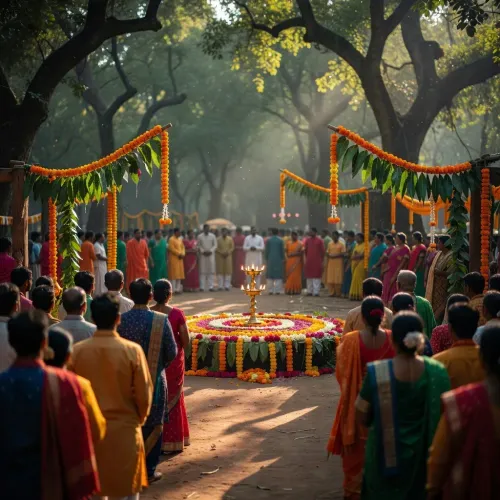
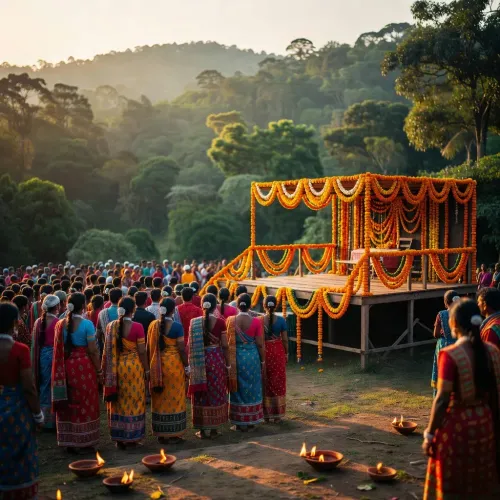
Vibrant Adivasi folk-dance performances at the venue showcased tribal culture, tradition, and the community's bond with nature.
On the 151st birth anniversary of Bhagwan Birsa Munda, Union Jal Shakti Minister C. R. Paatil joined thousands at Pal, Surat on 15 November 2026 to celebrate Janjatiya Gaurav Diwas — a national observance that places the Adivasi freedom fighter at the very centre of India's independence story.
The event was jointly organised by the Tribal Development Department of the Gujarat Government and the Surat Municipal Corporation. Paatil described the gathering as a moment of deep joy, writing in Gujarati: 'aananddni laagaNi anubhavi' — 'experienced a feeling of joy' — as vibrant tribal folk-dance performances brought alive the richness of Adivasi culture, tradition, and bond with nature.
Birsa Munda: the 'Dharti Aaba' who defied an empire
Birsa Munda, born on 15 November 1875 in present-day Jharkhand, led the Ulgulan — the Great Tumult — a rebellion that took on British colonial land laws and missionary cultural encroachment simultaneously. He died in British custody in 1900, aged just 25, but his legacy as Dharti Aaba (Father of the Earth) has only grown larger. He remains the only tribal leader whose portrait hangs in the Central Hall of Parliament.
Paatil invoked that legacy directly: Birsa Munda's struggle for self-respect, freedom, and the protection of culture against injustice, he said, 'remains an inspiration for all even today.' The minister also underlined that the contribution of Adivasi society to nation-building is 'priceless.'
How 15 November became a national day of tribal pride
The Government of India formally declared 15 November as Janjatiya Gaurav Diwas in 2021, anchoring the annual observance to Birsa Munda's birth anniversary. The move was designed to institutionalise recognition of tribal communities' role in the freedom movement — a chapter long underweighted in mainstream historical memory. Since then, state governments and municipal bodies across the country have held parallel events, transforming a single date into a nationwide, ground-level celebration of Adivasi heritage.
Modi's 'Sabka Saath' framework and tribal outreach
Paatil tied the celebration to Prime Minister Narendra Modi's signature four-part development mantra: 'Sabka Saath, Sabka Vikas, Sabka Vishwas, Sabka Prayas' — 'Together with all, development for all, trust of all, effort of all.' He reaffirmed collective commitment to the holistic development of Adivasi communities under this framework.
The linkage is deliberate. Events like the Surat gathering serve a dual purpose: honouring a historical icon while reinforcing the present government's inclusive-development messaging among Scheduled Tribe populations — a constituency that cuts across multiple competitive states. Gujarat alone has a significant Adivasi belt across its eastern districts, and Surat's tribal-diaspora community adds another layer of political and cultural relevance to hosting such an event in the city.
Paatil closed his post with the salutation 'Koti koti vandan' — a million-fold reverence — to Bhagwan Birsa Munda, the rebel the British colonial system could imprison but could never erase.
Point of View
With senior BJP leaders attending state and local events to reinforce the party's tribal-welfare narrative ahead of competitive electoral cycles. By placing Birsa Munda's legacy alongside PM Modi's 'Sabka Saath' slogan, Paatil's appearance in Surat signals the Centre's intent to deepen its connect with Scheduled Tribe voters in Gujarat's Adivasi belt — a region that has historically seen multi-party competition. The institutionalisation of the day in 2021 has given the ruling dispensation an annual, nationally coordinated platform to shape how tribal history is remembered and politically mobilised. Whether development outcomes match the symbolic investment will determine how durable this outreach proves over time.
NationPress
15 Nov 2026
Frequently Asked Questions
What is Janjatiya Gaurav Diwas and when is it celebrated?
Janjatiya Gaurav Diwas is a national observance celebrated on 15 November every year to honour the contributions of tribal communities to India's freedom struggle. It was formally declared by the Government of India in 2021 to coincide with the birth anniversary of Bhagwan Birsa Munda .
Who was Birsa Munda?
Birsa Munda was a 19th-century tribal leader born on 15 November 1875 in present-day Jharkhand. He led the Ulgulan rebellion against British colonial land laws and is revered as Dharti Aaba — Father of the Earth — across Adivasi communities. He died in British custody in 1900 at the age of 25.
What happened at the Janjatiya Gaurav Diwas event in Surat in 2026?
The event at Pal, Surat on 15 November 2026 was organised by the Tribal Development Department of the Gujarat Government and the Surat Municipal Corporation . It featured tribal folk-dance performances celebrating Adivasi culture, and was attended by Union Jal Shakti Minister C. R. Paatil .
What is 'Sabka Saath, Sabka Vikas, Sabka Vishwas, Sabka Prayas'?
It is Prime Minister Narendra Modi 's four-part inclusive-development slogan, translating to 'Together with all, development for all, trust of all, effort of all.' It frames the central government's stated commitment to ensuring no community is left out of India's growth story, including tribal populations.
What is C. R. Paatil's role in the government?
C. R. Paatil is the Union Minister of Jal Shakti in the Government of India. He is also a senior BJP leader and former president of the BJP's Gujarat state unit.