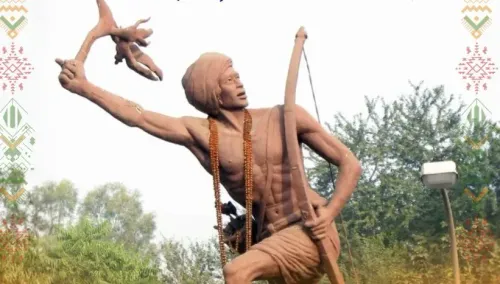
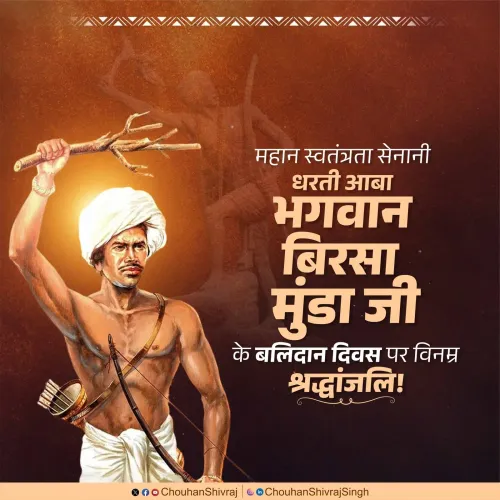
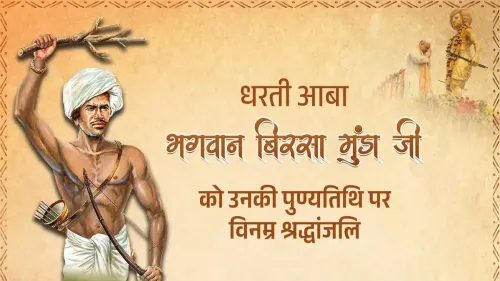
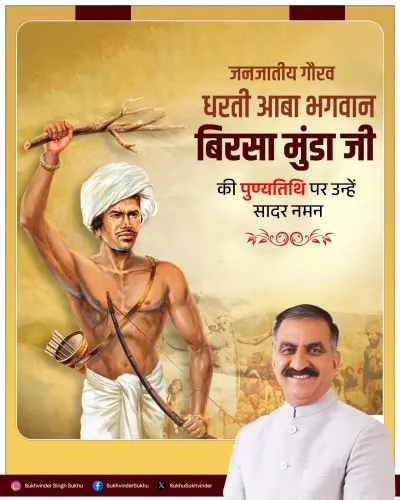
Chirag Paswan pays tribute to Birsa Munda on death anniversary
Synopsis
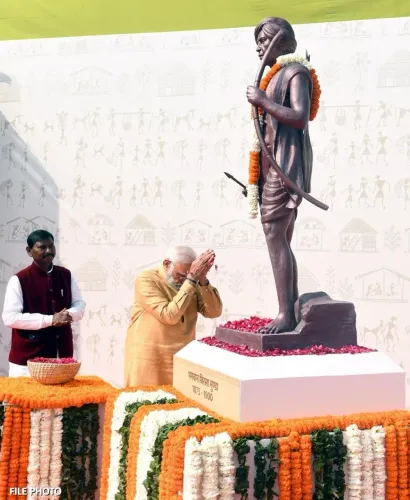
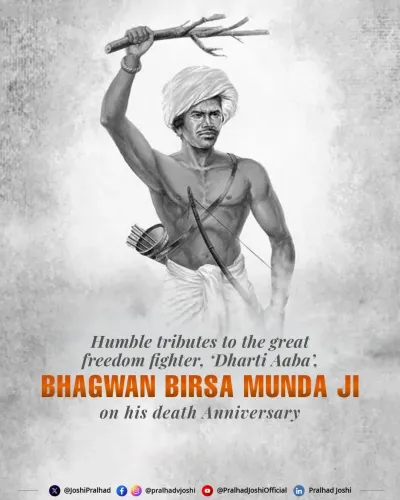
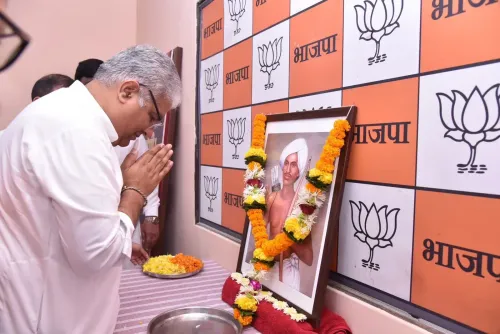
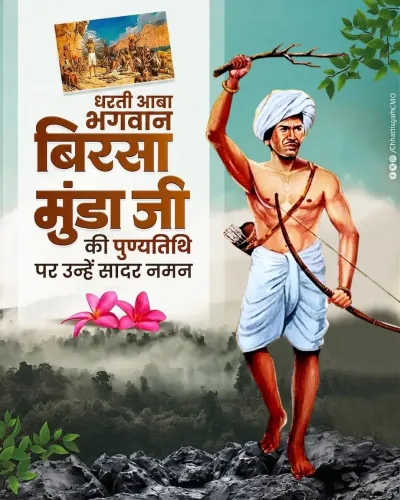
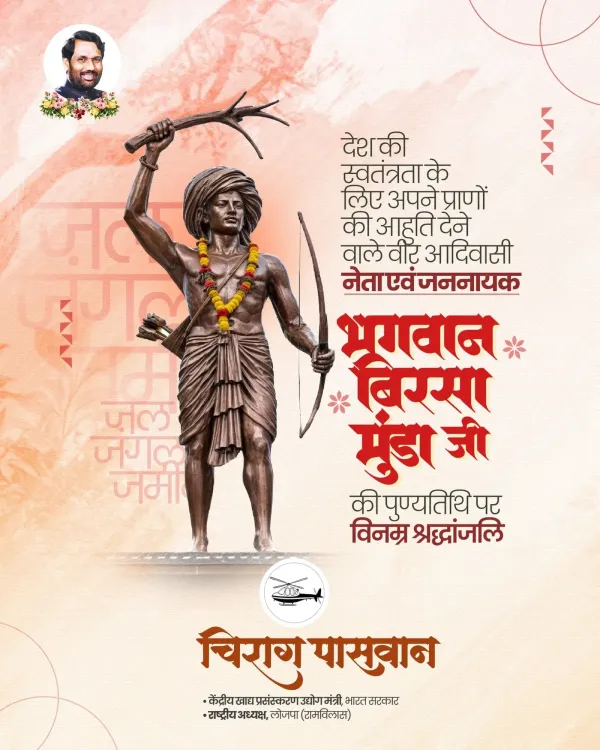
Union Food Processing Minister Chirag Paswan on 9 June 2026 paid homage to Birsa Munda on his death anniversary, calling the tribal icon a great people's hero and symbol of Adivasi identity who fought for jal-jungle-zameen rights and freedom against British colonial rule.
Key Takeaways
Union Food Processing Minister Chirag Paswan posted a tribute to Birsa Munda on 9 June 2026 , the tribal leader's death anniversary.
Birsa Munda (1875–1900) led the Ulgulan movement from the Chotanagpur region, fighting for tribal rights over land, forests and water.
Paswan described Munda as a symbol of adivasi asmita (tribal identity) and a champion of jal-jungle-zameen (water, forest, land) rights.
The tribute reflects the national political significance of Adivasi communities across Jharkhand , Bihar and central India.
The Forest Rights Act, 2006 is the primary legislative recognition of the land and forest rights that Birsa Munda's movement originally demanded.
Leaders across parties issue similar tributes on 9 June , underlining the electoral salience of Scheduled Tribe voters in eastern and central India.
Union Food Processing Minister Chirag Paswan on Tuesday, 9 June 2026 paid homage to tribal icon Birsa Munda on his death anniversary, hailing the 19th-century leader as a great champion of the people who fought for the rights of land, forests and water and for freedom.
Posting in Hindi on X, Paswan described Munda as 'mahaan jannayak' (a great people's hero) and 'adivasi asmita ke pratik' (a symbol of tribal identity), offering what he called 'koti-koti naman evam bhaavpurn shraddhanjali' — countless salutations and heartfelt tribute.
Context
Birsa Munda, born in 1875 in the Chotanagpur region of present-day Jharkhand, led the Ulgulan (Great Tumult) movement against British colonial encroachment on tribal lands and forests. He died on 9 June 1900 in British custody at the age of just 25, and has since been venerated across central and eastern India as a martyr and protector of tribal rights. The three-word phrase jal-jungle-zameen — water, forest, land — that Paswan invoked in his post is directly associated with Munda's legacy and remains a rallying call for tribal communities to this day.
Policy Backdrop
The rights Birsa Munda fought for found partial legislative recognition more than a century later through the Scheduled Tribes and Other Traditional Forest Dwellers (Recognition of Forest Rights) Act, 2006, which legally acknowledged individual and community rights of tribal communities over forest land and resources. Jharkhand, carved out of Bihar in 2000, encompasses the historic Chotanagpur plateau and retains one of the largest Scheduled Tribe populations in the country, making tribal welfare a perennially significant policy and political issue in the region. The central government has in recent years named welfare programmes and public infrastructure after Birsa Munda to reinforce the connection between contemporary policy and tribal heritage.
Stakeholders and Impact
Tributes to Birsa Munda on his death anniversary draw participation from political leaders across party lines, reflecting the broad electoral salience of Adivasi communities in Jharkhand, Bihar, Odisha, Chhattisgarh and West Bengal. As national president of the Lok Janshakti Party (Ram Vilas) and a Union minister from Bihar, Paswan's public tribute signals continued national-level engagement with tribal identity and the jal-jungle-zameen discourse. For Adivasi communities, such statements by senior ministers carry symbolic weight regarding the government's stated commitment to forest and land rights.
What's Next
State-level commemorative events in Jharkhand and Bihar are expected around this anniversary, often accompanied by announcements on tribal welfare schemes or infrastructure projects. With the monsoon session of Parliament approaching, references to Birsa Munda's legacy and tribal rights legislation could feature in floor discussions on forest rights and land policy. The broader pattern of national leaders invoking tribal icons is likely to intensify ahead of assembly elections in states with significant Scheduled Tribe constituencies.
Point of View
Directed at Adivasi communities whose votes are decisive across Jharkhand, Bihar and Odisha. The invocation of jal-jungle-zameen — the core demand of Munda's Ulgulan movement — connects a 19th-century tribal assertion to present-day debates over the Forest Rights Act and land acquisition policy. As LJP (Ram Vilas) seeks to consolidate its standing among Scheduled Tribe and Scheduled Caste voters in eastern India, such symbolic communication reinforces the party's alignment with tribal heritage. The timing, ahead of a likely monsoon session of Parliament, also positions the party to participate in any legislative discussion on tribal welfare.
NationPress
23 Oct 2026
Frequently Asked Questions
Who was Birsa Munda and why is 9 June significant?
Birsa Munda was a tribal leader from the Chotanagpur region (present-day Jharkhand ) who led the Ulgulan movement against British colonial encroachment on tribal lands and forests. He died on 9 June 1900 in British custody at age 25 , and his death anniversary is observed as a day of tribute across India.
What does jal-jungle-zameen mean?
Jal-jungle-zameen is a Hindi phrase meaning 'water, forest, land.' It encapsulates the core demand of tribal movements, particularly associated with Birsa Munda's legacy, asserting the rights of Adivasi communities over their natural resources and habitat.
Why did Chirag Paswan pay tribute to Birsa Munda?
Chirag Paswan , as Union Food Processing Minister and national president of Lok Janshakti Party (Ram Vilas) , posted a tribute on 9 June 2026 to mark Birsa Munda's death anniversary — a practice common among Indian political leaders to honour the tribal icon and connect with Adivasi communities.
What is the Forest Rights Act and how does it relate to Birsa Munda?
The Scheduled Tribes and Other Traditional Forest Dwellers (Recognition of Forest Rights) Act, 2006 legally recognised the rights of tribal communities over forest land and resources — the very rights that Birsa Munda fought for over a century earlier through the Ulgulan movement.
Which states have significant Adivasi populations relevant to Birsa Munda's legacy?
Jharkhand — carved out of Bihar in 2000 and home to the historic Chotanagpur plateau — has the most direct connection to Birsa Munda's legacy. Bihar , Odisha , Chhattisgarh and West Bengal also have large Scheduled Tribe populations for whom his memory remains politically and culturally significant.