Giriraj Singh Extends Chhath Puja Wishes, Hails Festival's Green Soul
Synopsis
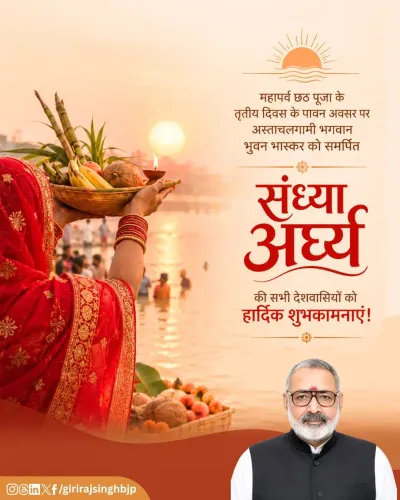
Union Textiles Minister Giriraj Singh greeted the nation on Chhath Puja 2026, highlighting the festival's equal veneration of the rising and setting sun as a reflection of India's cultural harmony and environmental gratitude.
Key Takeaways
Giriraj Singh posted Chhath Puja greetings on 15 November 2026 , addressing all Indians and his Bihar constituents specifically.
He described Chhath as a festival of faith, discipline, purity, and values — not merely a religious occasion.
Singh emphasised the festival's unique tradition of offering arghya to both the rising and the setting sun as a marker of cultural depth.
He framed Chhath as a symbol of reverence and gratitude toward nature and the environment .
As Lok Sabha MP from Begusarai, Bihar , Singh expressed personal pride in being Bihari.
He prayed to Chhathi Maiya for Bihar and the entire nation's happiness, prosperity, and development.
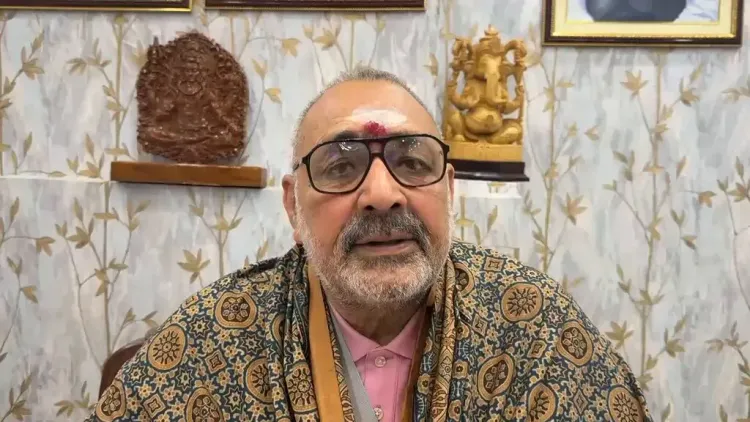
When a Bihari politician says 'ek Bihari hone ke naate mujhe garv hai' — 'as a Bihari, I am proud' — on the morning of Chhath Puja, it is more than a seasonal greeting. Union Textiles Minister Giriraj Singh extended heartfelt wishes to the nation and to his brothers and sisters in Bihar on Sunday, 15 November 2026, calling the festival an unparalleled celebration of faith, discipline, purity, and enduring values.
In his post, Singh described Chhath as a symbol of reverence and gratitude toward nature and the environment — a dimension of the festival that often gets overshadowed by its spectacular riverbank imagery. He wrote that the festival's defining spirit lies in the equal veneration offered to both the rising and the setting sun, adding: 'This reflects the beauty, harmony, and life values of our culture.'
The Sun That Sets Is Worshipped Too
That detail — the arghya (ritual water offering) given to the sun as it dips below the horizon — is what sets Chhath apart from virtually every other solar festival in the Hindu calendar. Most sun-worship traditions celebrate the ascending, victorious arc. Chhath alone insists on honouring the declining sun with equal devotion, a philosophy of gratitude that extends to endings, not just beginnings. It is the kind of lived theology that travels well: Bihari communities in Delhi, Mumbai, and across the Indian diaspora now carry Chhath to riverbanks and urban lakesides far beyond its eastern heartland.
Bihar's Biggest Festival and Its National Footprint
Chhath Puja is a four-day observance rooted in Bihar's agrarian and riverine traditions, observed on the Shashthi tithi of the Kartik month in the Hindu lunar calendar. Fasting, holy dips, and the offering of seasonal produce to the sun god mark a cycle that demands remarkable physical discipline — devotees stand waist-deep in rivers for extended periods, often in the early-morning cold. The festival's emphasis on personal austerity and environmental stewardship has drawn renewed national attention as river-cleaning initiatives tie themselves to its ethos.
Singh, the Lok Sabha MP from Begusarai — a constituency in the Mithila-Bhojpur belt where Chhath sentiment runs deep — closed his post with a prayer to Chhathi Maiya that Bihar and the whole country continue on a path of happiness, prosperity, and development. 'Jai Chhathi Maiya!' he signed off.
For a minister whose political base is woven into the social fabric of Bihar, the post does double duty: it is genuine cultural expression and a reminder to the state's vast electorate — including millions who celebrate Chhath far from home — that their representative shares their calendar, their river, and their prayer.
Point of View
Public identification with Chhath strengthens his Begusarai base ahead of any electoral cycle. The post's reach beyond Bihar — invoking the whole nation — also signals an attempt to elevate Chhath's national political salience.
NationPress
15 Nov 2026
Frequently Asked Questions
What is Chhath Puja and why is it important?
Chhath Puja is a four-day Hindu festival celebrated mainly in Bihar and eastern Uttar Pradesh, involving ritual offerings of water and seasonal produce to the sun god. It is considered Bihar's most significant public religious observance and has spread nationally as Bihari communities celebrate it across India and abroad.
Why does Chhath Puja offer arghya to the setting sun?
Unlike most solar festivals that only honour the rising sun, Chhath uniquely venerates the setting sun too — a tradition symbolising gratitude for all phases of life, not just the ascendant ones. This equal reverence is widely cited as the festival's defining philosophical distinction.
Who is Giriraj Singh and what is his Bihar connection?
Giriraj Singh is India's Union Minister of Textiles and a senior BJP leader. He is the Lok Sabha MP from Begusarai, Bihar, and has long identified closely with Bihari cultural identity and the state's development narrative.
What did Giriraj Singh say about Chhath 2026?
He called Chhath an 'unparalleled festival of faith, discipline, purity, and values,' described it as a symbol of nature-reverence, highlighted the dual arghya to both the rising and setting sun, expressed pride in being Bihari, and prayed for Bihar and India's prosperity.
Is Chhath Puja only celebrated in Bihar?
While Bihar is Chhath's heartland, the festival is now celebrated widely in Delhi, Mumbai, and by the Indian diaspora globally, as Bihari migrant communities carry the tradition to their new homes.