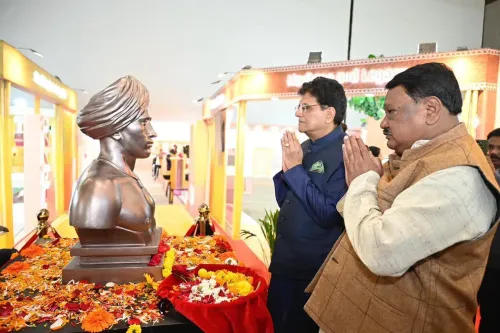
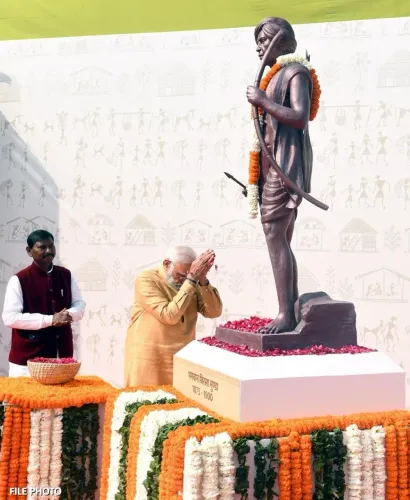
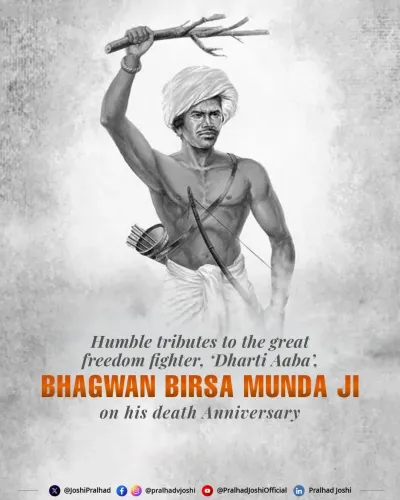
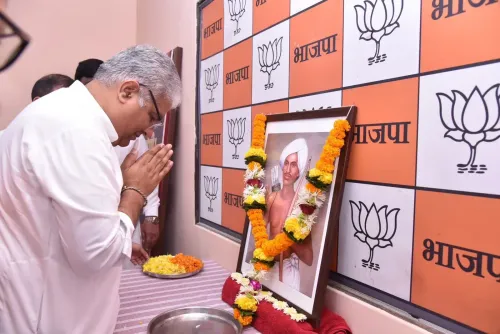
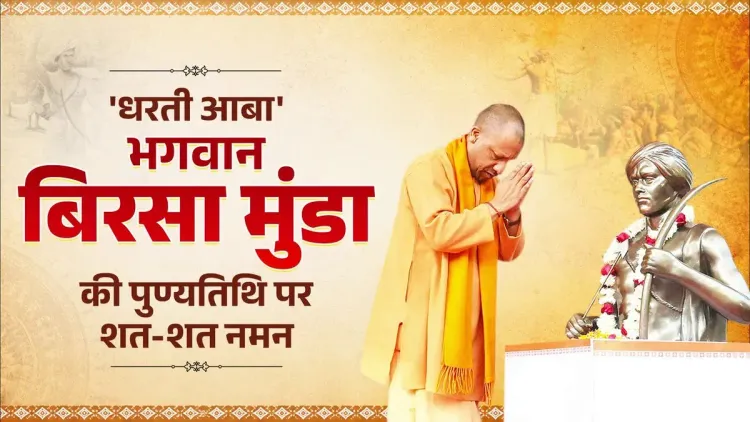
CM Yogi pays tribute to Birsa Munda on death anniversary
Synopsis
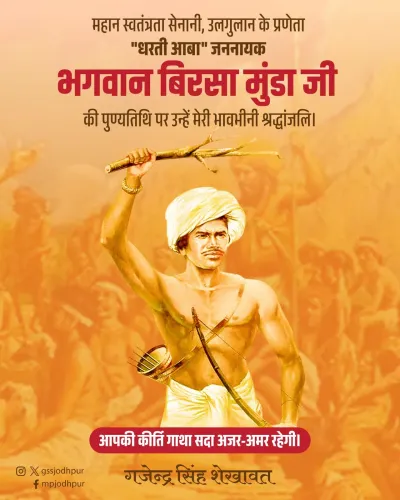
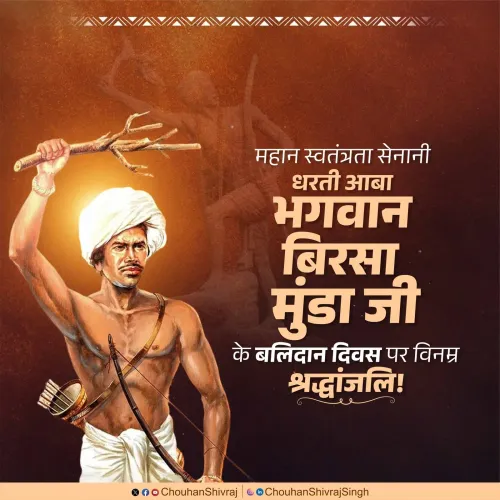
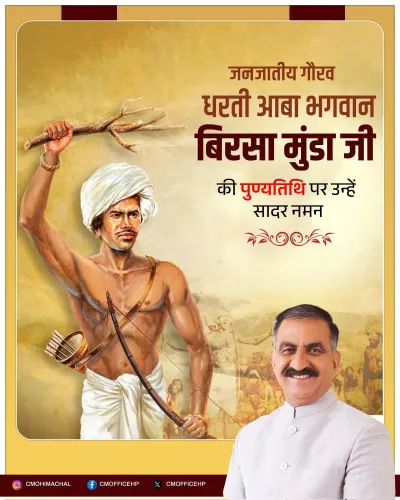
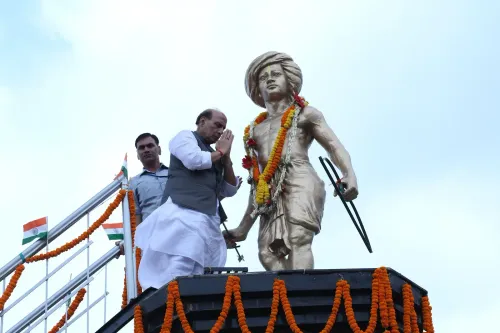
Uttar Pradesh Chief Minister Yogi Adityanath on 9 June 2026 paid tribute to tribal icon Birsa Munda on his death anniversary, saluting the Ulgulan leader's sacrifice and his enduring inspiration for India's freedom struggle.
Key Takeaways
CM Yogi Adityanath offered homage to Birsa Munda on his death anniversary, 9 June 2026 , via a post on X.
Birsa Munda ( 1875–1900 ), known as Dharti Aaba , led the Ulgulan uprising against British colonial land policies in the Chotanagpur region.
The Chief Minister described Munda's life as 'an immortal inspiration for India,' citing his sacrifice and devotion to the nation.
The Government of India designated 15 November as Janjatiya Gaurav Diwas in 2021 to honour tribal contributions to the freedom movement.
BJP leaders regularly commemorate Adivasi freedom fighters as part of a sustained effort to integrate tribal icons into the national independence narrative.
Uttar Pradesh Chief Minister Yogi Adityanath on Tuesday, 9 June 2026 paid homage to tribal freedom fighter Birsa Munda on his death anniversary, honouring the leader's role in galvanising India's independence struggle against British colonial rule.
Posting on X in Hindi, CM Yogi offered a hundredfold salute — shat-shata naman — to Birsa Munda, reverentially addressed as 'Dharti Aaba' (Father of the Earth). He described Munda as the man who gave 'new energy to tribal self-respect against the injustice of British rule' and 'a new direction to India's freedom struggle through the immortal proclamation of Ulgulan.' The Chief Minister added that Munda's life, 'illuminated by sacrifice, penance and devotion to the nation, is an immortal inspiration for India.'
Context
Birsa Munda (1875–1900) was a Munda tribal leader from the Chotanagpur region of present-day Jharkhand. Revered as Dharti Aaba, he combined religious revivalism with armed resistance to British land policies and the exploitation of tribal communities by local landlords. He died on 9 June 1900 in British custody at Ranchi Jail, aged just 25.
The Ulgulan — literally 'the Great Tumult' — was the late-1890s Munda uprising he led. It remains one of the most significant tribal revolts of the colonial era, directly challenging the diku (outsider) landlord system and demanding restoration of traditional forest and land rights.
Policy Backdrop
In 2021, the Government of India notified 15 November — Birsa Munda's birth anniversary — as Janjatiya Gaurav Diwas (Tribal Pride Day) to formally honour tribal contributions to the freedom struggle. The move placed Adivasi icons at the centre of the national independence narrative.
Since 2014, the central government has paired such symbolic recognition with administrative initiatives targeting tribal districts, including the PM JANMAN scheme aimed at particularly vulnerable tribal groups and revisions to the Forest Rights Act. Tributes from BJP leaders to figures such as Birsa Munda form a consistent part of this broader political and policy outreach to Adivasi communities.
Stakeholders and Impact
India's Adivasi population — estimated at over 10 crore people and constituting roughly 8.6 per cent of the national population — holds Birsa Munda as a central cultural and political symbol. Commemorations of his death anniversary carry weight across tribal belts in Jharkhand, Odisha, Chhattisgarh, Madhya Pradesh, and parts of West Bengal.
For Uttar Pradesh, which has a significant Scheduled Tribe population concentrated in districts such as Sonbhadra and the Terai belt, such tributes from the Chief Minister reinforce the state government's stated commitment to tribal welfare and cultural recognition.
What's Next
National attention on tribal heritage is expected to intensify again around 15 November 2026, when Janjatiya Gaurav Diwas will mark Birsa Munda's birth anniversary with government-organised commemorations. Any fresh state-level announcements on tribal welfare schemes or memorial projects in Uttar Pradesh and Jharkhand in the months ahead will be watched closely by Adivasi rights groups and political observers alike.
Point of View
Countering the perception that the party's historical imagination is limited to upper-caste or north Indian figures. The invocation of the Ulgulan — a rebellion rooted in land rights and anti-colonial resistance — is politically significant given ongoing debates around forest and tribal land protections. Such commemorations also serve a direct electoral function, targeting tribal voter blocs spread across competitive states including Jharkhand, Chhattisgarh, and Odisha. The pattern suggests that symbolic recognition and welfare-scheme branding will continue to operate in tandem as the BJP's twin instruments of Adivasi outreach.
NationPress
24 Sept 2026
Frequently Asked Questions
Who was Birsa Munda and why is he called Dharti Aaba?
Birsa Munda ( 1875–1900 ) was a Munda tribal leader from the Chotanagpur region who led the Ulgulan uprising against British colonial rule and landlord exploitation. He is called Dharti Aaba , meaning 'Father of the Earth,' in recognition of his role as a protector of tribal land and community rights.
When did Birsa Munda die and how?
Birsa Munda died on 9 June 1900 in British custody at Ranchi Jail , aged 25 . The exact cause of death was recorded as cholera by colonial authorities, though the circumstances have long been a subject of scrutiny.
What was the Ulgulan rebellion?
The Ulgulan — meaning 'the Great Tumult' — was a late-1890s armed uprising led by Birsa Munda in the Chotanagpur region. It combined religious revivalism with resistance to British land policies and the diku (outsider) landlord system that displaced tribal communities from their forests and lands.
What is Janjatiya Gaurav Diwas and when is it observed?
Janjatiya Gaurav Diwas (Tribal Pride Day) is observed on 15 November each year, the birth anniversary of Birsa Munda . The Government of India notified the day in 2021 to formally honour the contributions of tribal communities to India's freedom struggle.
Why did CM Yogi Adityanath pay tribute to Birsa Munda?
CM Yogi Adityanath paid tribute on 9 June 2026 , which marks the death anniversary of Birsa Munda . The homage is part of a broader pattern among BJP leaders of commemorating Adivasi freedom fighters to honour tribal contributions to the national independence movement.