China shares Chang'e-6 far-side moon samples with Russia
Synopsis
China has shared 1.5 grams of far-side lunar soil from the Chang'e-6 mission with Russian scientists — the first such transfer to a foreign body — as the two nations deepen space ties that US law prevents Washington from matching.
Key Takeaways
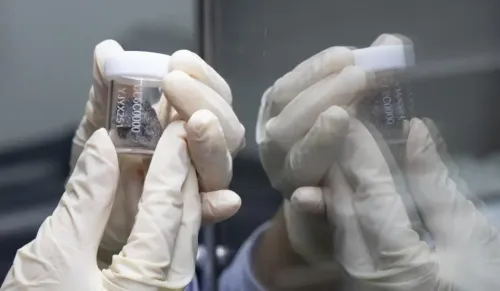
On June 3, 2026 , China transferred 1.5 grams of far-side lunar soil to the Planetary Physics Department of the Russian Space Research Institute .
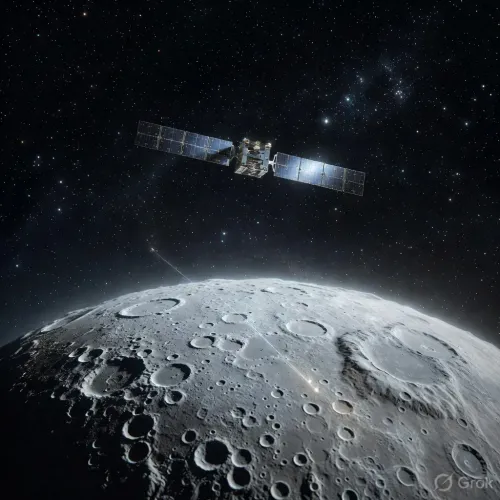
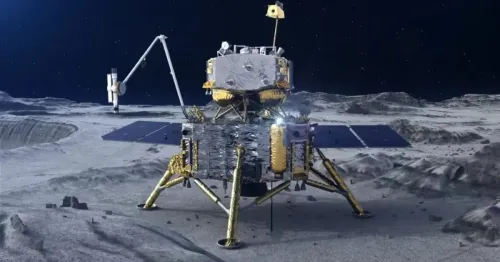
The samples were collected by the Chang'e-6 lunar lander, the first mission ever to retrieve material from the moon's far side.
Russian researchers will focus on identifying volatile compounds preserved in the lunar soil, which could inform future human settlement on the moon.
The handover was conducted under a bilateral agreement between Russia and China on the study of extraterrestrial matter from the moon, planets, and other solar system bodies.
The Wolf Amendment bars NASA from direct collaboration with CNSA , leaving the US without access to these scientifically unique far-side specimens.
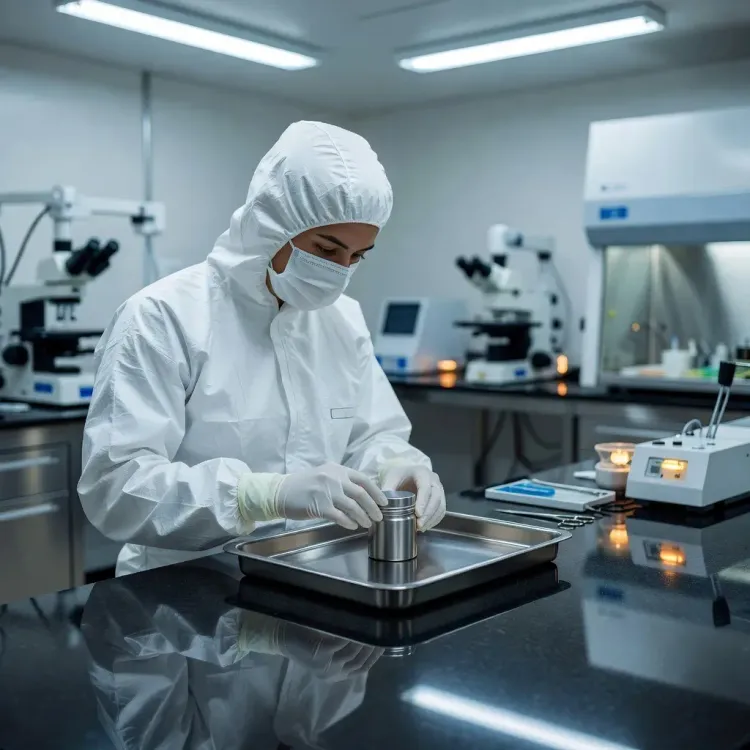
China has transferred a portion of lunar soil collected from the far side of the moon to Russian scientists, marking a significant milestone in Sino-Russian space cooperation. On June 3, 2026, 1.5 grams of lunar material gathered by the Chang'e-6 mission were formally handed over to the Planetary Physics Department of the Russian Space Research Institute.
Historic Handover of Far-Side Lunar Soil
The transfer represents the first time samples from the lunar far side have been shared with a foreign scientific body. The Chang'e-6 mission, operated by the China National Space Administration (CNSA), successfully retrieved material from the moon's far side — a region never sampled before — making these 1.5 grams among the most scientifically valuable extraterrestrial specimens ever collected. 'The transfer of the soil samples took place as part of the development of cooperation in space science and lunar exploration between Russia and China,' the Russian Space Research Institute said in a statement.Why It Matters: The Search for Volatile Compounds
Russian researchers will analyse the lunar material with a particular focus on identifying volatile compounds — substances such as water ice, carbon dioxide, and other gases — that may have been preserved within the soil's constituent minerals over billions of years. 'Researchers will study the composition of lunar material. Of particular interest is the search for volatile compounds that may have been preserved in the lunar soil as part of its constituent minerals,' the institute noted. Understanding these compounds could illuminate the moon's geological and chemical history, and critically, could inform the design of future self-sustaining human settlements on the lunar surface — a priority for both nations' long-term space programmes.The Cooperative Framework Behind the Transfer
The handover was conducted under a joint bilateral agreement between Russia and China covering the study of extraterrestrial matter, including samples from the moon, planets, and other solar system bodies. This framework positions the two countries as close partners in deep-space science at a time when NASA remains barred from direct collaboration with CNSA under the Wolf Amendment, the US congressional restriction that has effectively excluded American scientists from accessing Chinese lunar samples.Competitive Backdrop: China vs. the West in Lunar Science
The Chang'e-6 mission built on the success of Chang'e-5, which returned 1.73 kilograms of near-side lunar soil in 2020 — the first new lunar samples since the Soviet Union's Luna 24 mission in 1976. While NASA's Apollo programme collected around 382 kilograms of lunar material between 1969 and 1972, none of it came from the far side. China now holds an exclusive scientific advantage over that dataset, and the decision to share samples with Russia — rather than Western partners — underscores the geopolitical dimension of lunar exploration. Former NASA administrator Bill Nelson had previously warned that the US and China are in a space race, with the moon as a central prize. As both nations accelerate plans for permanent lunar infrastructure, the scientific findings from these far-side samples — particularly any confirmation of accessible volatile compounds — could prove decisive in shaping the next phase of that contest.Point of View
Originally intended to constrain China, has instead handed Beijing a soft-power instrument — the ability to selectively share irreplaceable data with strategic partners. Mainstream coverage tends to frame this as a science story, but the real story is about who controls access to the solar system's most valuable new dataset. If volatile compounds are confirmed in significant quantities, these 1.5 grams could shape trillion-dollar decisions about where and how humanity builds its first off-Earth infrastructure.
NationPress
26 Oct 2026
Frequently Asked Questions
What lunar samples did China give to Russia?
China transferred 1.5 grams of lunar soil collected from the far side of the moon by the Chang'e-6 mission to the Planetary Physics Department of the Russian Space Research Institute on June 3, 2026 . These are the first far-side lunar samples ever shared with a foreign scientific institution.
Why are Chang'e-6 far-side moon samples scientifically important?
The far side of the moon has never previously been sampled, making Chang'e-6 specimens uniquely valuable. Russian researchers plan to study them for volatile compounds — such as water ice or trapped gases — that could reveal the moon's geological history and guide the design of future self-sustaining lunar settlements.
Can NASA access China's lunar samples?
No. The Wolf Amendment , a US congressional restriction, bars NASA from direct collaboration with the China National Space Administration (CNSA) , effectively preventing American scientists from accessing Chang'e-6 or any other Chinese lunar samples. This gives Russia and other Chinese partner nations a significant scientific advantage.
What is the China-Russia agreement on space samples?
China and Russia have a bilateral agreement covering the joint study of extraterrestrial matter, including samples from the moon, planets, and other solar system bodies. The Chang'e-6 soil transfer was conducted under this framework as part of broader cooperation in space science and lunar exploration.
How does Chang'e-6 compare to Apollo and Chang'e-5?
NASA 's Apollo programme collected approximately 382 kilograms of lunar material between 1969 and 1972 , but exclusively from the near side. Chang'e-5 returned 1.73 kilograms of near-side soil in 2020 . Chang'e-6 is the only mission to have retrieved samples from the far side, giving China a dataset with no historical equivalent.