China merges lunar programmes amid intensifying US moon race
Synopsis
China merged its crewed and robotic lunar programmes into a single mission on 24 May 2026 — the day after SpaceX's most powerful Starship launch yet — in a move that crystallises the intensifying US-China race to put boots on the moon.
Key Takeaways
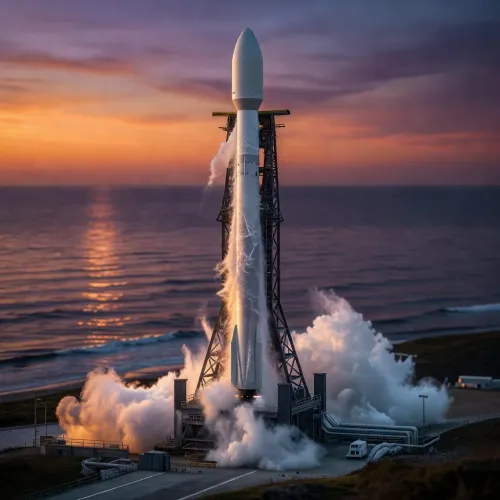
China Manned Space Agency announced the merger of its crewed and uncrewed lunar programmes on Saturday, 24 May 2026 , one day after SpaceX launched its most powerful Starship to date.
Agency spokesman Zhang Jingbo said the goal is to leverage decades of experience from both the crewed spaceflight programme and the Chang'e lunar exploration missions.
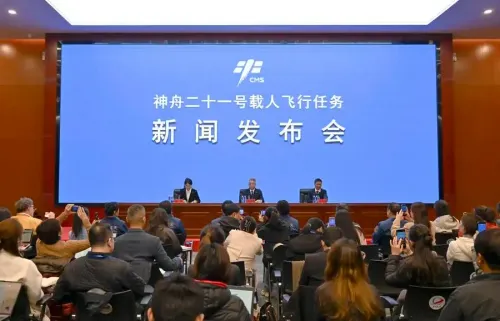
Senior engineer Zhou Yaqiang confirmed the integration process is 'progressing smoothly.' The announcement was made at the Jiuquan Satellite Launch Centre during a press conference.
Zhou Yaqiang stated China is 'not competing with other countries in space' and that its programme is 'not subject to interference from any factors.' Long March rockets, Tiangong station experience, and Chang'e robotic heritage are all expected to feed into the unified lunar architecture.
China has announced the consolidation of its crewed and uncrewed lunar landing programmes into a single integrated mission, with the China Manned Space Agency unveiling the decision on Saturday, 24 May 2026 — one day after SpaceX successfully launched its largest and most powerful Starship rocket. The move signals a sharpening of Beijing's strategic focus as the global race to return humans to the moon accelerates.
The Merger: What Changed and Why
Agency spokesman Zhang Jingbo told a press conference at the Jiuquan Satellite Launch Centre that the integration was designed 'to fully leverage the technical foundations and practical experience accumulated over decades through crewed space programmes and the Chang'e lunar exploration missions.' The decision effectively folds the experience of China's robotic Chang'e probes — several of which have already landed on the moon — into the architecture of its forthcoming human spaceflight effort.
Zhou Yaqiang, a senior engineer at the China Manned Space Agency, told reporters that the process of 'combining experiences and expertise' from the various missions was 'progressing smoothly.' The consolidation is widely seen as an efficiency measure to avoid duplicated infrastructure and accelerate the timeline toward a crewed lunar landing.
Why It Matters
The timing of the announcement — the day after SpaceX's milestone Starship launch — underscores how closely the two space powers are tracking each other's progress. NASA's Artemis programme, which relies on SpaceX's Starship as its lunar lander and Blue Origin's New Glenn-derived systems, is targeting a crewed lunar surface mission in the coming years. China's integrated programme now positions itself as a direct parallel track.
The structural merger also reflects lessons learned from the Tiangong space station programme, where iterative crewed missions built operational depth that China now intends to apply to deep-space objectives.
China's Official Position on the Space Race
When pressed on the US-China moon race at the press conference, Zhou Yaqiang reiterated Beijing's standard posture. 'We carry out the project of crewed lunar exploration under the established plan. We are not competing with other countries in space. Our crewed lunar programme is also not subject to interference from any factors,' he said.
Zhou added: 'When Chinese astronauts land on the moon in the future, this will be a great feat for all of humanity. It will help increase our understanding of space.' The remarks reflect China's consistent framing of its space ambitions as scientific and cooperative rather than geopolitically competitive.
The Competitive Backdrop
Both the US and China are targeting crewed lunar landings within roughly the same window this decade. NASA's Artemis programme uses the Orion capsule alongside Starship as a lander, while China's architecture pairs its next-generation crewed spacecraft with a dedicated lunar lander developed under the integrated programme. Long March heavy-lift rockets are expected to serve as primary launch vehicles on the Chinese side.
What's Next
With the programme merger now formalised, attention will turn to China's next Chang'e mission milestones and the debut flights of its next-generation crewed vehicle. Any acceleration in SpaceX Starship's test cadence — or a concrete Artemis crewed landing date — is likely to influence how publicly Beijing discusses its own schedule going forward.
Point of View
Potentially redundant tracks. What mainstream coverage often glosses over is that this structural integration mirrors exactly what NASA did when it folded its lunar lander procurement under the Artemis umbrella: reducing bureaucratic friction to accelerate timelines. The deeper tension is resource allocation — China must balance its operational Tiangong station commitments with deep-space ambitions using a launch manifest that, unlike SpaceX's rapid-reuse model, still depends heavily on expendable Long March vehicles. If Starship achieves routine reusability, the cost-per-kilogram gap between the two programmes could widen significantly, making China's consolidation move less a sign of strength and more a pragmatic response to that looming asymmetry.
NationPress
7 Oct 2026
Frequently Asked Questions
What did China announce about its moon programme in May 2026?
China's Manned Space Agency announced on 24 May 2026 that it is merging its crewed and uncrewed lunar landing programmes into a single integrated mission. The agency said the goal is to combine the technical foundations of its Chang'e robotic probes with its human spaceflight expertise.
Why did China merge its crewed and uncrewed lunar programmes?
According to agency spokesman Zhang Jingbo, the merger is intended to 'fully leverage the technical foundations and practical experience accumulated over decades' from both the crewed space programme and the Chang'e lunar exploration missions. Senior engineer Zhou Yaqiang added that the integration is 'progressing smoothly.'
Is China in a space race with the United States?
China officially denies it is competing with the US. Zhou Yaqiang stated at the press conference that China 'is not competing with other countries in space' and that its crewed lunar programme is 'not subject to interference from any factors.' However, the announcement came one day after SpaceX's landmark Starship launch, highlighting the parallel timelines of both nations.
How does China's lunar programme compare to NASA's Artemis?
Both programmes are targeting crewed lunar landings within the same broad timeframe this decade. NASA's Artemis uses the Orion capsule and SpaceX's Starship as a lander, while China's integrated programme pairs its next-generation crewed spacecraft with a dedicated lunar lander, with Long March rockets as primary launch vehicles.
What role does the Chang'e programme play in China's crewed moon mission?
The Chang'e robotic lunar exploration missions have provided China with direct surface-landing experience and scientific data about the moon. By merging this heritage into the crewed programme, China aims to reduce development risk and apply proven technologies to its human lunar landing architecture.