NASA's 3 Big Goals: Moon Base, 2028 Landing & Commercial LEO Push
Synopsis
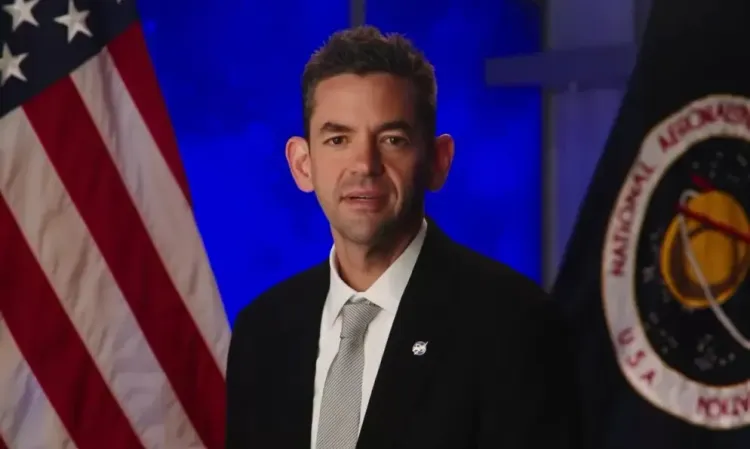
NASA chief Jared Isaacman told Congress the agency has three non-negotiable goals: a Moon landing by 2028, a permanent lunar base, and commercial LEO expansion. The bold vision is shadowed by a proposed 23% budget cut — even as China races toward its own 2030 lunar landing.
Key Takeaways
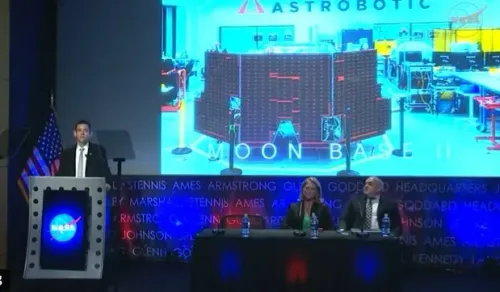
NASA Administrator Jared Isaacman testified before the House Science Committee on April 25, 2025 , outlining three strategic priorities for the US space programme.
Priority one: Return astronauts to the Moon by 2028 through the Artemis programme , increasing launch cadence significantly.
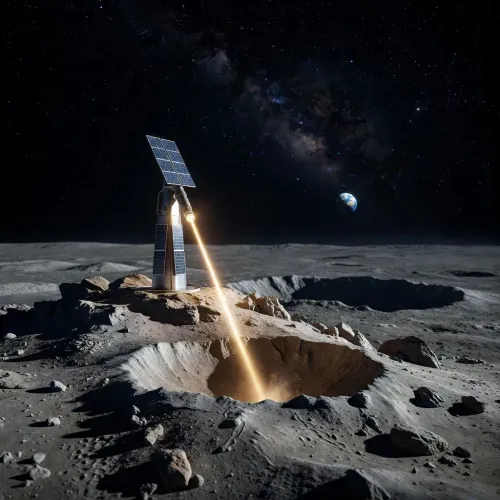
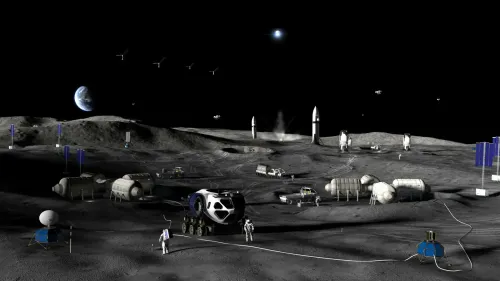
Priority two: Build a permanent lunar base (Moonbase) with landers, rovers, power systems and communications tech, developed alongside private industry.
Priority three: Expand commercial low-Earth orbit activity, including transitioning to privately operated space stations and new monetisation opportunities.
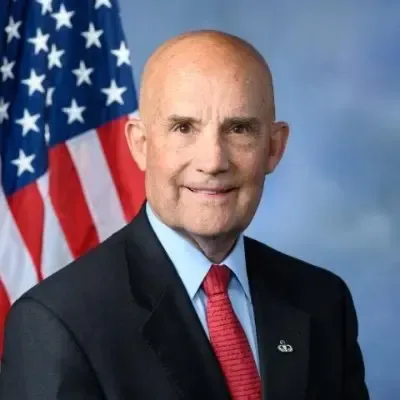
The White House has proposed a ~23% budget cut for NASA, drawing bipartisan concern from lawmakers including Chairman Brian Babin and Ranking Member Zoe Lofgren .
China plans to land its own astronauts on the Moon by 2030 , intensifying pressure on the US to accelerate its lunar programme despite funding constraints.
Washington, April 25 — NASA Administrator Jared Isaacman has outlined three defining priorities for the United States' space programme: returning astronauts to the Moon by 2028, establishing a permanent lunar base, and aggressively expanding commercial partnerships in low-Earth orbit (LEO). Testifying before the House Science Committee, Isaacman framed these goals as the cornerstone of a reformed US space strategy designed to outpace intensifying global competition — particularly from China.
Three Core Pillars of NASA's Renewed Space Vision
Isaacman told lawmakers that the first and most urgent priority is accelerating the Artemis programme to achieve a crewed lunar landing by 2028. "Return to the Moon, increase launch cadence, and land American astronauts on the surface by 2028," he said, echoing the administration's directive for NASA's near-term mission.
The second pillar involves constructing a long-term human presence on the lunar surface — what Isaacman called a "Moonbase" — developed in partnership with private industry. This includes deploying landers, rovers, power systems, and communications technologies capable of supporting sustained operations on the Moon.
The third priority is commercialising low-Earth orbit, transitioning from government-operated infrastructure like the International Space Station (ISS) toward privately owned and operated space stations. Isaacman said the goal is to "work alongside industry to expand commercial astronaut payload and monetisation opportunities."
Reform Over Spending: Isaacman's Efficiency Doctrine
A central theme of Isaacman's testimony was a sharp critique of NASA's historical tendency toward bloated, inefficient programmes. He argued that the agency must shift from large, open-ended spending to targeted investments that produce measurable outcomes.
"We cannot establish programmes that are designed to be too big to fail, but at the same time too costly to succeed," he said — a pointed reference to legacy programmes like the Space Launch System (SLS), which has faced years of delays and billions in cost overruns.
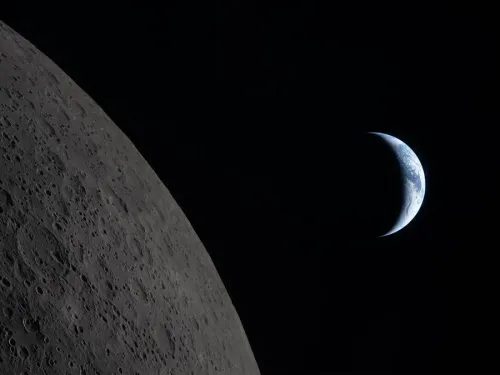
He pointed to the Artemis II mission — which successfully carried astronauts around the Moon and back — as proof that focused execution delivers results. "We showed the world the Moon again, and we showed humanity Earth again," Isaacman told the committee, calling it a moment of global significance.
Under the proposed framework, NASA would cede capabilities like satellite deployment and Earth observation to private companies, concentrating its own resources on high-complexity missions including deep-space exploration and nuclear propulsion systems.
Budget Cuts Spark Bipartisan Alarm on Capitol Hill
The ambitious strategy faces a significant headwind: the White House's proposed budget includes a roughly 23 per cent reduction from the previous year's NASA allocation — one of the steepest cuts in the agency's recent history.
Space Committee Chairman Brian Babin warned that underfunding NASA at this juncture is strategically reckless. "Shortchanging NASA is simply not smart," he said, highlighting that China is rapidly accelerating its own lunar programme and aims to land taikonauts on the Moon by 2030.
Ranking Member Zoe Lofgren argued that the cuts would disproportionately gut scientific and technological programmes outside human exploration. "That's just not a winning strategy," she said, raising alarms about the long-term erosion of US technological leadership.
Other lawmakers flagged concerns about the impact on workforce development, Earth science missions, and aeronautics research, as well as risks associated with over-reliance on commercial providers whose priorities may not always align with national interests.
The China Factor and the Race for Lunar Supremacy
The urgency behind NASA's three-pillar strategy cannot be separated from the geopolitical context. China's National Space Administration (CNSA) has made no secret of its ambitions: Beijing plans to land astronauts on the Moon by 2030 and has been steadily building its Tiangong space station as a potential replacement for the ageing ISS.
This comes amid a broader pattern of US-China technological competition that spans semiconductors, artificial intelligence, and now outer space. Analysts note that whoever establishes a permanent lunar presence first will likely have a decisive advantage in accessing the Moon's resources — including helium-3, a potential fuel for future fusion reactors, and water ice at the lunar south pole critical for long-duration missions.
Notably, NASA was established in 1958 as a direct response to the Soviet Union's Sputnik launch — a reminder that American space ambition has historically been sharpest when a rival is close behind. The current moment echoes that dynamic, with the stakes arguably higher given the Moon's potential as a strategic and resource-rich frontier.
What Comes Next for NASA and the Artemis Programme
Isaacman pledged that NASA would "always follow the law" in implementing congressional appropriations and committed to greater transparency in resource allocation — a response to lawmakers' concerns about accountability under a leaner budget.
He maintained that eliminating inefficiencies and concentrating on core objectives would allow the agency to deliver stronger outcomes even with reduced funding — a claim that will face its first real test as Artemis III, the mission intended to actually land astronauts on the lunar surface, moves toward its scheduled launch window.
The Artemis programme is also widely seen as the critical stepping stone toward eventual crewed missions to Mars — a goal that requires mastering long-duration human spaceflight, in-situ resource utilisation, and deep-space propulsion, all of which depend on sustained lunar operations. How Congress resolves the budget debate in the coming weeks will determine whether that roadmap remains on track or faces another costly delay.
Point of View
But history shows that underfunded ambition in space produces exactly the kind of costly delays he claims to be fixing. If Congress approves these cuts, the US risks winning the rhetoric of the space race while losing the race itself.
NationPress
16 Sept 2026
Frequently Asked Questions
What are NASA's three main priorities for 2025 and beyond?
NASA's three core priorities are returning astronauts to the Moon by 2028, building a sustained lunar base in partnership with private industry, and expanding commercial activity in low-Earth orbit. These goals were outlined by NASA Administrator Jared Isaacman in testimony before the House Science Committee.
When will NASA land astronauts on the Moon again?
NASA is targeting a crewed Moon landing by 2028 under the Artemis programme. This would be the first time humans have set foot on the lunar surface since the Apollo 17 mission in December 1972.
How much is NASA's budget being cut in 2025?
The White House has proposed a roughly 23 percent reduction in NASA's budget compared to the previous year. Lawmakers from both parties have raised concerns that this level of cuts could undermine US competitiveness in space, particularly against China.
Why is China a concern for NASA's lunar plans?
China aims to land its own astronauts on the Moon by 2030 and is rapidly expanding its space capabilities, including the Tiangong space station. US officials fear that if China establishes a permanent lunar presence first, it could gain strategic and resource advantages on the Moon.
What is the Artemis II mission and why does it matter?
Artemis II was a NASA mission that carried astronauts around the Moon and back, marking a major milestone in the Artemis programme. NASA Administrator Isaacman cited it as proof that focused programme execution can deliver historic results, calling it a moment of global significance.