NASA unveils Moon Base roadmap, awards contracts for 2026 lunar missions
Synopsis
NASA has laid out its most concrete lunar roadmap yet — three Moon Base missions before the end of 2026, over $439 million in rover contracts, and a drone fleet to scout for water ice. With China racing toward its own South Pole base, this is less a science programme and more a strategic land-grab on humanity's next frontier.
Key Takeaways
NASA announced a permanent Moon Base roadmap targeting the lunar South Pole , with three missions planned before end of 2026 .
Astrolab received a $219 million contract and Lunar Outpost a $220 million contract to build lunar terrain vehicles for Artemis astronauts by 2028 .
Moon Base I uses Blue Origin 's lander; Moon Base II uses Astrobotic 's Griffin lander with 1,100+ pounds of cargo; Moon Base III uses Intuitive Machines ' Nova-C Trinity lander.
The 'MoonFall' mission will deploy four drones via Firefly Aerospace to survey landing zones and search for water ice.
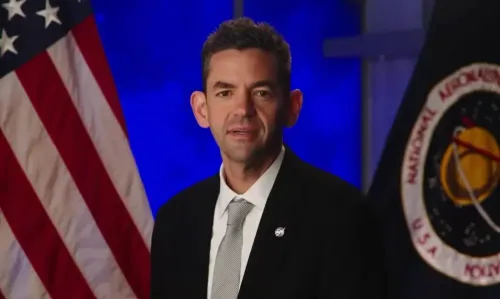
NASA Administrator Jared Isaacman called it a 'Golden Age of lunar exploration' and framed the Moon Base as a stepping stone to Mars .
The programme follows a commercial-first, iterative model rather than a single government-led infrastructure push.
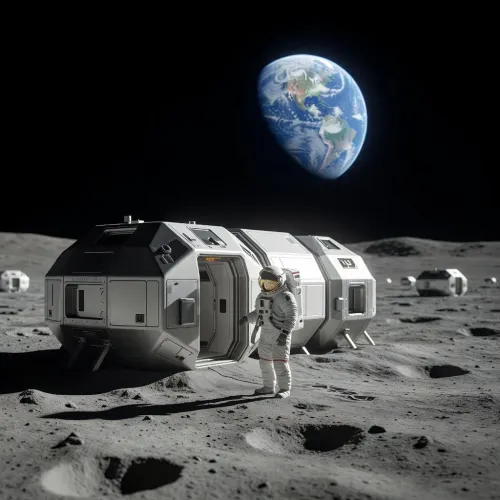
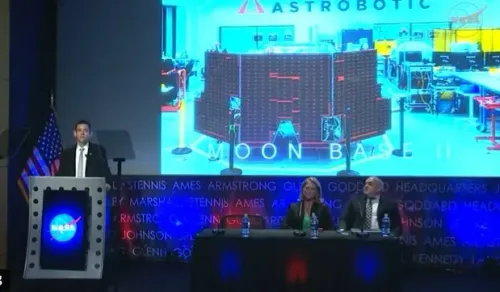
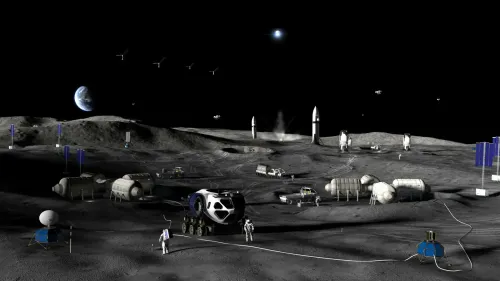
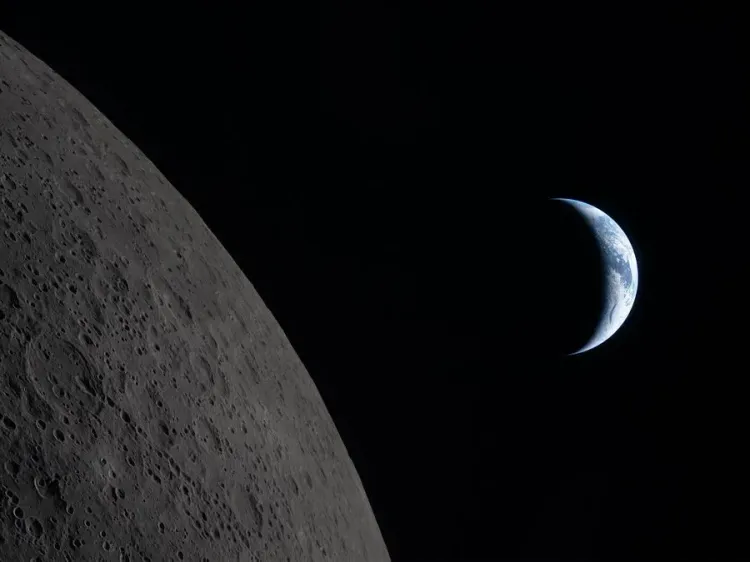
NASA has unveiled an ambitious roadmap to establish a permanent Moon Base at the lunar South Pole, announcing new contracts for lunar terrain vehicles, cargo landers, and drone missions as the agency accelerates preparations for long-duration human presence on the Moon and eventual crewed missions to Mars. The announcement was made on 27 May at a news conference at NASA Headquarters in Washington.
Three Early Missions Before End of 2026
NASA outlined three foundational Moon Base missions targeted for completion before the close of 2026. Moon Base I will deploy Blue Origin's Blue Moon Mark 1 Endurance lander to deliver scientific payloads to the Shackleton Connecting Ridge near the lunar South Pole. Moon Base II will use Astrobotic's Griffin lander to carry more than 1,100 pounds of cargo — including Astrolab's FLIP rover — to test mobility systems for future astronaut operations. Moon Base III will deploy scientific payloads aboard Intuitive Machines' Nova-C Trinity lander, including the Lunar Vertex investigation studying mysterious lunar swirls on the Moon's surface.
Lunar Terrain Vehicle Contracts Awarded
In a significant step toward supporting Artemis astronauts by 2028, NASA awarded two major contracts for lunar mobility systems. Astrolab received a $219 million award, while Lunar Outpost secured a $220 million contract to build lunar terrain vehicles (LTVs). Astrolab's crewed vehicle, adapted from its FLEX architecture, is designed to transport astronauts and supplies across the lunar surface. Lunar Outpost's Pegasus rover can operate manually, autonomously, or via teleoperation at speeds exceeding 9 mph. Officials noted the rovers would allow astronauts to cover far greater distances than was possible during the Apollo era, while also functioning autonomously between crewed missions.
MoonFall Drone Mission and South Pole Rationale
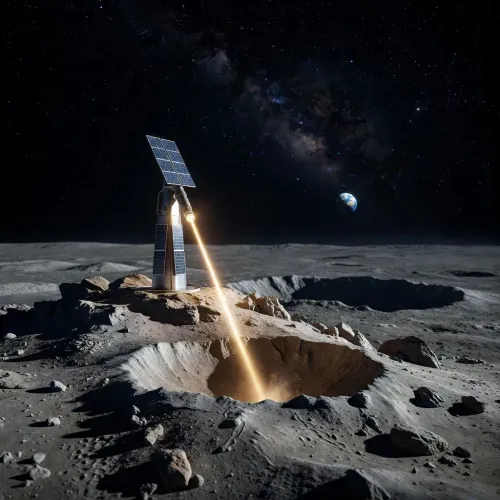
NASA also detailed 'MoonFall', a mission involving four lunar drones designed to hop across the Moon's surface, surveying future landing zones and searching for water ice deposits. Firefly Aerospace was selected to build the carrier spacecraft that will transport the drones to lunar orbit. The lunar South Pole was chosen for its scientific significance and the potential presence of water ice, which could eventually support human habitation and in-situ fuel production — a critical enabler for deep-space missions.
What NASA Officials Said
NASA Administrator Jared Isaacman described the initiative as part of a 'Golden Age of lunar exploration'. 'The Moon Base will be America's and humanity's first outpost on another celestial world,' Isaacman said. 'Every mission, crewed and uncrewed, will be a learning opportunity as we return to the lunar surface, build the infrastructure to stay, and master the skills required to live and operate in one of the most demanding and dangerous environments imaginable.' He added that NASA was 'going to get back to this iterative approach of learning,' drawing a direct line to the incremental methodology of the 1960s space programme. Moon Base programme executive Carlos Garcia Golan said the base was envisioned to span 'hundreds of square miles with different assets all building up to the objective of permanent lunar presence on the moon.'
Commercial-First Approach Marks a Strategic Shift
Agency officials repeatedly emphasised that the Moon Base initiative is structured as an iterative, commercially driven programme rather than a single large government-led infrastructure push — a marked departure from earlier NASA architecture models. This comes amid broader US efforts to assert leadership in cislunar space, with China also pursuing its own lunar base programme targeting the South Pole by the early 2030s. The Moon Base roadmap, if executed on schedule, would give the United States a significant head start in establishing permanent infrastructure on the Moon.
Point of View
Commercial-first model is a direct lesson drawn from the cost overruns and schedule slippage of the Space Launch System era. Awarding parallel rover contracts to two competing firms rather than a single prime contractor is smart redundancy, but the real test is whether three missions before end-2026 is an executable timeline or an optimistic press-conference number. The South Pole water ice thesis remains scientifically compelling but operationally unproven at scale. And with China's lunar base programme advancing on a parallel track, the margin for American schedule slippage is narrower than the agency's confident tone suggests.
NationPress
10 Oct 2026
Frequently Asked Questions
What is NASA's Moon Base plan?
NASA's Moon Base is a roadmap to establish a permanent human outpost at the lunar South Pole, using a series of commercial cargo, rover, and drone missions. Three foundational missions are targeted before the end of 2026, with crewed Artemis astronaut support expected by 2028.
Which companies received NASA lunar terrain vehicle contracts?
Astrolab received a $219 million contract and Lunar Outpost secured a $220 million contract to build lunar terrain vehicles. Both rovers are designed to support Artemis astronauts and can operate autonomously between crewed missions.
What is the MoonFall mission?
MoonFall is a NASA mission involving four lunar drones that will hop across the Moon's surface to survey future landing zones and search for water ice deposits. Firefly Aerospace was selected to build the carrier spacecraft that will deliver the drones to lunar orbit.
Why did NASA choose the lunar South Pole for its Moon Base?
The lunar South Pole was selected for its scientific importance and the potential presence of water ice in permanently shadowed craters. That water ice could eventually be used to support human habitation and produce rocket fuel, making it a strategic location for long-duration missions.
How does the Moon Base programme connect to Mars?
NASA Administrator Jared Isaacman has explicitly framed the Moon Base as a skills and infrastructure platform for eventual Mars missions. The agency intends to use lunar operations to master life support, mobility, and in-situ resource utilisation before attempting the longer journey to Mars.