Gadkari Reviews NHLML Projects: MMLPs, Ropeways, Wayside Amenities
Synopsis
Union Minister Nitin Gadkari chaired an NHLML review in New Delhi on 7 July 2026, assessing progress on Multi Modal Logistics Parks, ropeways, intermodal stations, and wayside amenities, and directing stakeholders to resolve bottlenecks and accelerate project completion under the Gati Shakti and Viksit Bharat frameworks.
Key Takeaways
Union Minister Nitin Gadkari chaired an NHLML review meeting in New Delhi on 7 July 2026 .
The review covered Multi Modal Logistics Parks (MMLPs) , ropeways, intermodal stations, and wayside amenities across India.
Gadkari directed all stakeholders to resolve execution bottlenecks 'on priority' and expedite project completion.
The projects are part of the PM Gati Shakti National Master Plan (launched October 2021 ) and the National Logistics Policy (2022) targeting logistics costs below 10 per cent of GDP .
Timely completion is expected to improve logistics efficiency, reduce transportation costs, and deliver world-class commuter facilities.
Progress is linked to the government's twin goals of Viksit Bharat and Aatmanirbhar Bharat by 2047 .
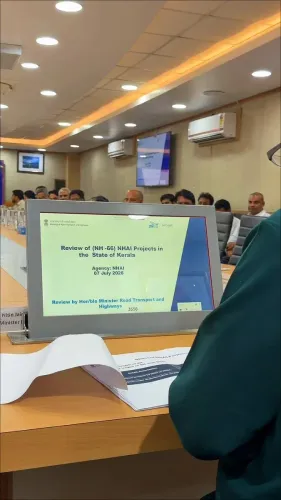
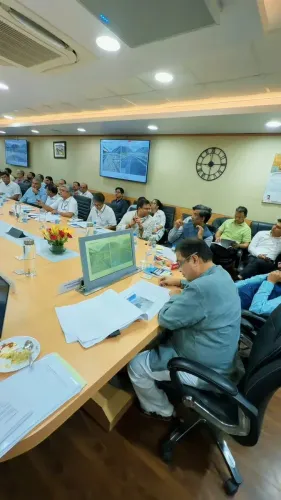
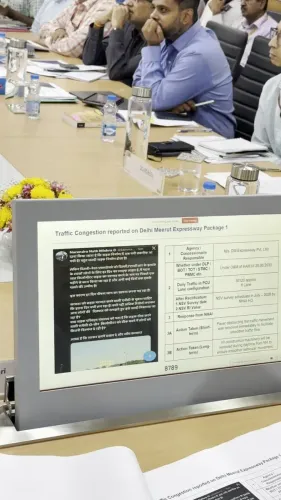
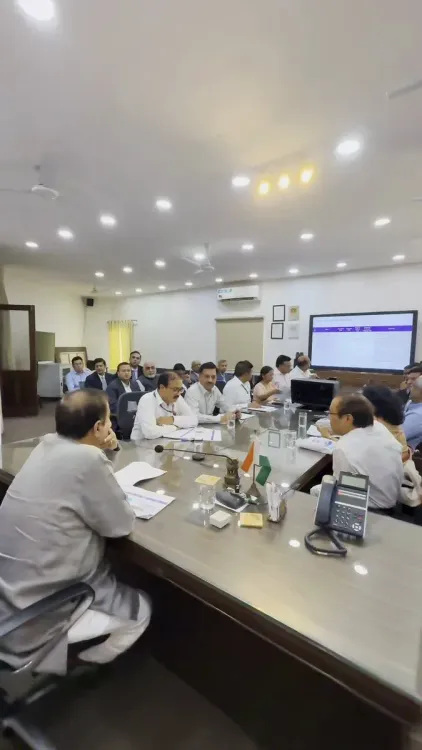
Union Road Transport and Highways Minister Nitin Gadkari on Monday, 7 July 2026 chaired a review meeting of National Highways Logistics Management Limited (NHLML) in New Delhi, assessing project-level progress on Multi Modal Logistics Parks (MMLPs), ropeways, intermodal stations, and wayside amenities across the country.
Context
Gadkari announced that the meeting examined the execution status of these projects and directed all concerned stakeholders to resolve bottlenecks 'on priority and expedite project completion.' The minister described the initiatives as 'transformative projects shaping the next generation of India's infrastructure by fostering seamless multimodal integration and creating a future-ready transport network.'
The review underscores the central government's continued push to accelerate capital expenditure in logistics and road infrastructure, a priority that has seen repeated high-level directives since 2021.
Policy Backdrop
NHLML is a special purpose vehicle under the Ministry of Road Transport and Highways (MoRTH) mandated to develop MMLPs and other multimodal assets. The MMLP programme envisions integrated freight hubs combining road, rail, air, and waterway connectivity — a core deliverable under the PM Gati Shakti National Master Plan, launched in October 2021 to coordinate infrastructure planning across ministries.
The National Logistics Policy, released in September 2022, set an explicit target of reducing India's logistics costs from approximately 14 per cent of GDP to single digits. MMLPs, ropeways, and intermodal stations are among the flagship physical interventions intended to close that gap. Development of these assets was first outlined in the 2020-21 Union Budget and subsequent NHAI roadmaps.
The broader Gati Shakti pipeline now spans more than 1,500 projects aimed at improving last-mile connectivity and supporting manufacturing zones across the country.
Stakeholders and Impact
Logistics operators, freight transporters, and regional businesses stand to benefit most directly from faster MMLP commissioning, which promises to cut dwell times and reduce multi-modal transaction costs. For everyday commuters, upgraded intermodal stations and wayside amenities translate into better facilities along national highway corridors.
Gadkari stated that timely execution 'will improve logistics efficiency, reduce transportation costs, and provide world-class facilities for commuters,' framing the push within the dual national goals of a Viksit Bharat (Developed India) and an Aatmanirbhar Bharat (Self-Reliant India) by 2047. Regional economies along MMLP corridors are also expected to see stronger industrial and warehousing activity as integrated freight hubs attract investment.
What's Next
Attention will now turn to state-wise MMLP bidding outcomes and commissioning timelines, which are expected to feature in the next quarterly NHLML review. Any supplementary budgetary allocations for ropeway and intermodal projects in the forthcoming Union Budget will be closely watched as a signal of fiscal commitment to the programme.
With the minister personally directing stakeholders to clear execution bottlenecks, the pace of on-ground progress at MMLP sites and the resolution of tendering or land-acquisition hurdles will serve as the immediate test of Monday's directives.
Point of View
Suggesting progress has not kept pace with ambition. The meeting also reinforces logistics infrastructure as a political priority ahead of the Union Budget cycle, where supplementary allocations for ropeways and intermodal assets are anticipated. For the broader Viksit Bharat narrative, visible acceleration in MMLP commissioning would serve as a concrete metric of the government's infrastructure delivery record.
NationPress
5 Oct 2026
Frequently Asked Questions
What is NHLML and what does it do?
National Highways Logistics Management Limited (NHLML) is a special purpose vehicle under the Ministry of Road Transport and Highways set up to develop Multi Modal Logistics Parks, ropeways, intermodal stations, and wayside amenities along national highway corridors.
What are Multi Modal Logistics Parks (MMLPs)?
Multi Modal Logistics Parks (MMLPs) are integrated freight hubs that combine road, rail, air, and waterway connectivity to reduce logistics costs and improve cargo handling efficiency. They were first proposed in the 2020-21 Union Budget and are a key deliverable under the PM Gati Shakti National Master Plan.
Why did Gadkari review NHLML projects in July 2026?
Union Minister Nitin Gadkari chaired the review to assess project-level progress and address execution bottlenecks affecting MMLPs, ropeways, intermodal stations, and wayside amenities, directing stakeholders to expedite completion in line with the Viksit Bharat and Aatmanirbhar Bharat goals.
What is India's logistics cost target under the National Logistics Policy?
The National Logistics Policy (September 2022) set a target of reducing India's logistics costs from approximately 14 per cent of GDP to single digits, with MMLPs and multimodal infrastructure serving as primary instruments to achieve that reduction.
What is PM Gati Shakti and how do MMLPs fit into it?
PM Gati Shakti is a National Master Plan launched in October 2021 to coordinate infrastructure planning across ministries. MMLPs, ropeways, and intermodal stations are among the more than 1,500 projects in the Gati Shakti pipeline designed to improve multimodal connectivity and support manufacturing zones across India.