Gadkari meets Nagaland CM, DyCMs on NH progress

Synopsis
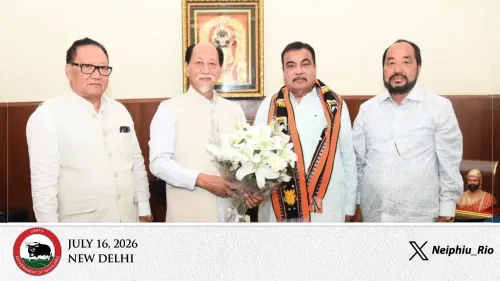
Union Minister Nitin Gadkari met Nagaland Chief Minister Neiphiu Rio and Deputy CMs Yanthungo Patton and T.R. Zeliang in New Delhi on July 16, 2026, to review ongoing National Highway projects and stress timely completion for better connectivity across the state.
Key Takeaways
Nitin Gadkari hosted a delegation of Nagaland's top three elected leaders — Chief Minister Neiphiu Rio and Deputy CMs Yanthungo Patton and T.R.
Zeliang — in New Delhi on July 16, 2026 .
The meeting focused on reviewing the progress of ongoing National Highway projects in Nagaland and ensuring their timely completion.
The stated goal is to deliver 'faster, safer, and hassle-free travel' across the state, linking to the Ministry's broader logistics-cost-reduction targets.
Bharatmala Pariyojana (2015) and SARDP-NE (2005) form the policy backbone for Central highway investment in Nagaland.
Nagaland's difficult terrain and historical security constraints have made timely project execution a persistent challenge.
The meeting aligns with India's Act East Policy , which treats Northeast road connectivity as a strategic priority.
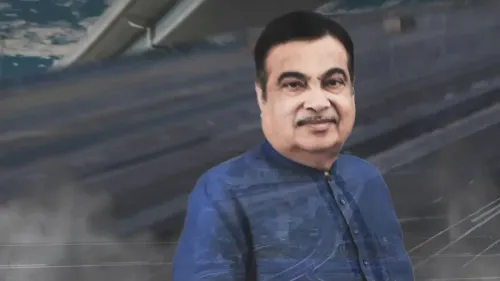
Union Road Transport and Highways Minister Nitin Gadkari met Nagaland Chief Minister Neiphiu Rio along with Deputy Chief Ministers Yanthungo Patton and T.R. Zeliang in New Delhi on Thursday, July 16, 2026, to review the progress of ongoing National Highway projects in the state and press for their timely completion.
Context
Gadkari posted on X that the Nagaland leadership 'called on' him in the capital, and that the meeting centred on accelerating highway construction to deliver 'faster, safer, and hassle-free travel' across the state. The delegation comprising the Chief Minister and both Deputy Chief Ministers signals the political weight Nagaland is placing on resolving infrastructure bottlenecks with the Centre.
The meeting reflects the sustained central-state coordination that has become a hallmark of the Ministry's approach to integrating the Northeast into the national road network. Such high-level consultations typically precede fresh project reviews, funding releases, or course-corrections on stalled packages.
Policy Backdrop
Nagaland sits at the intersection of two major Central government road programmes. The Bharatmala Pariyojana, launched in 2015, identified the Northeast as a priority corridor and has driven a significant share of new National Highway alignment in hilly and border states. Earlier, the Special Accelerated Road Development Programme for North East (SARDP-NE), approved in 2005, laid the groundwork for upgrading roads in difficult terrain.
Nagaland's topography — steep ridges, dense forest cover, and seismically sensitive zones — has historically made construction slower and costlier than in the plains. Security considerations in certain districts have added further complexity, making inter-agency coordination between the Ministry, state authorities, and project implementing agencies critical to keeping timelines on track.
The emphasis on 'timely completion' in Wednesday's discussions aligns with the Ministry's broader national target of reducing logistics costs and travel time, a goal that feeds directly into India's Act East Policy, which treats improved Northeast connectivity as a strategic bridge to Southeast Asia.
Stakeholders and Impact
Residents of Nagaland stand to be the most immediate beneficiaries of faster highway completion. Better roads cut travel time between district headquarters, lower the cost of transporting agricultural produce to markets, and improve emergency access in a state where healthcare infrastructure is concentrated in a handful of towns.
Broader Northeast highway users — including freight operators moving goods between Assam, Manipur, and Myanmar — also have a direct stake, as Nagaland forms a critical transit corridor. For the NDPP-BJP coalition government in Kohima, visible highway progress carries political dividends ahead of future electoral cycles.
What's Next
The Ministry is expected to publish quarterly progress updates on Nagaland highway packages, and any fresh financial allocations could feature in the next Union Budget. The meeting may also trigger a formal project-review mechanism between the state Public Works Department and the National Highways Authority of India to resolve on-ground bottlenecks flagged by the state delegation.
Sustained political attention from both the state's top leadership and a senior Union Cabinet minister suggests that Nagaland's highway agenda is unlikely to slip off the priority list in the near term.
Point of View
Likely reflecting pressure from constituents in districts still waiting for all-weather road access. For Gadkari, the meeting reinforces his Ministry's pattern of using high-visibility bilateral engagements with state governments to maintain political accountability on project timelines. The Northeast has become a showcase for the BJP-led Centre's infrastructure ambitions, and delays in Nagaland risk undercutting the Act East Policy narrative. Quarterly progress disclosures and the next Budget cycle will be the real test of whether this political momentum translates into on-ground acceleration.
NationPress
15 Oct 2026
Frequently Asked Questions
Why did Nagaland CM meet Nitin Gadkari in Delhi?
Nagaland Chief Minister Neiphiu Rio, along with Deputy CMs Yanthungo Patton and T.R. Zeliang, met Union Minister Nitin Gadkari on July 16, 2026, to discuss the progress of ongoing National Highway projects in Nagaland and push for their timely completion.
Which National Highway projects are being built in Nagaland?
Nagaland has active National Highway projects under the Bharatmala Pariyojana and the older SARDP-NE programme, though the specific packages reviewed in the July 16 meeting have not been officially disclosed.
What is the Bharatmala Pariyojana and how does it affect Nagaland?
Bharatmala Pariyojana, launched in 2015, is a Central government programme to build and upgrade National Highways across India, with the Northeast — including Nagaland — identified as a priority region for connectivity investment.
What is India's Act East Policy and its link to Northeast highways?
India's Act East Policy aims to strengthen economic and strategic ties with Southeast Asia, and improved road connectivity in Northeastern states like Nagaland is seen as a key enabler of that goal.
What challenges slow down highway construction in Nagaland?
Nagaland's steep terrain, dense forests, seismic sensitivity, and historical security concerns in certain districts have made highway construction slower and more expensive than in the plains, requiring close coordination between Central and state agencies.