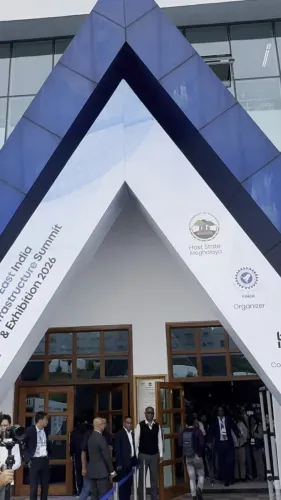
CM Rio addresses NE India Infrastructure Summit 2026 in Shillong

Synopsis
Nagaland Chief Minister Neiphiu Rio addressed the NE India Infrastructure Summit and Exhibition 2026 in Shillong on June 15, presenting the state's development priorities to Union Minister Nitin Gadkari and Meghalaya CM Conrad Sangma, as the Northeast pushes to accelerate central infrastructure commitments.
Key Takeaways
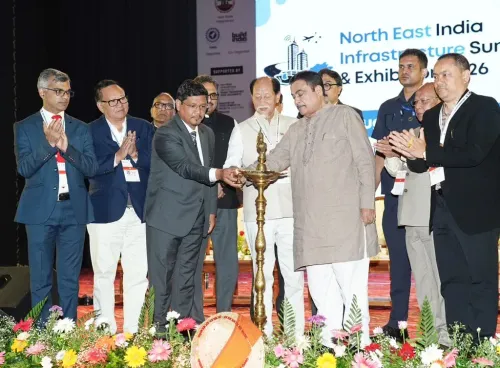
Nagaland CM Neiphiu Rio addressed the NE India Infrastructure Summit & Exhibition 2026 in Shillong on June 15, 2026 .
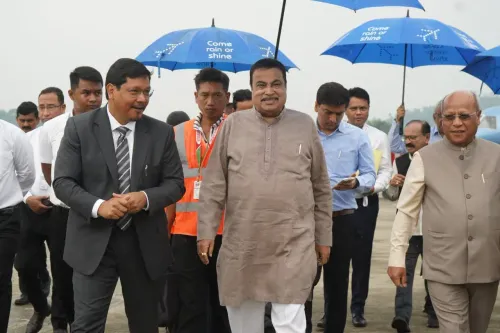
Union Minister for Road Transport and Highways Nitin Gadkari and Meghalaya CM Conrad Sangma were among the senior dignitaries present.
Rio shared Nagaland's specific development and connectivity priorities before central and regional decision-makers.
The summit aligns with the Bharatmala Pariyojana (launched 2015 ) and the Act East Policy (announced 2014 ), both of which prioritise Northeast infrastructure.
Follow-up MoUs, project sanctions, or budget provisions are expected to emerge from the summit's deliberations.
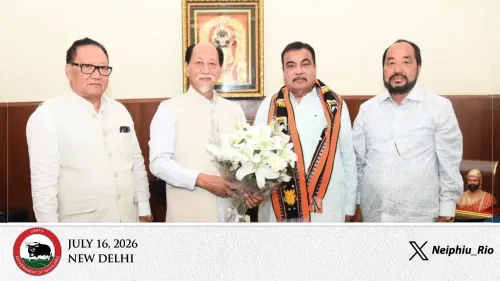
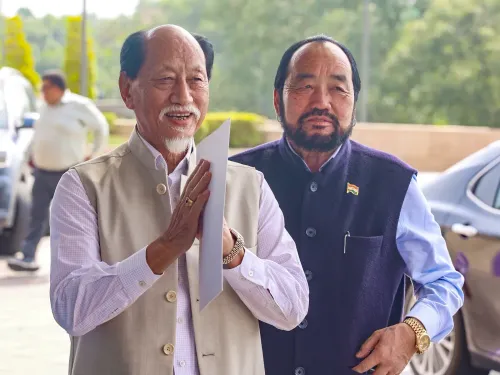
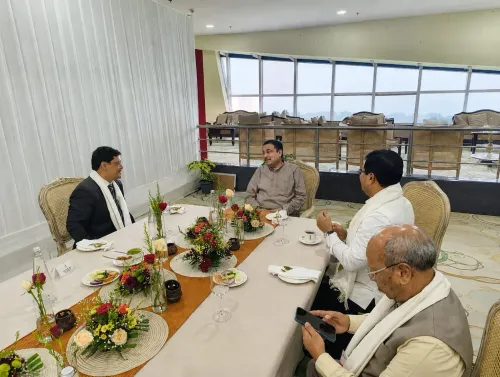
Nagaland Chief Minister Neiphiu Rio addressed the NE India Infrastructure Summit & Exhibition 2026 in Shillong on Monday, June 15, 2026, sharing the state's development priorities before an audience that included Union Minister for Road Transport and Highways Nitin Gadkari and Meghalaya Chief Minister Conrad Sangma.
Context
The summit, held in Shillong — the capital of Meghalaya — brought together central ministers, state chief ministers, industry leaders, and development partners to deliberate on infrastructure priorities across the eight Northeastern states. Rio used the platform to articulate Nagaland's specific connectivity and development needs before key decision-makers from the central government.
In his post on X, Rio noted that he 'shared Nagaland's development priorities' at the event, underscoring the state's intent to align with national infrastructure programmes and secure central support for pending projects.
Policy Backdrop
The summit sits within a long-running federal push to reduce the Northeast's infrastructure deficit. The Bharatmala Pariyojana, launched in 2015, includes dedicated highway corridors for the region, while the Act East Policy, announced in 2014, frames physical connectivity as a gateway to deeper economic integration with Southeast Asia.
The North Eastern Council, established in 1971, continues to serve as the nodal agency for regional planning among the eight Northeastern states. Events such as this summit function as a key interface between state-level priorities and central funding and execution mechanisms overseen by the Ministry of Road Transport and Highways.
Nitin Gadkari, whose ministry has driven an accelerated pace of national highway expansion in the Northeast in recent years, was the senior-most central government figure present — lending the summit significant policy weight.
Stakeholders and Impact
Nagaland has historically faced acute connectivity challenges owing to its mountainous terrain and limited road infrastructure. Successive state governments, including Rio's, have consistently participated in regional forums to highlight these gaps and press for faster execution of sanctioned projects.
Industry leaders and development partners present at the summit represent a constituency that stands to benefit from clearer project pipelines and faster land-clearance processes. Local communities across the Northeast, for whom road access translates directly into market linkages, healthcare reach, and livelihood opportunities, are the ultimate stakeholders of any outcomes from such a gathering.
Meghalaya's role as the host state, with Conrad Sangma in attendance, also signals a broader regional consensus-building exercise ahead of potential announcements on cross-state highway corridors and multimodal connectivity projects.
What's Next
Attention will now turn to follow-up announcements — whether in the form of memoranda of understanding, project sanctions, or budget allocations — that translate the summit's discussions into on-ground action. Any commitments made by Gadkari's ministry at Shillong are likely to be reflected in subsequent Union Budget provisions or state-level implementation reports.
For Nagaland, the summit represents an opportunity to move specific connectivity proposals closer to central approval, with Rio's direct engagement with the Union Minister potentially accelerating decisions on long-pending highway and infrastructure projects in the state.
Point of View
The forum carries real decision-making proximity — not merely symbolic weight. The Act East Policy has given successive governments a strategic rationale to fund connectivity in the region, and summits like this one are where that rationale is converted into project-level commitments. For Rio, who has built his political identity around development delivery, a visible role in such forums reinforces his standing both within the NDPP and in New Delhi's policy corridors.
NationPress
14 Sept 2026
Frequently Asked Questions
What is the NE India Infrastructure Summit 2026?
The NE India Infrastructure Summit and Exhibition 2026 is a regional platform held in Shillong to bring together central ministers, state chief ministers, industry leaders, and development partners to discuss and align infrastructure priorities across the eight Northeastern states of India.
Why did Nagaland CM Neiphiu Rio attend the Shillong summit?
Rio attended to present Nagaland's development priorities directly to Union Minister Nitin Gadkari and other senior stakeholders, seeking central support and faster execution of infrastructure projects in the state.
Who is Nitin Gadkari and what is his role in Northeast infrastructure?
Nitin Gadkari is the Union Minister for Road Transport and Highways. His ministry oversees national highway expansion across India, including dedicated corridors for the Northeast under the Bharatmala Pariyojana launched in 2015.
What is the Act East Policy and how does it relate to this summit?
The Act East Policy, announced in 2014, frames Northeast India's physical connectivity as a strategic gateway to economic integration with Southeast Asia. It provides the overarching policy rationale for central investment in regional infrastructure, which summits like this one help to operationalise.
What outcomes are expected from the NE India Infrastructure Summit 2026?
Observers will watch for follow-up MoUs, project sanctions, or new budget allocations arising from the summit's discussions, particularly any commitments from the Ministry of Road Transport and Highways on highway and multimodal projects in Nagaland and other Northeastern states.