CM Bhupendra Patel leads Ahmedabad's 149th Jagannath Rath Yatra
Synopsis
Chief Minister Bhupendra Patel performed the traditional chariot worship and golden-broom pahind vidhi at Ahmedabad's Jagannath Temple on 16 July 2026, flagging off the city's 149th Rath Yatra for the fifth straight year. Deputy CM Harsh Sanghvi joined the ceremonies. The CM also extended Kutchi New Year greetings on Ashadhi Beej.
Key Takeaways
CM Bhupendra Patel performed the pahind vidhi (golden-broom sweeping ritual) at Ahmedabad's Jagannath Temple for the fifth consecutive year .
The procession flagged off is described as the 149th Rath Yatra in Ahmedabad's tradition.
Deputy CM Harsh Sanghvi participated alongside the Chief Minister in the devotional ceremonies.
The CM described the Rath Yatra as a 'symbol of communal harmony' and thanked all government departments and volunteer organisations on duty.
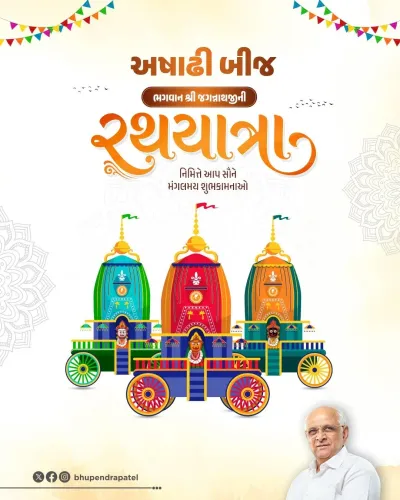
The CM also extended Kutchi New Year greetings to the global Kutchi community on the occasion of Ashadhi Beej .
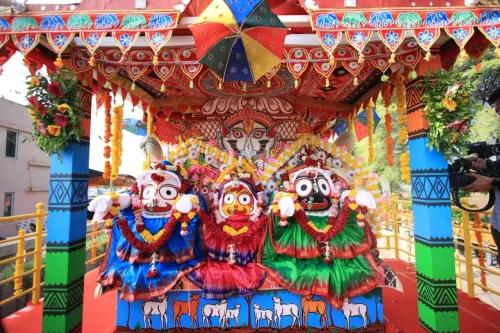
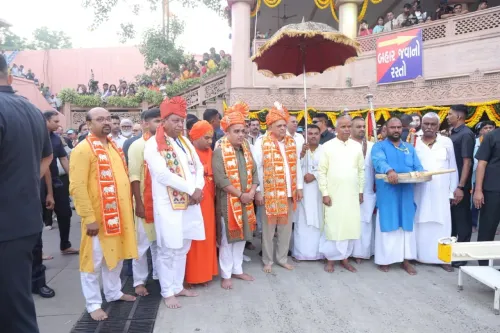
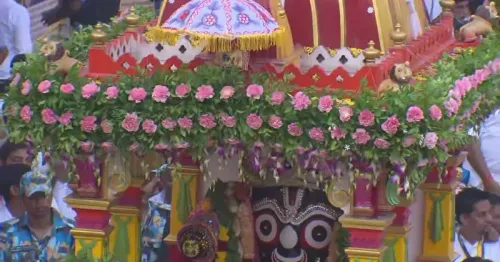
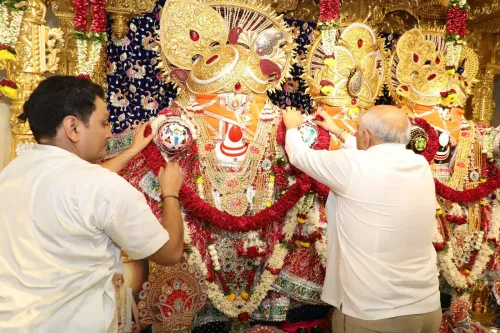
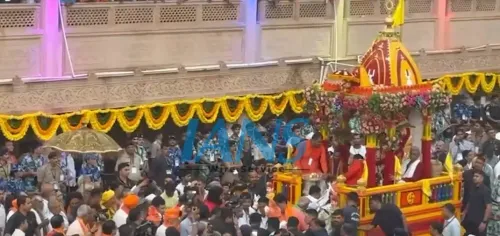
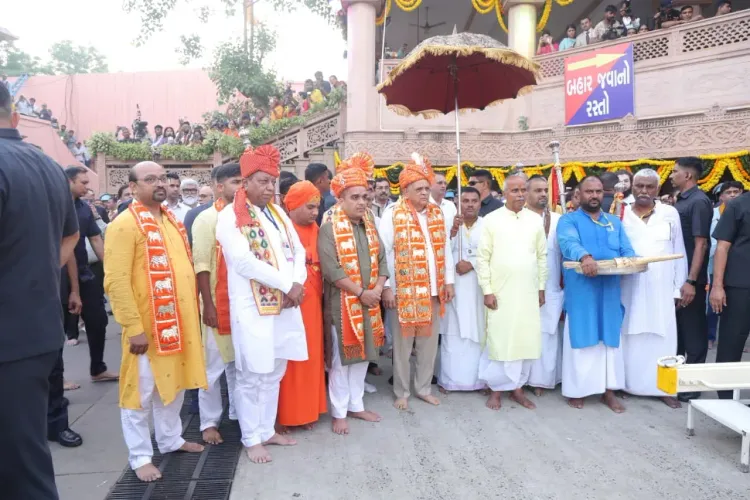
Chief Minister Bhupendra Patel on Thursday, 16 July 2026, performed the traditional chariot worship and the pahind vidhi (ceremonial sweeping with a golden broom) at the renowned Jagannath Temple in Ahmedabad, flagging off the city's 149th Rath Yatra procession — marking his fifth consecutive year performing the ritual.
What happened
Deputy Chief Minister Harsh Sanghvi joined CM Patel in the devotional ceremonies at the temple complex. The Chief Minister's Office stated that CM Patel conveyed greetings for the Rath Yatra festival to all citizens of the state, declaring that 'Ahmedabad ni Jagannathji ni Rath Yatra koami ekhlasnu pratik bani rahi chhe' — 'the Rath Yatra of Lord Jagannath in Ahmedabad has come to symbolise communal harmony.'
The CM also extended Kutchi New Year greetings to the global Kutchi community on the occasion of Ashadhi Beej, the traditional new year of the Kutch region that falls on the second day of the Ashad month.
Context
The Jagannath Rath Yatra in Ahmedabad is one of the largest chariot processions in India outside Puri, Odisha. The festival draws lakhs of devotees annually and winds through the old city, requiring extensive inter-departmental coordination between police, civic bodies, health services, and volunteer organisations.
CM Patel thanked all government departments and service-oriented organisations and citizens who remained on duty to ensure the procession concluded in a peaceful and harmonious atmosphere. This year's edition was described as the 149th in the Ahmedabad tradition.
Policy backdrop
Gujarat administrations have provided security and logistical support for the Ahmedabad Jagannath Rath Yatra for well over a century. The state government's visible participation in the event is a long-standing practice that reinforces official messaging around social cohesion and public order during large religious gatherings.
The emphasis on communal harmony is a recurring official framing for the Rath Yatra, positioning the procession as a city-wide civic event rather than an exclusively religious one. This framing has been used across successive Gujarat governments to highlight inter-community participation in the festival's logistics and celebrations.
Stakeholders and impact
Lakhs of devotees from Ahmedabad and surrounding districts participate in or witness the procession each year. The Kutchi community — both within Gujarat and in the diaspora — observes Ashadhi Beej as their new year, making the CM's greetings significant to a large population spread across Kutch, Mumbai, and international destinations.
Volunteer organisations and civic bodies that support the event's management are among the direct stakeholders acknowledged by the government's public communication.
What's next
The procession, having departed from the Jagannath Temple, will follow its traditional route through the old city before returning to the temple. State agencies will monitor crowd management and public safety throughout the day. Looking ahead, the government's coordination model for this year's event is likely to inform planning for the 150th edition of the Ahmedabad Rath Yatra, which would carry additional ceremonial significance.
Point of View
Blending religious participation with a governance message about communal order. The official framing of the Rath Yatra as a 'symbol of communal harmony' is a deliberate political positioning that successive Gujarat governments have used to project the state as a model of managed pluralism. Pairing the Rath Yatra coverage with Ashadhi Beej greetings to the Kutchi diaspora broadens the political outreach beyond Ahmedabad to a commercially influential community spread across India and abroad. Together, these gestures reflect how Gujarat's ruling establishment uses high-visibility cultural events to simultaneously signal administrative competence and cultural affinity.
NationPress
16 Jul 2026
Frequently Asked Questions
What is the Ahmedabad Jagannath Rath Yatra?
The Ahmedabad Jagannath Rath Yatra is an annual chariot procession of Lord Jagannath originating from the historic Jagannath Temple in Ahmedabad. It is one of India's largest Rath Yatras outside Puri, Odisha, and draws lakhs of devotees each year.
What is the pahind vidhi in Rath Yatra?
The pahind vidhi is a ceremonial ritual in which a designated dignitary sweeps the path before the chariot using a golden broom, symbolically cleansing the route for Lord Jagannath's procession.
How many times has CM Bhupendra Patel performed the Rath Yatra rituals?
According to the Chief Minister's Office of Gujarat, CM Bhupendra Patel has performed the chariot worship and pahind vidhi at the Ahmedabad Jagannath Rath Yatra for five consecutive years as of 2026.
What is Ashadhi Beej?
Ashadhi Beej is the traditional new year of the Kutchi community, observed on the second day of the Hindu month of Ashad. It coincides with the Rath Yatra period and is celebrated by Kutchi people across India and the world.
Who is Harsh Sanghvi?
Harsh Sanghvi is the Deputy Chief Minister of Gujarat. He joined CM Bhupendra Patel at the 2026 Ahmedabad Rath Yatra ceremonies at the Jagannath Temple.