Nepal-India digital payment corridor an untapped opportunity: ADB

Synopsis
The ADB says billions of dollars flow between Nepal and India every year — yet most of it still moves through old-fashioned bank channels. Daily cross-border QR transactions have grown fourfold since launch, but Nepalis still cannot pay digitally in India because two countries cannot agree on who pays the fee. That single unresolved commission question is the bottleneck between a functional corridor and a transformative one.
Key Takeaways
The ADB has identified the Nepal-India digital payment corridor as a major untapped opportunity in a report released in July 2025 .
Daily cross-border QR transactions grew from 500 at launch (March 2024) to 2,000 by early 2025 , with cumulative value reaching NPR 1.6 billion ($11 million) .
Reciprocal QR payments for Nepalis in India remain blocked due to an unresolved dispute over commission structures .
Nepal Rastra Bank and RBI signed terms of reference in 2024 to integrate Nepal's National Payments Interface with India's UPI .
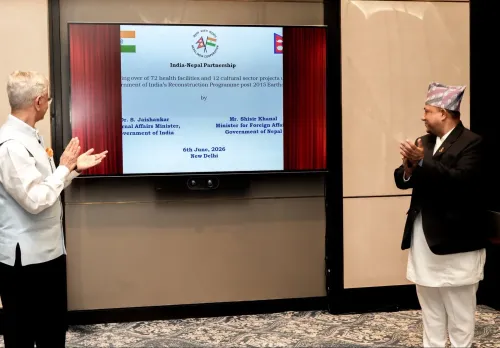
A cross-border fund transfer service was launched in early June 2025 by Foreign Minister Shishir Khanal and EAM S.
Jaishankar as an interim workaround.
The ADB has urged adoption of a UPI-like architecture for bilateral trade payments and expedited resolution of the commission dispute.
The Asian Development Bank (ADB) has identified the Nepal-India digital payment corridor as a major untapped opportunity that could substantially boost trade, tourism, and remittance flows between the two neighbouring countries, according to a report released earlier this week.
In its report titled 'Advancing Digital Payments in Nepal: Infrastructure Upgrades and Policy Development for Enhanced Trade Facilitation', the Manila-based multilateral lender noted that billions of dollars move annually between Nepal and India through trade and remittances — yet the vast majority of these transactions continue to rely on conventional banking channels, despite rapid advances in digital payment infrastructure on both sides.
The Scale of the Opportunity
Nepali fintech expert Sanjib Subba, quoted in the report, said: 'The economic relationship between India and Nepal creates a digital payment opportunity that remains largely untapped,' adding that interoperable payment infrastructure could generate significant efficiency gains for businesses and consumers in both countries.
The ADB report recommended strengthening cross-border payment infrastructure, regulatory alignment, payment system interoperability, and market integration to reinforce Nepal's digital payment ecosystem and enhance its role in facilitating bilateral trade.
What Has Been Achieved So Far
In 2024, Nepal Rastra Bank — Nepal's central bank — and the Reserve Bank of India (RBI) signed regulatory terms of reference to facilitate the integration of Nepal's National Payments Interface with India's Unified Payments Interface (UPI).
Since March 2024, Indian travellers have been able to use their home payment systems to pay merchants in Nepal via QR codes from Fonepay or Khalti, two of Nepal's major digital payment service providers. According to the report, daily transactions grew from approximately 500 at launch to 2,000 by early 2025, representing a daily transaction value of NPR 6 million ($42,000) and cumulative transactions worth NPR 1.6 billion ($11 million) since launch.
In January 2025, NEPALPAY QR — a national digital payment system implemented by Nepal Clearing House Limited (NCHL) under the guidance of Nepal's central bank — was extended to tourists from China, Italy, South Korea, Malaysia, and Singapore, broadening its reach beyond Indian visitors.
The Reciprocity Gap
Despite these gains, the report flagged a critical asymmetry: while Indian citizens can make QR payments in Nepal at a standard charge of 1.95% per transaction, the reciprocal service enabling Nepalis to make QR payments in India remains pending. The primary obstacle, according to the report, is an unresolved dispute over commission structures.
In India, QR code payments are free of charge, creating uncertainty over who would absorb the service commission payable to Nepali banks when their customers transact in India. 'This situation highlights how differences in fee structures and regulatory approaches between countries can impede the implementation of otherwise technically feasible cross-border payment solutions,' the report noted.
A Workaround and the Road Ahead
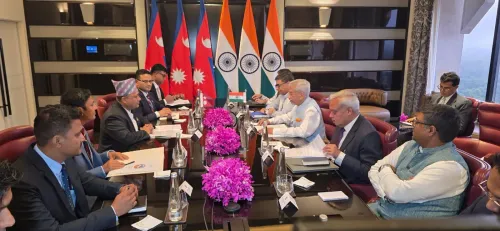
As the commission structure impasse persisted, the two countries launched a cross-border online fund transfer service in early June, enabling customers to directly transfer money to bank accounts in either country. The service was inaugurated during Nepali Foreign Minister Shishir Khanal's visit to India, where he and his Indian counterpart, External Affairs Minister S. Jaishankar, jointly launched the initiative — enabling cross-border remittance transfers for workers of both nations employed across the border.
The ADB has called for expediting the resolution of the commission structure dispute and adopting a UPI-like architecture to simplify cross-border transactions with India, Nepal's largest trading partner, in order to address persistent inefficiencies in bilateral trade payments. How swiftly both governments act on these recommendations will determine whether the corridor's potential is finally realised.
Point of View
The political will has been demonstrated, and transaction volumes are growing — yet a fee-sharing disagreement is holding the corridor hostage. The irony is that India's own success in making domestic QR payments free has become the obstacle to cross-border expansion, because no one wants to absorb the Nepali bank commission. Resolving this requires a policy decision, not a technical one — and the longer it drags, the more informal remittance channels fill the vacuum. The June fund-transfer launch is a useful bridge, but it does not substitute for the seamless, consumer-facing QR interoperability that would genuinely shift behaviour at scale.
NationPress
16 Jul 2026
Frequently Asked Questions
What is the Nepal-India digital payment corridor identified by the ADB?
It refers to the cross-border digital payment infrastructure linking Nepal and India, which the ADB says remains largely underutilised despite billions of dollars flowing annually between the two countries through trade and remittances. The ADB's July 2025 report calls for stronger regulatory alignment, interoperability, and a UPI-like architecture to unlock this potential.
Can Indian tourists pay digitally in Nepal?
Yes. Since March 2024, Indian travellers have been able to make QR-based payments in Nepal using Fonepay or Khalti at a standard charge of 1.95% per transaction. Daily transactions grew from around 500 at launch to 2,000 by early 2025, with cumulative value reaching NPR 1.6 billion ($11 million).
Why can't Nepalis make QR payments in India yet?
The reciprocal service is technically ready but has been delayed by a dispute over commission structures. India offers free QR payments domestically, creating uncertainty over who would cover the service commission owed to Nepali banks when their customers pay in India. The ADB has called for expedited resolution of this issue.
What is NEPALPAY and who can use it?
NEPALPAY QR is Nepal's national digital payment brand, implemented by Nepal Clearing House Limited (NCHL) under the guidance of Nepal Rastra Bank. Since January 2025, it has been accessible to tourists from China, Italy, South Korea, Malaysia, and Singapore, in addition to Indian visitors.
What cross-border payment service was launched in June 2025?
A cross-border online fund transfer service enabling direct bank-to-bank remittances between Nepal and India was launched in early June 2025. It was jointly inaugurated by Nepali Foreign Minister Shishir Khanal and Indian External Affairs Minister S. Jaishankar during Khanal's visit to India.