Jaishankar, Nepal FM Launch UPI Link, Hand Over 84 Projects
Synopsis
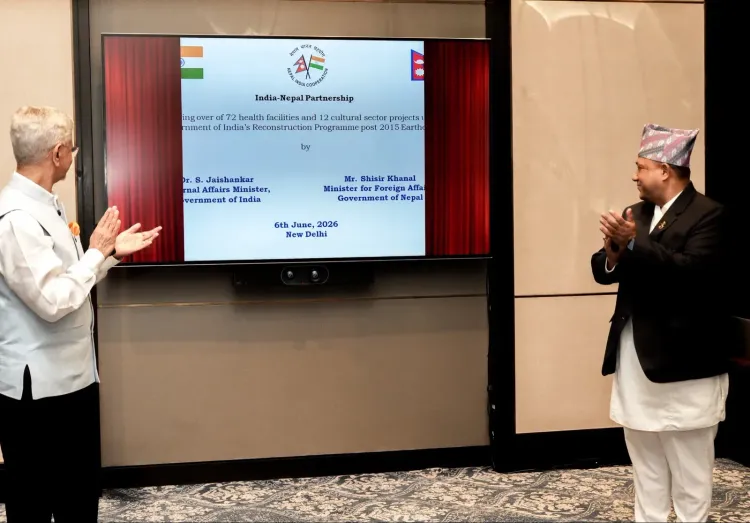
EAM Dr. S. Jaishankar and Nepal FM Shisir Khanal on June 6, 2026 virtually handed over 84 post-earthquake reconstruction projects, launched the India-Nepal UPI payments link, and signed a Bhashini-Kathmandu University MoU for a 'Voice First' language platform — advancing India's Neighbourhood First agenda on three fronts simultaneously.
Key Takeaways
84 projects handed over : India virtually transferred 72 health facilities and 12 cultural heritage sites to Nepal under its post-2015 earthquake Reconstruction Programme.
UPI-Nepal payments link launched : India's UPI (NPCI) and Nepal's National Payments Interface were jointly activated to enable low-cost cross-border personal remittances.
Bhashini MoU signed : Digital India Bhashini and Kathmandu University will co-create a 'Voice First' language translation platform for Nepal.
Neighbourhood First framing : All three deliverables were explicitly tagged under India's #NeighbourhoodFirst policy, active since 2014.
USD 1 billion reconstruction pledge : Today's handover fulfils a major tranche of India's assistance commitment made after the April 2015 magnitude 7.8 earthquake.
Regional digital payments pattern : The Nepal UPI linkage follows similar corridors with Bhutan (2020) and Singapore (2023) .
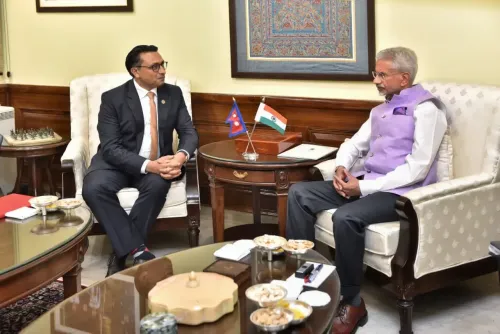
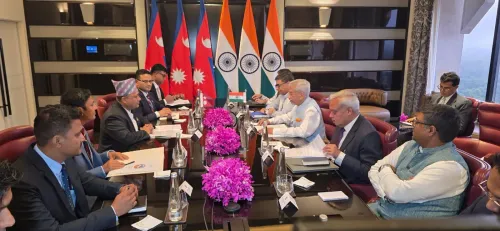
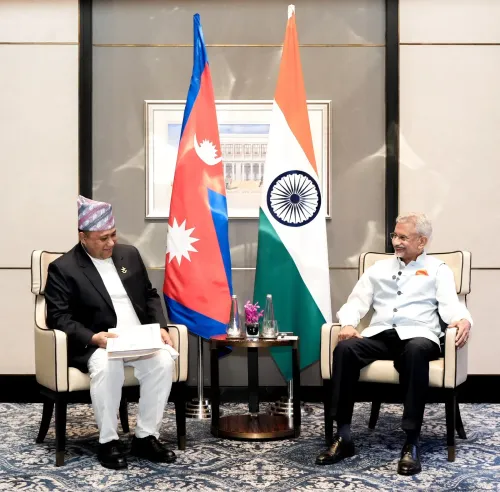
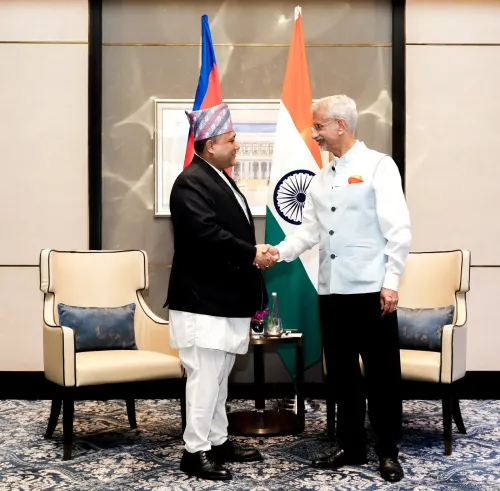
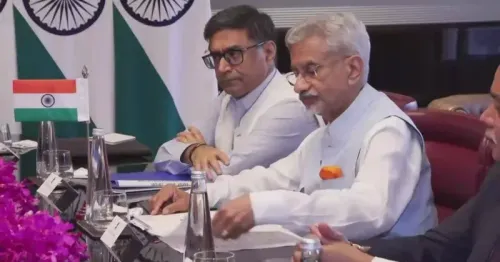
Union External Affairs Minister Dr. S. Jaishankar on Saturday, June 6, 2026, held a follow-up engagement with Nepal's Finance Minister Shisir Khanal, overseeing the handover of reconstruction projects, the launch of a cross-border payments link, and the signing of a digital language infrastructure agreement — marking a significant step in India-Nepal bilateral ties.
Context
The flurry of deliverables followed what Dr. Jaishankar described as a 'productive meeting' with FM Khanal. Three distinct outcomes were announced: the virtual handover of 72 health facilities and 12 cultural heritage projects under India's post-earthquake Reconstruction Programme; the joint launch of a payments interface linking India's UPI and Nepal's National Payments Interface; and the signing of a Memorandum of Understanding between Digital India Bhashini and Kathmandu University for a 'Voice First' language translation platform.
The minister tagged the developments under #NeighbourhoodFirst, the policy framework that has guided India's outreach to immediate neighbours since 2014.
Policy Backdrop
The reconstruction handover traces directly to India's USD 1 billion assistance pledge following the April 2015 earthquake — a magnitude 7.8 tremor that devastated Nepal's health and heritage infrastructure. The package covered schools, hospitals and cultural sites, and today's virtual ceremony marks the formal completion of 84 projects under that commitment.
The UPI-Nepal payments linkage is part of a broader arc of cross-border digital finance that India has extended across the region — earlier operationalised with Bhutan in 2020 and with Singapore in 2023. For Nepal, where remittances from workers in India form a significant share of household income, a direct UPI-to-NPI corridor could reduce transaction costs and processing time for personal transfers.
Digital India Bhashini, launched in 2022, is the Government of India's AI-driven public digital infrastructure for real-time language translation across Indic languages. The MoU with Kathmandu University extends its mandate to co-create a 'Voice First' platform tailored to Nepal's linguistic landscape — signalling an intent to make the tool genuinely bilateral rather than a unilateral export.
Stakeholders and Impact
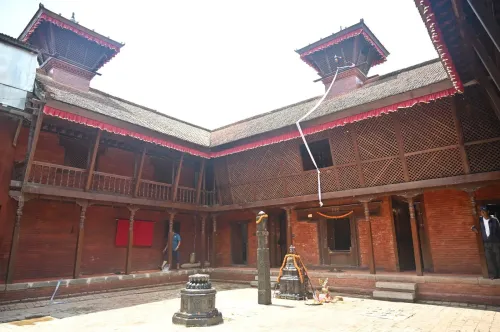
Nepali citizens in rural districts stand to benefit most directly from the 72 health facilities now formally handed over, many of which serve communities still recovering from the 2015 disaster. The 12 cultural heritage projects are significant for Nepal's tourism economy and its intangible cultural identity, with several sites holding religious importance for both countries.
For the Nepali diaspora and migrant workers in India, the UPI-NPI linkage directly addresses a long-standing friction point: cross-border personal remittances have historically relied on informal channels or high-fee correspondent banking. A regulated, low-cost digital corridor could formalise a large volume of transfers. The Bhashini-Kathmandu University collaboration, meanwhile, positions academic institutions as co-owners of the platform, which may improve adoption and localisation for Nepali language users.
What's Next
Observers will watch for the operational launch timeline of the UPI-Nepal payments corridor and early user-uptake data, which will test whether the regulatory and technical plumbing translates into real-world usage. The Bhashini-Kathmandu University MoU deliverables — including prototype timelines and language coverage — are expected to surface at upcoming India-Nepal Joint Commission meetings. Together, the three announcements reinforce a pattern in which India is increasingly combining physical infrastructure completion with digital public goods as the twin pillars of its Neighbourhood First engagement.
Point of View
Digital payments diplomacy, and AI-driven soft power. By completing the 2015 earthquake reconstruction handover nearly a decade after the pledge, New Delhi closes a credibility gap that had lingered in bilateral discourse. The UPI-Nepal link is the most consequential near-term deliverable: if uptake is strong, it will deepen financial interdependence in ways that outlast any single government on either side. The Bhashini MoU, though less immediately tangible, signals that India is willing to co-develop — not merely donate — digital public infrastructure, a posture that could prove more durable and politically palatable in Kathmandu.
NationPress
21 Oct 2026
Frequently Asked Questions
What is the UPI-Nepal payments link launched by Jaishankar?
It is a cross-border digital payments corridor linking India's Unified Payments Interface (UPI), operated by NPCI, with Nepal's National Payments Interface, designed to facilitate low-cost personal remittances between the two countries.
How many projects did India hand over to Nepal under the 2015 earthquake reconstruction programme?
India virtually handed over a total of 84 projects — comprising 72 health facilities and 12 cultural heritage sites — under its post-2015 earthquake Reconstruction Programme for Nepal.
What is Digital India Bhashini and why is it relevant to Nepal?
Digital India Bhashini is an AI-based language translation platform launched by the Government of India in 2022. Its MoU with Kathmandu University aims to co-create a 'Voice First' language translation platform tailored to Nepal's linguistic needs.
What is India's Neighbourhood First policy?
Neighbourhood First is India's foreign policy framework, active since 2014, that prioritises development cooperation, connectivity, and people-to-people ties with immediate neighbours including Nepal, Bhutan, Bangladesh, Sri Lanka, and the Maldives.
Has India linked UPI with other countries before Nepal?
Yes. India operationalised a UPI payments link with Bhutan in 2020 and with Singapore in 2023 , as part of a broader push to extend its digital payments infrastructure across key bilateral relationships.