India-funded restoration revives centuries-old Buddhist complex in Lalitpur
Synopsis
A decade after the 2015 earthquake killed nearly 9,000 people, India has helped restore one of Lalitpur's most significant Buddhist complexes with a NPR 120 million grant — part of a USD 1 billion bilateral commitment that has now touched 30 heritage sites, 85 schools, 133 health facilities, and 50,000 homes across Nepal.
Key Takeaways
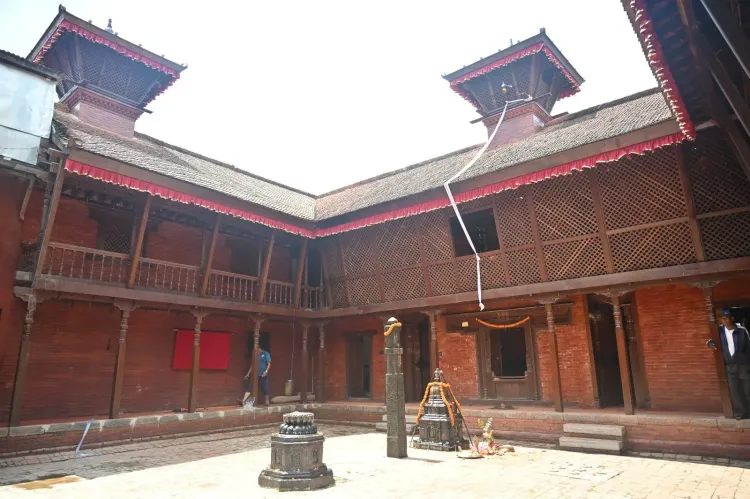
The restored Shree Gusthal Mahavihar and Agam of Prathamshree Mahavihar at Guita Tole, Lalitpur were inaugurated on Tuesday, 29 July 2025 .
Restoration was funded by a Government of India grant of approximately NPR 120 million .
India has supported conservation of 30 cultural heritage sites across 8 districts of Nepal under its post-earthquake programme.
India's total post-earthquake commitment to Nepal stands at USD 1 billion — USD 250 million in grants and USD 750 million via Line of Credit.
The programme has also covered 50,000 private houses , 85 schools , and 133 health facilities across Nepal.
The 2015 Nepal earthquake claimed nearly 9,000 lives and devastated cultural heritage sites and infrastructure nationwide.
A centuries-old Buddhist heritage complex in Lalitpur district, Kathmandu Valley, has been formally restored under India's post-earthquake reconstruction assistance programme, the Embassy of India in Kathmandu confirmed on 29 July 2025. The inauguration marks a significant milestone in bilateral efforts to rebuild Nepal's cultural fabric a decade after the devastating 2015 earthquake.
The Inauguration
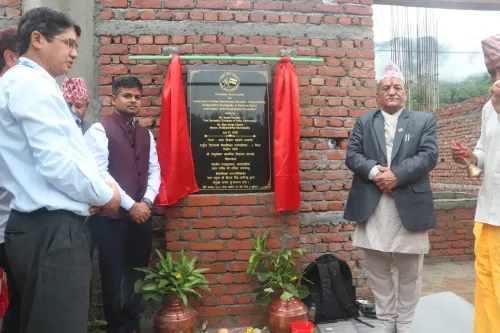
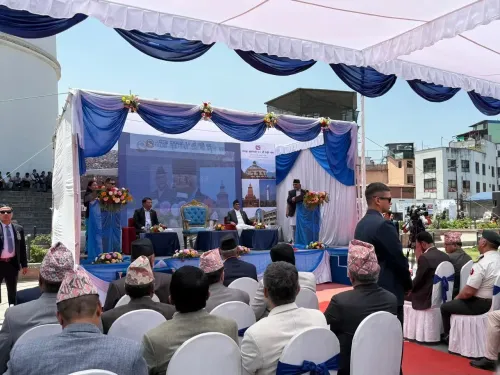
Nepal lawmaker Jagdish Kharel, Lalitpur Metropolitan City Mayor Chiribabu Maharjan, and Indian Ambassador to Nepal Naveen Srivastava jointly inaugurated the restored Shree Gusthal Mahavihar and the Agam of Prathamshree Mahavihar at Guita Tole in Lalitpur on Tuesday. The restoration was funded through a grant of approximately NPR 120 million from the Government of India.
How the Project Was Executed
The project was implemented by the Central Level Project Implementation Unit (Buildings and Housing) under the Government of Nepal. Design and project management consultancy services were provided by the Indian National Trust for Art and Cultural Heritage (INTACH), lending technical rigour to the conservation effort.
Lawmaker Kharel praised the resilience of the local community and stressed the importance of preserving living heritage sites such as Gusthal Mahavihar. He also acknowledged India's sustained support in restoring cultural assets damaged by the 2015 earthquake. Mayor Maharjan commended both India's contribution and the residents of Lalitpur for their continued efforts to protect the city's historical identity.
What India's Assistance Has Covered
According to the Indian Embassy, India has supported the conservation of 30 cultural heritage sites across eight districts of Nepal under the post-earthquake reconstruction programme. Beyond heritage, the assistance has encompassed the reconstruction of 50,000 private houses in Gorkha and Nuwakot, 85 educational institutions across eight districts, and 133 health facilities in 11 districts.
India committed a total of USD 1 billion — comprising USD 250 million in grants and USD 750 million through a Line of Credit — making it one of the largest bilateral donors to Nepal's post-earthquake reconstruction effort.
Shared Heritage, Enduring Ties
Ambassador Srivastava said the restoration reflects the 'deep-rooted cultural and civilizational ties' between Nepal and India, describing the revived monument as a symbol of the two countries' shared heritage and enduring friendship. Notably, the 2015 earthquake claimed nearly 9,000 lives and damaged hundreds of cultural heritage sites and public infrastructure across Nepal — the restoration of Gusthal Mahavihar is among the most symbolically significant recoveries to date.
With the Lalitpur inauguration complete, attention turns to the remaining pipeline of heritage and infrastructure projects under India's bilateral commitment, several of which are reportedly in advanced stages of implementation.
Point of View
Not just infrastructure loans. Restoring Buddhist heritage in the Kathmandu Valley carries particular resonance given China's own deepening cultural and economic footprint in Nepal. What is less discussed is the implementation gap: a decade after the earthquake, only 30 of Nepal's hundreds of damaged heritage sites have been addressed under this programme, raising questions about pace and prioritisation. The USD 1 billion commitment is substantial, but the distribution between grants and credit means Nepal still carries debt obligations for reconstruction it did not choose to need.
NationPress
27 Oct 2026
Frequently Asked Questions
Which heritage sites were restored in Lalitpur with India's assistance?
The restored sites are the Shree Gusthal Mahavihar and the Agam of Prathamshree Mahavihar , both located at Guita Tole in Lalitpur district, Kathmandu Valley. They were inaugurated on Tuesday, 29 July 2025, with funding from a Government of India grant of approximately NPR 120 million.
How much has India committed to Nepal's post-earthquake reconstruction?
India committed a total of USD 1 billion — USD 250 million in outright grants and USD 750 million through a Line of Credit — making it one of Nepal's largest bilateral donors for post-earthquake recovery. The assistance spans housing, schools, health facilities, and cultural heritage restoration.
How many cultural heritage sites has India helped restore in Nepal?
According to the Indian Embassy, India has supported the conservation of 30 cultural heritage sites across eight districts of Nepal under its post-earthquake reconstruction programme.
What role did INTACH play in the Lalitpur restoration?
The Indian National Trust for Art and Cultural Heritage (INTACH) provided design and project management consultancy services for the restoration. Physical implementation was carried out by the Central Level Project Implementation Unit (Buildings and Housing) under the Government of Nepal.
Why is the 2015 Nepal earthquake significant to this restoration?
The April 2015 earthquake claimed nearly 9,000 lives and caused widespread damage to cultural heritage sites, homes, schools, and health facilities across Nepal. India's post-earthquake assistance programme, of which this restoration is a part, was launched in direct response to that disaster.