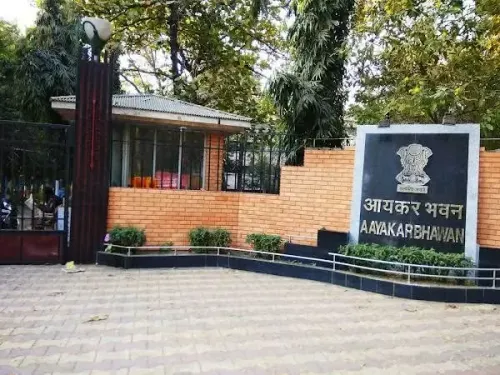
CBDT raises Cost Inflation Index to 384 for FY 2026-27

Synopsis
CBDT has revised the Cost Inflation Index to 384 for FY 2026-27 — a 2.3% uptick — but its real-world impact is now confined to a narrow group: resident individuals and HUFs selling property acquired before 23 July 2024. For everyone else, the Finance Act 2024's flat 12.5% regime already overrides indexation entirely.
Key Takeaways
CBDT raised the Cost Inflation Index (CII) to 384 for FY 2026-27 , up 2.3% from 376 in FY 2025-26.
The notification was issued on 15 July 2026 and applies from 1 April 2026 .
Indexation benefits were discontinued for most assets transferred on or after 23 July 2024 under the Finance Act, 2024 ; a flat 12.5% tax rate now applies.
Resident individuals and HUFs selling land or buildings acquired before 23 July 2024 can still choose between 12.5% without indexation and 20% with indexation .
Net direct tax collections grew 16.4% year-on-year to ₹6.51 lakh crore as of 13 July 2026 , with STT collections surging over 44% .
The Central Board of Direct Taxes (CBDT) has raised the Cost Inflation Index (CII) for financial year 2026-27 to 384, up 2.3% from 376 in the previous year. The official notification was issued on 15 July 2026 and takes effect from 1 April 2026 for all applicable tax calculations.
What the Cost Inflation Index Does
The CII adjusts the original purchase price of a capital asset — such as land or property — for inflation accumulated over the years of ownership. By inflating the cost base, it reduces the computed long-term capital gain, and consequently the tax owed, when the asset is sold. This mechanism is designed to ensure taxpayers are not penalised for nominal price appreciation that merely reflects inflation rather than real economic gain.
Limited Applicability After Finance Act 2024
Notably, the practical reach of the CII has narrowed significantly. Following amendments introduced under the Finance Act, 2024, indexation benefits have been discontinued for most long-term capital assets transferred on or after 23 July 2024. A flat 12.5% tax rate now applies to such transfers, without indexation.
The CII retains relevance only in a grandfathered scenario: resident individuals and Hindu Undivided Families (HUFs) selling land or buildings acquired before 23 July 2024 may choose between the new 12.5% rate without indexation and the older 20% rate with indexation — whichever results in a lower tax liability. For this segment, the revised CII of 384 could meaningfully reduce the taxable gain.
Direct Tax Collections Surge in FY 2026-27
The CII revision comes against the backdrop of a strong direct tax performance. India's net direct tax collections grew 16.4% year-on-year to ₹6.51 lakh crore as of 13 July 2026, according to CBDT data.
Within that, net corporate tax collections rose over 22% to approximately ₹2.40 lakh crore, while net non-corporate tax collections climbed around 12% to ₹3.85 lakh crore. Securities Transaction Tax (STT) collections surged over 44% to more than ₹26,000 crore, reflecting heightened equity market activity.
What Taxpayers Should Know
For most property sellers, the flat 12.5% regime introduced in 2024 will apply automatically. However, those who acquired land or buildings before 23 July 2024 retain the option to compute tax under both regimes and opt for the lower figure. Tax experts advise running both calculations before filing, as the better outcome will vary depending on the asset's holding period and original acquisition cost. The CBDT notification ensures the updated CII is available for such computations from the start of the current financial year.
Point of View
Making this notification consequential for a shrinking pool of taxpayers. The real story in this release is the direct tax surge: 16.4% growth and a 44% STT jump signal that equity market buoyancy is now a meaningful revenue variable for the Centre — a dependency that deserves scrutiny if market conditions reverse.
NationPress
16 Jul 2026
Frequently Asked Questions
What is the Cost Inflation Index for FY 2026-27?
The CBDT has set the Cost Inflation Index at 384 for financial year 2026-27, up 2.3% from 376 in FY 2025-26. The revised index applies from 1 April 2026 for eligible tax calculations.
Who benefits from the revised CII of 384?
The benefit is limited to resident individuals and Hindu Undivided Families (HUFs) who are selling land or buildings acquired before 23 July 2024. They can choose between paying 12.5% tax without indexation or 20% with indexation, whichever is lower.
Why is the CII no longer relevant for most taxpayers?
The Finance Act, 2024 discontinued indexation benefits for most long-term capital assets transferred on or after 23 July 2024, replacing them with a flat 12.5% tax rate. As a result, the CII now applies only in a grandfathered scenario for pre-July 2024 property acquisitions.
How are India's direct tax collections performing in FY 2026-27?
Net direct tax collections grew 16.4% year-on-year to ₹6.51 lakh crore as of 13 July 2026, according to CBDT figures. Corporate tax rose over 22%, non-corporate tax climbed around 12%, and Securities Transaction Tax jumped over 44% to more than ₹26,000 crore.
When was the CBDT notification for CII 384 issued?
The CBDT issued the notification on 15 July 2026. It is effective retrospectively from 1 April 2026, covering the entire financial year 2026-27.