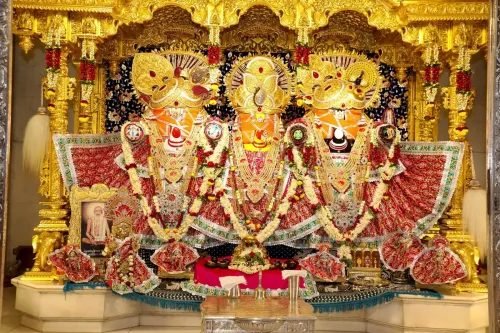
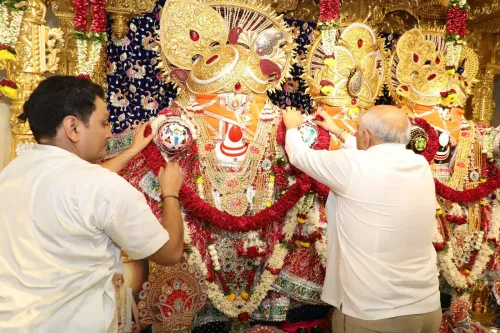
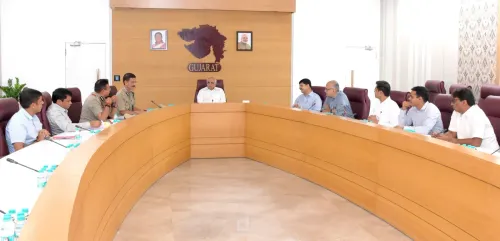
CM Bhupendra Patel Greets Gujarat on Rath Yatra, Ashadhi Bij
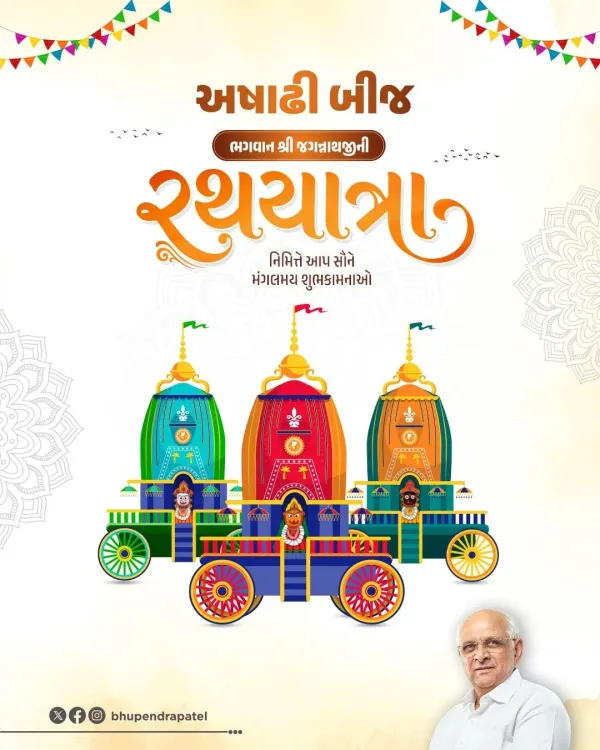
Synopsis
Gujarat Chief Minister Bhupendra Patel marked Ashadhi Bij and the Jagannath Rath Yatra on 16 July 2026 with a Gujarati-language message calling the chariot festival a symbol of tradition, faith, and social harmony, and praying for the state's and nation's progress.
Key Takeaways
CM Bhupendra Patel posted Ashadhi Bij and Rath Yatra greetings on 16 July 2026 in Gujarati.
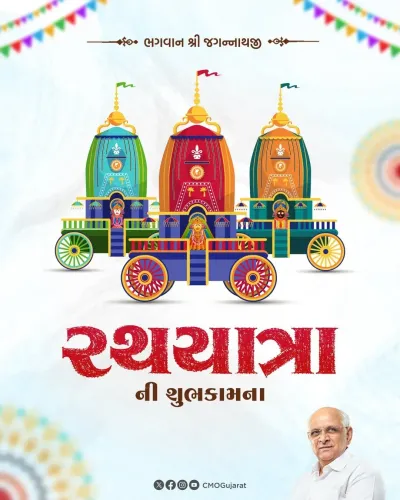
He described the Rath Yatra of Lord Jagannath, Subhadra, and Balabhadra as a confluence of tradition, faith, and social harmony — not merely a religious event.
The Chief Minister invoked the blessings of Mahaprabhu Jagannath for happiness, peace, health, and prosperity for all.
Gujarat governments have a history of officially supporting Rath Yatra observances across major cities.
The message concluded with the traditional greeting Jai Jagannath , reflecting the festival's deep cultural resonance in Gujarat.
Gujarat Chief Minister Bhupendra Patel extended warm greetings to the people of Gujarat and the nation on the occasion of Ashadhi Bij and the Jagannath Rath Yatra on Thursday, 16 July 2026, invoking the blessings of Lord Jagannath for peace, prosperity, and progress across the state and country.
Context
Posting in Gujarati on the morning of the festival, CM Patel described the grand chariot procession of Mahaprabhu Jagannath, Bahen Subhadraji ane Bhai Balbhadraji — Lord Jagannath, sister Subhadra, and brother Balabhadra — as far more than a religious celebration. In his words, the Rath Yatra is 'not merely a religious festival, but a confluence of our glorious tradition, faith, and social harmony.' He concluded the message with the traditional invocation Jai Jagannath.
Ashadhi Bij, the second day of the bright fortnight of the Hindu month of Ashadh, marks the formal start of the Rath Yatra season. The festival holds particular cultural significance in Gujarat, where processions are held in multiple cities.
Policy Backdrop
Gujarat administrations have consistently supported the public observance of the Jagannath Rath Yatra as a major cultural and civic event, with official participation in city-level processions in prior years. The BJP-led state government has framed the festival as an expression of social harmony — a recurring theme in the party's cultural outreach across its governed states.
Such festival greetings from sitting chief ministers are a well-established practice in Indian politics, used to reinforce cultural identity and connect governance with public faith. CM Patel specifically prayed that 'by the grace of Mahaprabhu Jagannath, our state and country always remain on the path of progress, and that happiness, peace, health, and prosperity pervade everyone's life.'
Stakeholders and Impact
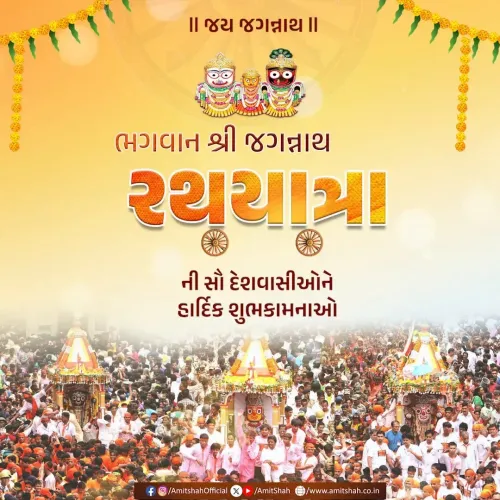
Hindu devotees across Gujarat and the broader Vaishnava community are the primary audience for this message. The Rath Yatra draws large public participation in cities such as Ahmedabad, Surat, and Vadodara, where the procession is both a religious and community event.
The emphasis on samajik samarasata — social harmony — in the Chief Minister's message reflects the festival's tradition of cutting across caste and community lines, a dimension that BJP-led governments have highlighted in their cultural messaging in recent years.
What's Next
Rath Yatra processions across Gujarat's major cities are expected to draw significant public and official participation in the coming days, with the scale of state government involvement likely to reflect the administration's continued emphasis on cultural heritage. The festival's conclusion will mark the end of the formal Ashadhi Bij observance for 2026.
Point of View
Social cohesion, and developmental aspiration — framing faith not as sectarian but as a unifying civic force. The specific invocation of 'social harmony' alongside tradition signals an effort to present the Rath Yatra as an inclusive public institution rather than a purely denominational event. In the run-up to local civic cycles and within Gujarat's politically competitive cultural landscape, such messaging reinforces the ruling party's positioning as the custodian of the state's Hindu heritage. The forward-looking prayer for state and national progress also subtly links divine blessing with the government's governance record.
NationPress
15 Oct 2026
Frequently Asked Questions
What is Ashadhi Bij and why is it significant in Gujarat?
Ashadhi Bij is the second day of the bright fortnight of the Hindu month of Ashadh and marks the traditional start of the Jagannath Rath Yatra season. In Gujarat, it is observed as a major cultural and religious occasion with large chariot processions in cities like Ahmedabad, Surat, and Vadodara.
What did Gujarat CM Bhupendra Patel say about the Rath Yatra?
CM Bhupendra Patel called the Rath Yatra 'not merely a religious festival, but a confluence of our glorious tradition, faith, and social harmony,' and prayed for happiness, peace, health, and prosperity for all citizens.
When is Jagannath Rath Yatra 2026?
The Jagannath Rath Yatra in 2026 falls on Ashadhi Bij, which corresponds to 16 July 2026 , the date on which CM Patel issued his greetings.
Who are the deities in the Jagannath Rath Yatra procession?
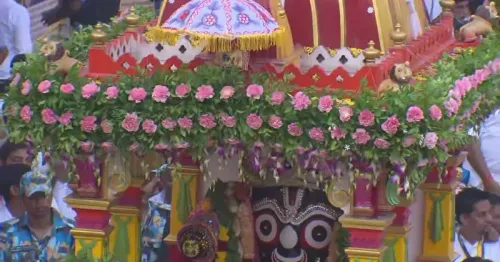
The Rath Yatra procession features three deities: Lord Jagannath , his sister Subhadra , and his brother Balabhadra , each carried on separate elaborately decorated chariots.
Does the Gujarat government officially participate in the Rath Yatra?
Yes, Gujarat administrations have a history of officially supporting and participating in Rath Yatra processions across major cities, treating it as both a cultural and civic event.