Karnataka CM's Office Pushes World-Class Infrastructure Vision
Synopsis
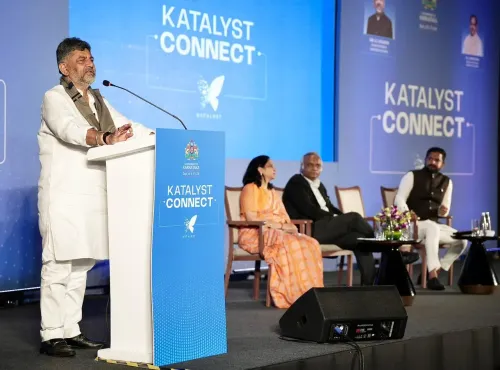
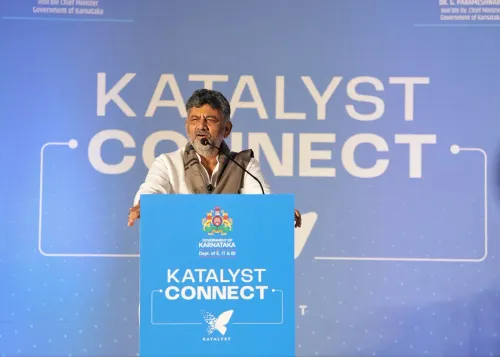
The Chief Minister's Office of Karnataka on 12 July 2026 announced a sweeping infrastructure and connectivity agenda under CM DK Shivakumar, aiming to position Bengaluru as a global hub while driving investment and jobs into Tier-2 and Tier-3 cities across the state.
Key Takeaways
The Chief Minister's Office of Karnataka on 12 July 2026 publicly outlined a world-class infrastructure and inclusive growth agenda for the state.
Chief Minister DK Shivakumar is credited with leading the initiative to build 'a strong foundation for the next generation of progress.' Bengaluru is to be developed as a 'global growth engine,' with simultaneous focus on Tier-2 and Tier-3 cities across Karnataka.
Key goals include attracting investment, creating quality jobs, and expanding economic opportunity beyond the state capital.
Karnataka's approach mirrors competitive infrastructure strategies adopted by Tamil Nadu and Maharashtra to spread industrialisation statewide.
Upcoming state budget allocations and Global Investors Meet announcements will be key indicators of concrete follow-through.
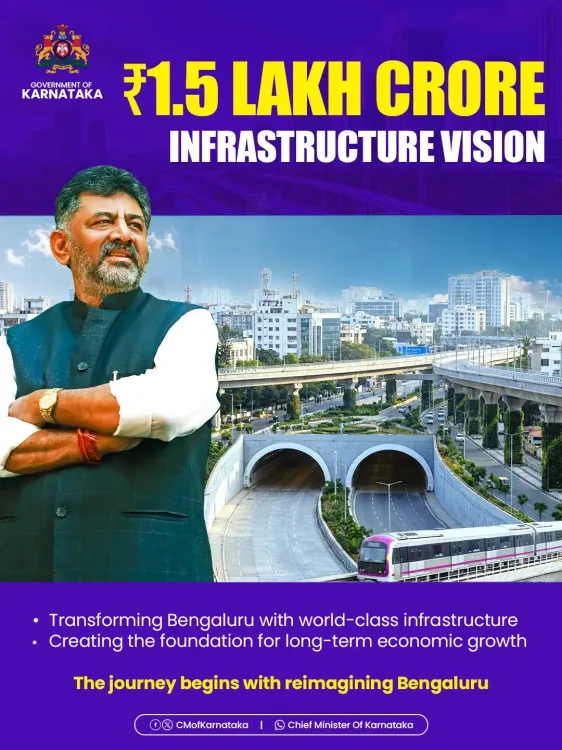
The Chief Minister's Office of Karnataka on Sunday, 12 July 2026, outlined an ambitious infrastructure and economic growth agenda for the state, emphasising connectivity upgrades, investment attraction, and the expansion of economic opportunity beyond Bengaluru to Tier-2 and Tier-3 cities across Karnataka.
Context
The official post from the Chief Minister's Office of Karnataka described the state as moving 'towards a future of world-class infrastructure, stronger connectivity, and inclusive economic growth.' The statement credits the government's direction to Chief Minister Shri DK Shivakumar, framing ongoing initiatives as building 'a strong foundation for the next generation of progress.'
The communication highlights a dual focus: transforming Bengaluru into a 'global growth engine' while simultaneously creating fresh economic opportunities in smaller urban centres across the state. Every initiative, the post states, is 'designed to attract investment, create quality jobs, and drive inclusive economic growth.'
Policy Backdrop
Karnataka has pursued aggressive industrial and infrastructure policy over recent years. The state's industrial policy framework has targeted sectors including electronics, IT, and aerospace, seeking to draw fresh domestic and foreign investment and generate employment at scale.
Bengaluru, as India's leading IT hub, has been the focal point of multiple metro expansion, airport development, and elevated corridor projects aimed at easing chronic urban congestion. The current government's stated ambition to extend this momentum to Tier-2 and Tier-3 cities represents a deliberate policy shift toward more geographically distributed growth.
Indian states increasingly compete for domestic capital and foreign direct investment by upgrading airports, ring roads, and logistics parks. Karnataka's approach mirrors parallel efforts in Tamil Nadu and Maharashtra, which have similarly sought to spread industrialisation beyond their primary metros.
Stakeholders and Impact
The beneficiaries of this agenda span a wide spectrum: private investors and multinational firms seeking land, infrastructure, and skilled labour; businesses in smaller Karnataka cities that stand to gain from improved logistics and connectivity; and urban commuters in Bengaluru who would benefit from eased congestion through new transit corridors.
For residents of Tier-2 and Tier-3 towns such as Hubballi-Dharwad, Mysuru, Mangaluru, and Belagavi, a meaningful decentralisation of investment could translate into local job creation and reduced migration pressure toward the state capital. Quality infrastructure in these centres is widely seen as a prerequisite for attracting anchor industries.
What's Next
Observers and investors will watch upcoming state budget allocations closely to gauge the financial commitments behind this policy direction. Announcements around any fresh Global Investors Meet dates, new industrial corridor proposals, or metro and suburban rail funding will serve as concrete indicators of the government's follow-through.
Progress on land acquisition and public-private partnership tenders for expressway and suburban rail projects will be equally critical. The credibility of Karnataka's infrastructure ambition will ultimately rest on the pace at which planned projects move from announcement to ground-level execution.
Point of View
As with similar announcements across Indian states, will be the speed and scale of budgetary allocation and project execution on the ground.
NationPress
12 Jul 2026
Frequently Asked Questions
What is Karnataka's infrastructure plan announced in July 2026?
The Chief Minister's Office of Karnataka on 12 July 2026 outlined a plan to develop world-class infrastructure and stronger connectivity across the state, with a focus on making Bengaluru a global growth engine and expanding economic opportunities to Tier-2 and Tier-3 cities.
What is DK Shivakumar's role in Karnataka's infrastructure push?
DK Shivakumar is the Chief Minister of Karnataka under whose leadership the government is pursuing this infrastructure and inclusive economic growth agenda, according to the official CMO post dated 12 July 2026.
Which cities in Karnataka will benefit from the new infrastructure initiative?
While Bengaluru is the primary focus as a global growth engine, the initiative explicitly targets Tier-2 and Tier-3 cities across Karnataka, aiming to create new investment and employment opportunities beyond the state capital.
How does Karnataka's infrastructure plan compare to other Indian states?
Karnataka's push to spread infrastructure and industrialisation to smaller cities mirrors similar strategies adopted by Tamil Nadu and Maharashtra, as Indian states increasingly compete for domestic capital and foreign direct investment.
What should investors and observers watch for next in Karnataka's infrastructure agenda?
Key indicators will include upcoming state budget allocations, any new Global Investors Meet announcements, and the progress of land acquisition and public-private partnership tenders for expressway, metro, and suburban rail projects.