CM Siddaramaiah Govt Pledges Jobs Push in Karnataka's Tier-2, Tier-3 Cities

Synopsis
The Chief Minister's Office of Karnataka declared on 9 July 2026 that the DK Shivakumar-led government is committed to spurring industry in tier-2 and tier-3 cities to generate youth employment and build a more prosperous, regionally balanced Karnataka.
Key Takeaways
The Chief Minister's Office of Karnataka posted on 9 July 2026 reaffirming the government's commitment to decentralised industrial growth.
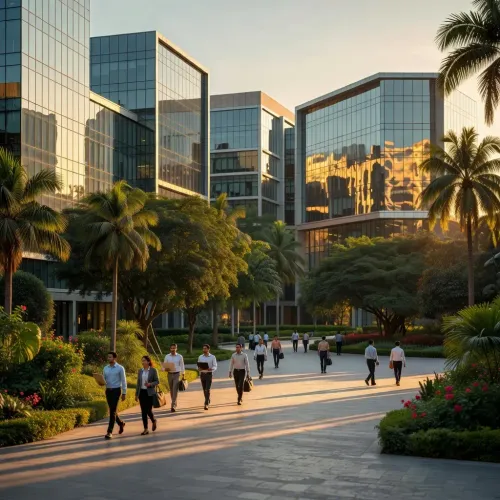
The post, in Kannada, stated that 'employment is the foundation of development' and pledged to encourage enterprise in tier-2 and tier-3 cities .
The initiative targets youth employment as its primary outcome, aiming to reduce dependence on Bengaluru for formal jobs.
The policy continues a lineage stretching back to the Karnataka Industrial Policy 2020-25 , which offered capital subsidies and single-window clearances outside Bengaluru.
Cities such as Mysuru , Hubballi-Dharwad , and Kalaburagi are historically cited as targets for this decentralisation push.
Specific incentive packages, budget allocations, and new industrial corridors are yet to be announced.
The Chief Minister's Office of Karnataka reaffirmed on Thursday, 9 July 2026 that the state government, led by Chief Minister DK Shivakumar, is committed to fostering enterprise and creating employment opportunities for youth in the state's second- and third-tier cities as the cornerstone of equitable development.
The official post, written in Kannada, declared: 'ಉದ್ಯೋಗವೇ ಅಭಿವೃದ್ಧಿಯ ಅಡಿಪಾಯ' ('Employment is the foundation of development'). It stated that the government is 'committed to building a prosperous Karnataka by encouraging the launch of industries in the state's tier-2 and tier-3 cities and creating employment opportunities for youth.'
Context
Karnataka's economic geography has long been skewed toward Bengaluru, which accounts for the overwhelming share of formal employment, investment, and high-skill jobs. Cities such as Mysuru, Hubballi-Dharwad, and Kalaburagi have repeatedly featured in state policy documents as targets for decentralised industrial growth, yet the gap between the capital and the rest of the state has persisted. Persistent youth unemployment and rural-to-urban migration pressures have kept this imbalance at the centre of political debate in the state.Policy Backdrop
The statement continues a long-running policy thread. The Karnataka Industrial Policy 2020-25 offered capital subsidies and single-window clearances specifically designed to attract manufacturing and services investment outside Bengaluru. Successive state governments since the early 2010s have introduced similar incentive frameworks, including dedicated industrial corridors and cluster-based development schemes, to seed growth in smaller urban centres. The current government's pledge signals that this decentralisation agenda will remain a priority in the ongoing policy cycle.Stakeholders and Impact
The primary beneficiaries identified in the government's statement are Karnataka's youth and aspiring tier-2 and tier-3 entrepreneurs. For young job-seekers outside Bengaluru, expanded local industry means reduced pressure to migrate to the capital or other metro cities. For small-city business owners and startups, government incentives — if translated into concrete programmes — could lower the cost and complexity of establishing enterprises. The broader Karnataka economy stands to gain through more regionally balanced tax revenues and reduced infrastructure stress on Bengaluru.What's Next
The government has not yet announced the specific incentive packages, budget allocations, or new industrial corridors that would operationalise this commitment. Policy watchers will look to the next Karnataka state budget and any forthcoming Global Investors Meet for concrete details. The articulation of this goal through the Chief Minister's Office's official channel suggests it will feature prominently in the administration's near-term economic messaging.Point of View
Where Congress performed strongly in the 2023 assembly election. By anchoring the message in tier-2 and tier-3 cities, the government signals awareness that Bengaluru-centric growth is a political liability in the rest of the state. This pledge fits a broader national pattern of state governments using industrial decentralisation as both economic policy and electoral positioning ahead of local body and assembly cycles. The real test will be whether the rhetoric translates into measurable investment and job numbers in cities like Hubballi-Dharwad and Kalaburagi before the next electoral reckoning.
NationPress
8 Oct 2026
Frequently Asked Questions
What did the Karnataka government announce about jobs in tier-2 and tier-3 cities?
The Chief Minister's Office of Karnataka announced on 9 July 2026 that the government is committed to encouraging industry in tier-2 and tier-3 cities to create employment opportunities for youth and build a prosperous Karnataka.
Who leads the Karnataka government making this jobs pledge?
The post attributes the commitment to the government led by Chief Minister DK Shivakumar , a senior Congress leader who also holds key development and finance portfolios.
Which Karnataka cities could benefit from this tier-2 and tier-3 city jobs policy?
Historically, cities such as Mysuru , Hubballi-Dharwad , and Kalaburagi have been the primary targets of Karnataka's industrial decentralisation policies, and they are likely to feature in any new initiative under this commitment.
What is Karnataka's track record on industrial policy outside Bengaluru?
The Karnataka Industrial Policy 2020-25 offered capital subsidies and single-window clearances to attract investment outside Bengaluru, continuing a series of such frameworks introduced since the early 2010s, though the capital has remained dominant in formal employment.
What should we watch for next regarding Karnataka's tier-2 city employment push?
Analysts will watch the next Karnataka state budget and any Global Investors Meet announcement for specific incentive packages, budget allocations, and details of new industrial corridors that would put concrete shape to this commitment.