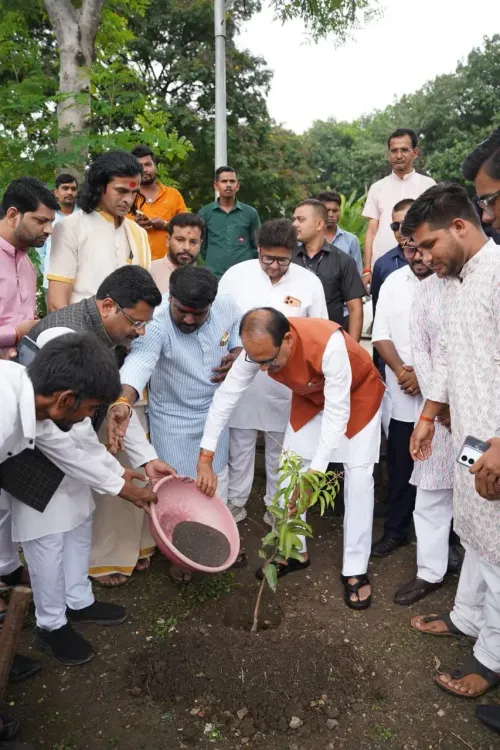
Shivraj Singh Chouhan Plants Sapling at Bhopal's Ravindra Bhawan
Synopsis
Union Agriculture Minister Shivraj Singh Chouhan planted a sapling at Bhopal's Ravindra Bhawan on 9 July 2026 under his daily #OnePlantADay pledge, calling on all Indians to plant at least one tree and contribute to environmental protection as India works toward its 33 per cent forest-cover goal.
Key Takeaways
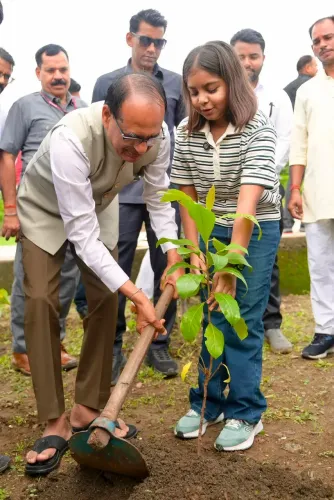
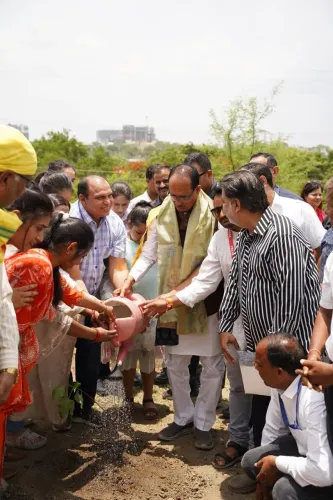
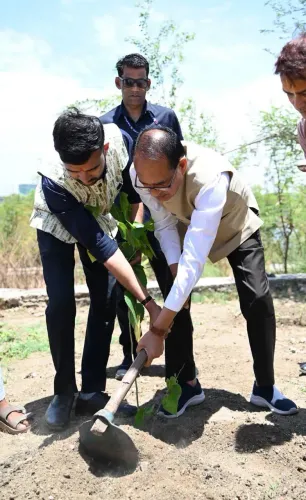
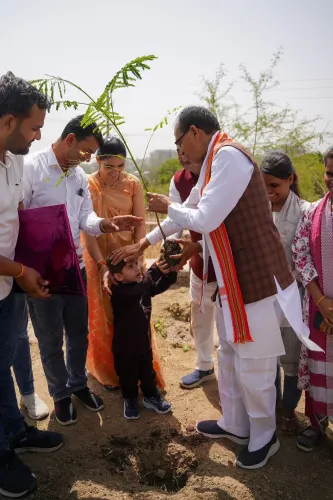
Shivraj Singh Chouhan planted a sapling at Ravindra Bhawan, Bhopal on 9 July 2026 as part of his ongoing #OnePlantADay pledge.
He urged every citizen to plant at least one tree to contribute to nature conservation and environmental protection.
India's recorded forest cover stands at approximately 21.7 per cent , against a national target of 33 per cent .
India committed in 2015 to creating an additional carbon sink of 2.5–3 billion tonnes CO₂ equivalent through forest and tree cover by 2030 .
The monsoon season (July–September) is India's peak planting window, when state forest departments scale up afforestation drives.
Chouhan's daily public pledge echoes a long tradition of ministerial afforestation symbolism dating to Van Mahotsav in 1950 .
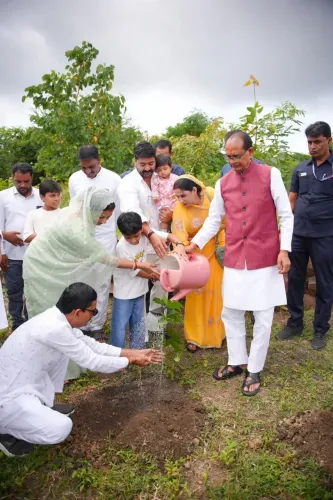
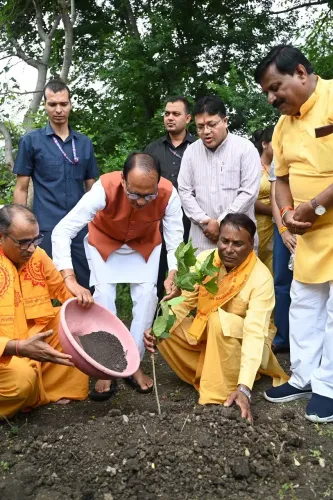
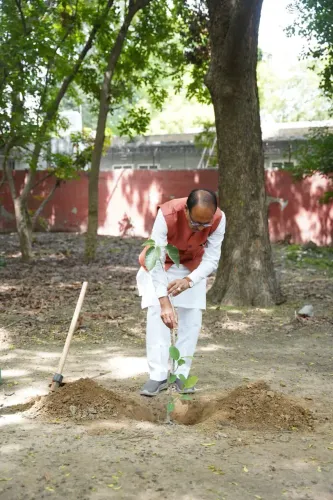
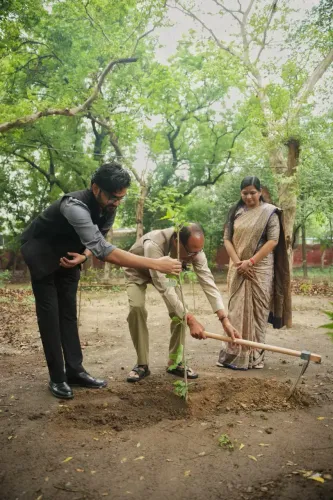
Union Agriculture Minister Shivraj Singh Chouhan on Thursday, 9 July 2026, planted a sapling at the Ravindra Bhawan complex in Bhopal, continuing his daily tree-planting pledge under the #OnePlantADay campaign and urging citizens across India to join the effort.
Posting on X in Hindi, the minister wrote: 'प्रतिदिन पौधरोपण के संकल्प के क्रम में आज भोपाल स्थित रवींद्र भवन परिसर में पौधा रोपा' ('In continuation of my daily tree-planting pledge, I planted a sapling today at the Ravindra Bhawan complex in Bhopal'). He added a call to action: 'Let us all plant at least one sapling and make our important contribution to serving nature and protecting the environment.'
Context
Ravindra Bhawan is a prominent cultural and convention centre in Bhopal, the capital of Madhya Pradesh, and a frequent venue for official and public events. Chouhan's choice of the complex for the day's planting underscores a broader effort to normalise afforestation as an everyday civic act rather than a seasonal or ceremonial one. The #OnePlantADay hashtag signals an attempt to build a visible, consistent personal commitment to the cause.
Policy Backdrop
India's tree-planting tradition in public life dates to 1950, when Van Mahotsav was launched to encourage mass participation in afforestation. The National Afforestation Programme, initiated in 2000–01, further institutionalised efforts to regenerate degraded forests through community forest management. At the international level, India's Nationally Determined Contribution submitted in 2015 committed to creating an additional carbon sink of 2.5–3 billion tonnes of CO₂ equivalent through forest and tree cover by 2030.
The Green India Mission, one of eight national missions under the National Action Plan on Climate Change, targets the expansion and improvement of forest and tree cover across the country. India's recorded forest cover currently stands at approximately 21.7 per cent of its geographical area, well short of the national goal of 33 per cent.
Stakeholders and Impact
Symbolic ministerial tree-planting carries measurable downstream effects: it amplifies state forest department drives, encourages urban residents to participate in local greening initiatives, and keeps India's climate commitments in public discourse. For Chouhan, who served four terms as Chief Minister of Madhya Pradesh before moving to the Union Cabinet, such acts also reinforce a long-standing personal brand built around grassroots engagement and environmental messaging.
Urban communities in Bhopal and beyond are the immediate audience for the appeal, but the campaign's social-media reach extends the call to a national public. Schools, resident welfare associations, and youth groups have historically been the primary ground-level actors in government-backed plantation drives during the monsoon season.
What's Next
The monsoon months — typically July through September — are India's peak tree-planting window, when soil moisture maximises sapling survival rates. State forest departments are expected to report plantation targets and progress figures in the coming weeks. Any new funding allocations for compensatory afforestation in the next Union Budget will be closely watched as a signal of the central government's commitment to closing the gap between current forest cover and the 33 per cent national target. Chouhan's daily public pledge keeps the political spotlight on these institutional efforts.
Point of View
Named location in Bhopal each time, he bridges his identity as a former four-term Madhya Pradesh chief minister with his current Union Cabinet role. The #OnePlantADay framing is notable: it shifts the narrative from a one-off government event to a sustained civic movement, placing pressure on followers to replicate the gesture. This positions the Agriculture Minister — whose core portfolio is farmer welfare and land productivity — as a broader steward of India's natural resources, reinforcing the government's climate commitments ahead of international reviews of India's 2030 NDC targets.
NationPress
8 Oct 2026
Frequently Asked Questions
What did Shivraj Singh Chouhan do at Ravindra Bhawan Bhopal?
On 9 July 2026, Union Agriculture Minister Shivraj Singh Chouhan planted a sapling at the Ravindra Bhawan complex in Bhopal as part of his daily #OnePlantADay tree-planting pledge.
What is the #OnePlantADay campaign by Shivraj Chouhan?
#OnePlantADay is a personal pledge by Shivraj Singh Chouhan to plant at least one tree every day, using the campaign to encourage the general public to contribute to afforestation and environmental protection.
What is India's target for forest cover?
India's national goal is to bring forest and tree cover to 33 per cent of its geographical area; current recorded forest cover stands at approximately 21.7 per cent .
What is the Green India Mission?
The Green India Mission is one of eight national missions under the National Action Plan on Climate Change, aimed at expanding and improving India's forest and tree cover to help meet the country's climate commitments.
Why is the monsoon season important for tree planting in India?
The monsoon months — roughly July through September — provide the soil moisture conditions that maximise sapling survival rates, making this the peak window for government and community afforestation drives across India.