CM Yogi: Bundelkhand Rising as UP Defence Corridor Hub
Synopsis
Chief Minister Yogi Adityanath has declared Bundelkhand a rising hub of the Uttar Pradesh Defence Industrial Corridor, linking the region's 2022 expressway to its new strategic role in India's domestic defence manufacturing push.
Key Takeaways
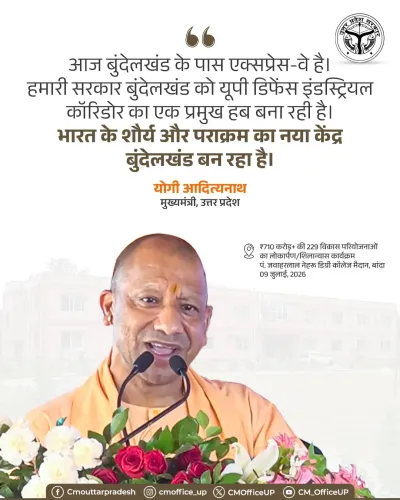
CM Yogi Adityanath declared Bundelkhand a 'major hub' of the UP Defence Industrial Corridor in remarks shared on 9 July 2026 .
The Bundelkhand Expressway , inaugurated in 2022 , is cited as the logistics backbone enabling defence manufacturing in the region.
The UP Defence Industrial Corridor was launched in 2019 with six nodes , including Jhansi in Bundelkhand.
The corridor is part of the central government's Atmanirbhar Bharat initiative to reduce defence import dependence.
Bundelkhand's inclusion aims to spread defence employment beyond western Uttar Pradesh's traditional industrial belt.
Upcoming land acquisition and anchor-unit investments at the Jhansi node will be key indicators of progress.
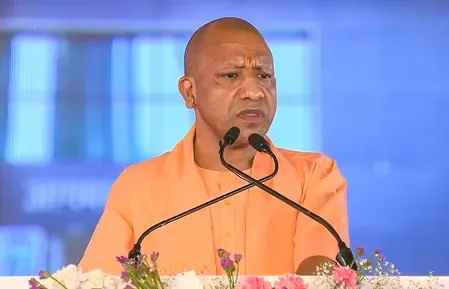
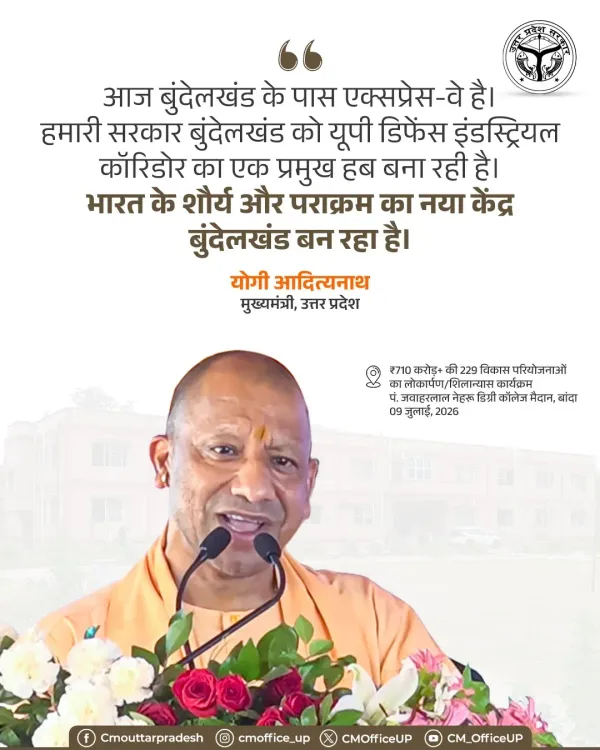
The Chief Minister's Office of Uttar Pradesh, on Thursday, 9 July 2026, shared remarks by Chief Minister Yogi Adityanath positioning Bundelkhand as a central node in the state's defence manufacturing ambitions, citing the region's new expressway connectivity and its role in the Uttar Pradesh Defence Industrial Corridor.
Context
Speaking in Hindi, CM Yogi Adityanath stated: 'Aaj Bundelkhand ke paas expressway hai' ('Today Bundelkhand has an expressway'). He added that his government is making Bundelkhand 'a major hub of the UP Defence Industrial Corridor' and described the region as 'the new centre of India's valour and military prowess.' The remarks reflect a sustained push by the Yogi Adityanath government to rebrand Bundelkhand — long associated with drought, farmer distress, and underdevelopment — as an emerging industrial and strategic zone.
Policy Backdrop
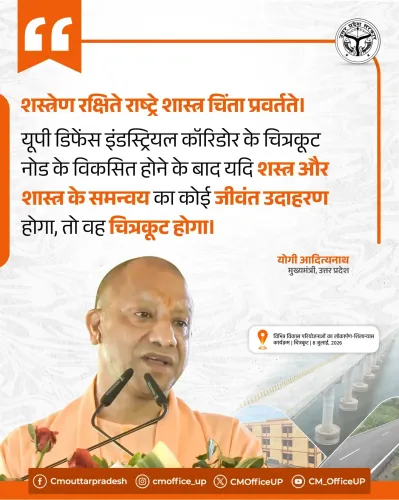
The Uttar Pradesh Defence Industrial Corridor was formally launched in 2019 with six nodes spread across the state, one of which is Jhansi in the heart of Bundelkhand. The corridor is part of the central government's Atmanirbhar Bharat initiative aimed at reducing India's dependence on defence imports and building domestic aerospace and armaments manufacturing capacity. Uttar Pradesh is one of only two states — alongside Tamil Nadu — to host a dedicated defence corridor under this national framework.
The Bundelkhand Expressway, inaugurated in 2022, is a key enabler of this industrial strategy. The access-controlled highway connects Agra to Chitrakoot passing through Bundelkhand districts including Jhansi, Lalitpur, and Banda, significantly improving logistics connectivity for heavy engineering and manufacturing units that require reliable freight movement.
Stakeholders and Impact
The corridor's Jhansi node is expected to benefit defence manufacturers seeking land-cost advantages and proximity to a growing road network. For Bundelkhand's youth, the promise is skilled employment in aerospace and ancillary defence manufacturing — sectors that traditionally clustered in western Uttar Pradesh's older industrial belt. Local landowners in and around the Jhansi node remain key stakeholders, as land acquisition for anchor units will determine the pace of actual industrial activity.
The broader pattern since 2014 has been to pair defence corridor investments with expressway infrastructure, using last-mile road connectivity to attract units that require heavy machinery logistics. Bundelkhand's inclusion in this model represents a deliberate attempt to geographically diversify defence-related employment within the state.
What's Next
Observers will watch for land acquisition notifications and anchor-unit investment announcements at the Jhansi node, as well as potential announcements at upcoming defence expos or state-level investor summits. The government's ability to translate the corridor's policy framework into operational manufacturing units will be the key measure of Bundelkhand's transformation from an aspirational hub into an active one.
Point of View
The government is attempting to shift the dominant story about the region from neglect to strategic investment. The choice to invoke India's 'valour and military prowess' in connection with Bundelkhand also draws on the region's historical association with figures like Rani Lakshmibai of Jhansi, lending cultural legitimacy to the industrial push. Whether this narrative solidifies will depend on the pace of actual investment at the Jhansi node — a metric that remains closely watched by both industry and the state's political opposition.
NationPress
9 Jul 2026
Frequently Asked Questions
What is the UP Defence Industrial Corridor and where is it located?
The Uttar Pradesh Defence Industrial Corridor is a state-level industrial project launched in 2019 with six nodes across UP, including Jhansi in Bundelkhand, designed to attract aerospace and defence manufacturing units under India's Atmanirbhar Bharat programme.
What did CM Yogi Adityanath say about Bundelkhand on 9 July 2026?
CM Yogi Adityanath said Bundelkhand now has an expressway and that his government is making it a major hub of the UP Defence Industrial Corridor, calling it 'the new centre of India's valour and military prowess.'
When was the Bundelkhand Expressway inaugurated?
The Bundelkhand Expressway was inaugurated in 2022 and connects Agra to Chitrakoot, passing through districts including Jhansi, Lalitpur, and Banda.
How does Bundelkhand fit into India's defence manufacturing plans?
The Jhansi node of the UP Defence Industrial Corridor positions Bundelkhand within India's broader push to build domestic defence manufacturing capacity and reduce reliance on imports, pairing the region's new expressway with industrial zone development.
What should we watch for next regarding Bundelkhand's defence corridor?
Key developments to watch include land acquisition notifications and anchor-unit investment announcements at the Jhansi node, as well as any major announcements at upcoming defence expos or UP investor summits.