CM Yogi to Develop Bundelkhand as Defence Corridor Hub
Synopsis
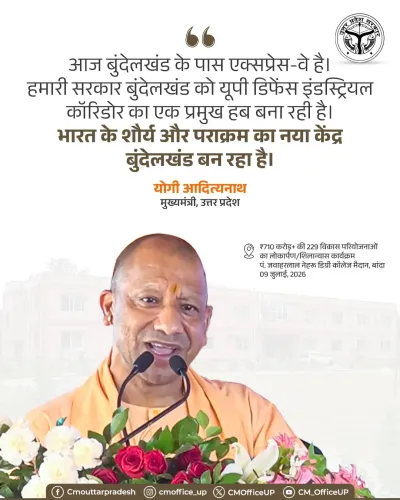
Chief Minister Yogi Adityanath has announced that Bundelkhand will be developed as a hub of the Uttar Pradesh Defence Industrial Corridor, deepening the state's commitment to indigenous defence manufacturing under the Atmanirbhar Bharat framework.
Key Takeaways
Chief Minister Yogi Adityanath announced on 20 June 2026 that Bundelkhand will be developed as a hub of the defence manufacturing corridor.
The Uttar Pradesh Defence Industrial Corridor was formally launched in 2019 with nodes including Jhansi and Chitrakoot in the Bundelkhand region.
The corridor is part of India's Atmanirbhar Bharat framework to reduce defence import dependence and scale indigenous production.
Key stakeholders include defence manufacturers , defence public sector undertakings , and Bundelkhand MSMEs that could benefit from supply-chain opportunities.
Upcoming state notifications on land acquisition , MoUs with defence firms, and budgetary allocations will indicate the pace of implementation.
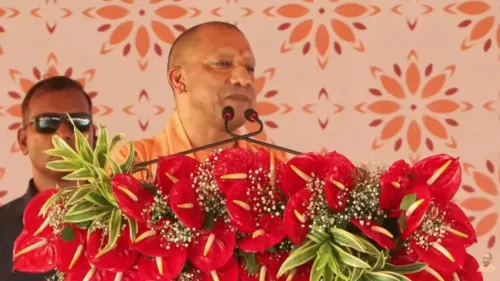
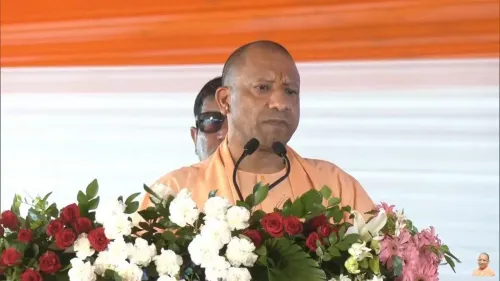
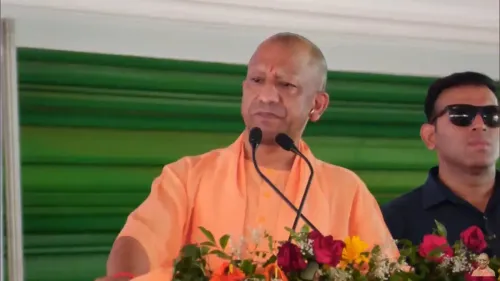
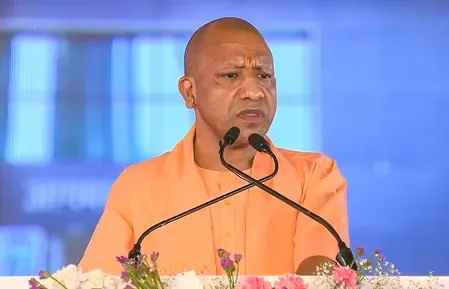
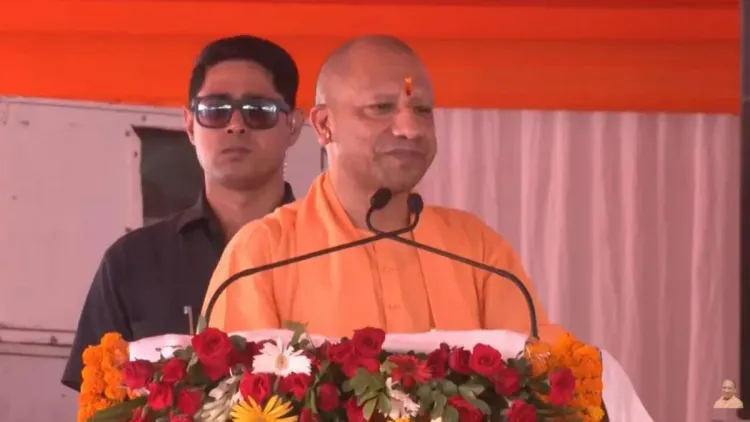
Uttar Pradesh Chief Minister Yogi Adityanath on Saturday, 20 June 2026 declared that the state government will develop Bundelkhand as a dedicated hub within the Uttar Pradesh Defence Industrial Corridor, reinforcing the region's strategic role in India's indigenous defence manufacturing push.
Context
In his post on X, the Chief Minister stated — 'हम डिफेंस मैन्युफैक्चरिंग कॉरिडोर के हब के रूप में बुंदेलखंड को भी डेवलप करेंगे' — which translates as: 'We will also develop Bundelkhand as a hub of the defence manufacturing corridor.' The statement signals a renewed political commitment to integrating the historically underdeveloped Bundelkhand belt into the state's industrial growth story.
Bundelkhand is a historical region straddling southern Uttar Pradesh and northern Madhya Pradesh, covering districts such as Jhansi, Chitrakoot, and Banda. Long associated with agrarian distress and outmigration, it has been a focus of successive state and central government development schemes.
Policy Backdrop
The Uttar Pradesh Defence Industrial Corridor was formally announced in 2019 as a state-led initiative to build an integrated defence manufacturing ecosystem. The corridor designates multiple nodes across Uttar Pradesh, with Jhansi and Chitrakoot — both situated in the Bundelkhand region — identified as key locations from the outset.
The corridor is part of India's broader post-2014 policy architecture to build dedicated defence manufacturing zones, reduce import dependence, and scale up indigenous production under the Atmanirbhar Bharat framework. Uttar Pradesh's corridor, alongside a parallel corridor in Tamil Nadu, represents one of two state-level defence industrial ecosystems backed by the central government.
Chief Minister Yogi Adityanath, who has held office since 2017, has consistently positioned industrial corridors — including the defence corridor — as centrepieces of the state's economic transformation strategy. Saturday's statement reaffirms that Bundelkhand's nodes are not peripheral to this vision but are intended to be core hubs.
Stakeholders and Impact
The primary beneficiaries of a Bundelkhand hub designation would be defence manufacturers — both large defence public sector undertakings and private firms — seeking land, infrastructure, and policy incentives in a cost-effective location. Bundelkhand MSMEs stand to gain from ancillary supply-chain opportunities if major anchor units are established in the region.
For the local economy, a functional defence manufacturing hub could generate skilled employment and curb the outmigration that has long plagued districts such as Banda and Chitrakoot. The region's connectivity and land availability make it logistically viable, though infrastructure upgrades would be a prerequisite for attracting large-scale investment.
What's Next
Observers will watch for state government notifications on land acquisition, formal memoranda of understanding with defence firms or public sector units, and budgetary allocations earmarked specifically for Bundelkhand nodes in upcoming Uttar Pradesh industrial policy updates. The pace at which the corridor's existing Jhansi and Chitrakoot nodes attract confirmed investment will serve as a practical measure of the hub ambition's progress.
If the Bundelkhand hub gains traction, it could position the region as a model for combining strategic defence manufacturing goals with targeted regional development — a template that other lagging regions within large states may seek to replicate.
Point of View
Which elevates the region from a peripheral node to a stated priority. For CM Yogi, tying defence manufacturing to Bundelkhand serves a dual purpose: it advances the Atmanirbhar Bharat narrative at the state level while addressing the political optics of regional neglect in a historically underdeveloped belt. The statement also arrives at a moment when India's defence indigenisation push is accelerating, giving Uttar Pradesh an opportunity to position itself as the dominant state-level player in this space. Whether the hub ambition translates into confirmed investment will be the real test of this political commitment.
NationPress
19 Sept 2026
Frequently Asked Questions
What is the Uttar Pradesh Defence Industrial Corridor?
The Uttar Pradesh Defence Industrial Corridor is a state-led initiative launched in 2019 to create an integrated defence manufacturing ecosystem with designated nodes across multiple districts of Uttar Pradesh, including Jhansi and Chitrakoot in the Bundelkhand region.
Why is Bundelkhand being targeted for the defence corridor hub?
Bundelkhand's strategic central-India location, availability of land, and existing corridor nodes at Jhansi and Chitrakoot make it a viable site; the state government also aims to use defence manufacturing investment to address the region's historically high unemployment and outmigration.
What did CM Yogi Adityanath say about Bundelkhand on 20 June 2026?
CM Yogi stated on X that the state government will develop Bundelkhand as a hub of the defence manufacturing corridor, signalling a renewed commitment to making the region a core part of Uttar Pradesh's defence industrial ecosystem.
How does the UP Defence Corridor connect to Atmanirbhar Bharat?
The Uttar Pradesh Defence Industrial Corridor is part of India's post-2014 Atmanirbhar Bharat policy to build dedicated defence manufacturing zones, increase indigenous production, and reduce dependence on imported defence equipment.
What should we watch for next regarding the Bundelkhand defence hub?
Key indicators will include state government notifications on land acquisition, memoranda of understanding with defence firms or public sector units, and specific budgetary allocations for Bundelkhand nodes in upcoming Uttar Pradesh industrial policy updates.