Sonowal: Maritime push to create 5.6 lakh jobs, cut 16 mn tonnes CO₂
Synopsis
Union Minister Sarbananda Sonowal says transformative maritime initiatives will create over 5.6 lakh jobs and save 16 million tonnes of CO₂, crediting MP consultations and PM Modi's Viksit Bharat vision for shaping the plan.
Key Takeaways
Union Minister Sarbananda Sonowal announced maritime initiatives projected to generate over 5.6 lakh employment opportunities .
The same initiatives are expected to save 16 million tonnes of CO₂ emissions , embedding a green target inside an economic programme.
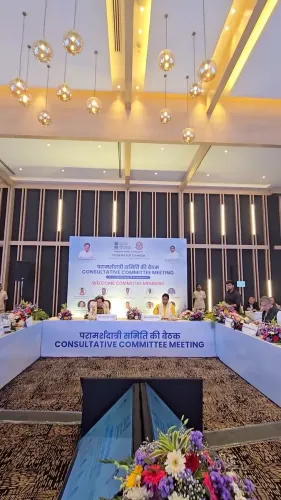
Sonowal credited Members of Parliament for insights that will help shape the maritime journey, underlining the role of parliamentary consultation.
The announcements are framed under PM Narendra Modi 's vision for a 'competitive, sustainable and thriving maritime ecosystem.' The policy builds on the Sagarmala Project launched in 2015 , which pioneered port-led development along India's coastline.
Specific rollout timelines and project-level details are expected in forthcoming ministry statements and budget discussions.
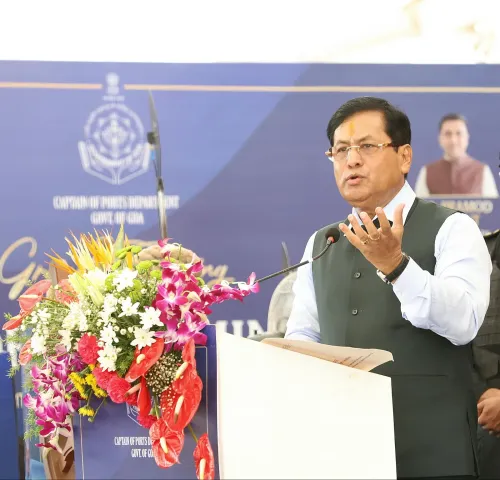
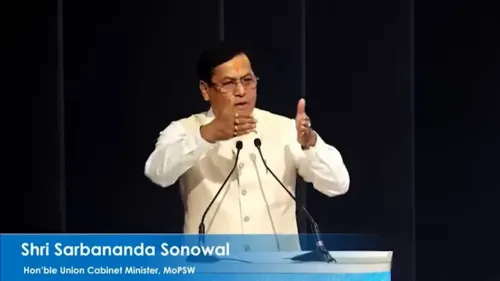
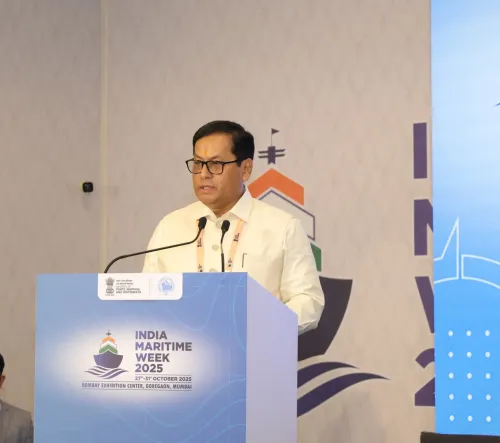
India's maritime sector is being reshaped at scale — and the numbers are now on the table. Union Minister of Ports, Shipping and Waterways Sarbananda Sonowal on Tuesday, November 3, 2026 declared that a cluster of transformative maritime initiatives is projected to generate over 5.6 lakh employment opportunities and eliminate 16 million tonnes of CO₂ emissions, as the ministry deepens parliamentary consultations to sharpen its course.
Parliament meets port: MPs sharpen the maritime blueprint
Sonowal acknowledged that the shape of this maritime push has been refined through direct engagement with Members of Parliament, extending his 'deep gratitude to the Hon'ble MPs for their valuable insights and suggestions.' It is a deliberate signal — that this is not a ministry-driven plan handed down from a secretariat, but one being stress-tested through democratic consultation. Large-scale infrastructure programmes routinely rely on such parliamentary feedback loops to iron out regional gaps and ground-level friction before implementation.
The twin metrics — jobs and carbon savings — frame the initiative squarely at the intersection of economic ambition and climate accountability. 5.6 lakh jobs in a labour-intensive coastal economy is not a minor footnote; it points to port-adjacent industries, logistics corridors, shipbuilding, and green-fuel infrastructure all advancing in tandem.
Sagarmala's long shadow and the green logistics pivot
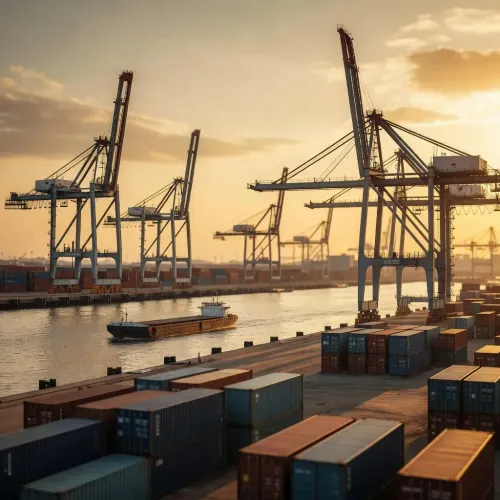
The policy lineage here runs deep. India's Sagarmala Project, launched in 2015, was the original bet on port-led development — a programme designed to reduce logistics costs, modernise terminals, and thread coastal communities into the economic mainstream. What Sonowal is describing in 2026 is a more evolved iteration of that vision: one where sustainability metrics sit alongside employment targets as primary benchmarks of success, not afterthoughts.
The 16 million tonne CO₂ reduction figure is particularly notable. Decarbonising freight logistics is one of the hardest problems in the global climate puzzle — shipping and port operations are energy-hungry by nature. Embedding an emissions target inside a jobs-and-growth announcement signals that India's Ministry of Ports is aligning its narrative with international green-trade expectations, a practical necessity as carbon border mechanisms reshape global commerce.
PM Modi's 'Viksit Bharat' framing and what comes next
Sonowal explicitly anchors this agenda to Prime Minister Narendra Modi's vision, describing a march toward 'a competitive, sustainable and thriving maritime ecosystem for a Viksit Bharat' — the government's shorthand for a fully developed India. The framing is deliberate: it places ports not as peripheral infrastructure but as a load-bearing pillar of the broader national development project.
Rollout timelines and project-specific allocations are expected to emerge through subsequent ministry statements and budget discussions. But the direction is now unmistakably set — India's coastline is being positioned as a jobs engine, a logistics artery, and a green-transition frontier, all at once.
The sea has always been India's oldest highway. The question now is whether this policy ambition can be converted into berths, jobs, and cleaner air before the next budget cycle rewrites the priorities again.
Point of View
Not a secondary player. The emphasis on MP consultations suggests the ministry is building legislative ownership ahead of what could be a significant budget ask. Whether the 5.6 lakh jobs and CO₂ figures survive detailed project-level scrutiny will be the real test of this ambition.
NationPress
3 Nov 2026
Frequently Asked Questions
How many jobs will India's new maritime initiatives create according to Sonowal?
Union Minister Sarbananda Sonowal stated that the transformative maritime initiatives will generate over 5.6 lakh total employment opportunities across the ports and shipping sector.
What is the CO₂ savings target for India's maritime initiatives?
The initiatives are projected to save 16 million tonnes of CO₂ emissions , according to Sonowal's statement on November 3, 2026.
What is the Sagarmala Project and how does it relate to this announcement?
The Sagarmala Project , launched in 2015 , is India's flagship port-led development programme aimed at reducing logistics costs and generating coastal employment. Sonowal's 2026 maritime push is an evolution of that framework, now integrating green-logistics and sustainability targets.
What is Viksit Bharat and why is it linked to India's maritime policy?
'Viksit Bharat' is the Indian government's vision for a fully developed India, typically referenced against a 2047 horizon. The ports ministry has explicitly linked its maritime ecosystem goals to this broader national ambition under PM Modi's direction.
Why did Sonowal thank MPs in his maritime policy statement?
Sonowal extended gratitude to Members of Parliament for their 'valuable insights and suggestions,' indicating that parliamentary consultations are actively being used to refine the maritime development plan before implementation.