NASA Moon Base plan: roads, power grids and a lunar 'city' at the South Pole
Synopsis
NASA's Moon Base isn't a single structure — it's a sprawling, city-like network of habitats, power grids, mining zones and hopping drones at the lunar South Pole. With commercial contracts already awarded to Blue Origin, Astrolab and others, and China racing toward its own lunar station, the US is making its clearest bid yet to own permanent human presence on the Moon.
Key Takeaways
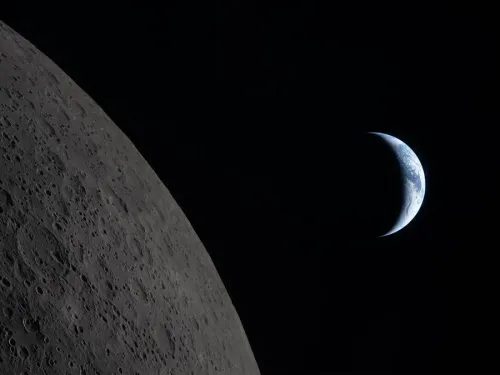
NASA unveiled Moon Base on 27 May 2025 , a long-term plan for a sustained human settlement at the lunar South Pole .
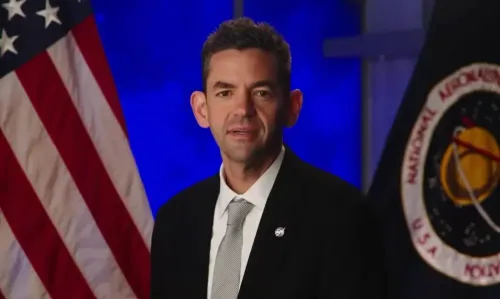
NASA Administrator Jared Isaacman described it as 'humanity's first outpost on another celestial world,' with infrastructure spanning roads, power grids and communication networks.
The lunar South Pole was chosen for its permanently shadowed craters, which may contain water ice usable for life support and rocket fuel.
New commercial contracts were awarded to Astrolab , Lunar Outpost , Blue Origin , Astrobotic and Intuitive Machines for rovers and cargo landers.
MoonFall , a hopping-drone scouting mission, was announced to map difficult terrain and establish navigation and communications nodes.
The effort comes as China advances its own International Lunar Research Station programme, raising the stakes of the renewed Moon race.
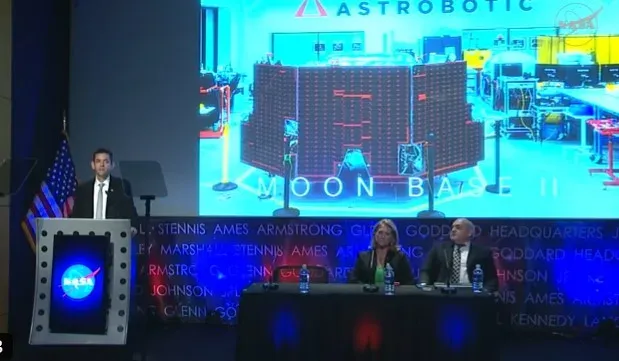
NASA on Tuesday, 27 May offered its most detailed public outline yet of Moon Base, a long-term programme to establish a sustained human presence at the lunar South Pole — complete with roads, power grids, communication networks, robotic rovers and eventually astronauts living and working across hundreds of square miles of the Moon's surface. The announcement, made at NASA Headquarters in Washington, marks a decisive break from the brief, flag-planting logic of the Apollo era.
What Moon Base Actually Envisions
NASA Administrator Jared Isaacman described the project as 'America's and humanity's first outpost on another celestial world,' with scale models of lunar landers and robotic vehicles displayed on stage behind him. Officials were careful to stress that Moon Base would not materialise overnight as a single structure, but would instead grow through an evolving sequence of missions, experiments and robotic deployments.
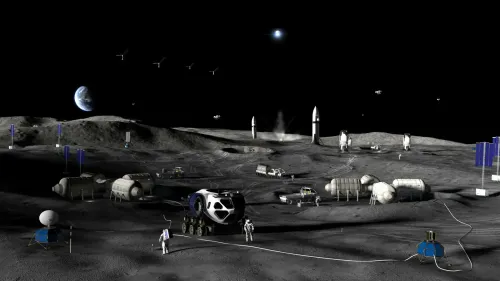
'It ends up sprawling a little bit more like a city as you start building it out,' said chief architect Nujoud Merancy. The agency described a future lunar landscape where habitats, power systems, mining zones and science stations could eventually stretch across vast stretches of the South Pole region.
Why the South Pole — and What Remains Unknown
The lunar South Pole is central to NASA's strategy because scientists believe permanently shadowed craters there may contain water ice — a resource that could sustain astronauts and potentially be converted into rocket fuel for deeper space missions. Isaacman noted the extreme environmental conditions: temperatures can swing from above 250 degrees Fahrenheit in direct sunlight to below minus 200 degrees in shadow.
Yet the agency acknowledged significant knowledge gaps. 'It dawns on us every day how little we know of the lunar surface,' said Moon Base programme executive Carlos Garcia Golan. Closing those gaps, officials said, is precisely why the incremental, data-driven approach has been chosen over a single large-scale deployment.
Commercial Partners and Key Missions
Unlike Apollo, which relied almost entirely on government systems, NASA says commercial industry will play a central role in constructing Moon Base. The agency announced new contracts for robotic lunar rovers with Astrolab and Lunar Outpost, alongside cargo lander missions involving Blue Origin, Astrobotic and Intuitive Machines.
NASA also unveiled MoonFall, a mission involving hopping drones designed to explore difficult terrain and scout future landing zones. The drones are expected to fly short distances across the surface before settling into fixed positions that could serve as navigation beacons, observation stations or communications nodes.
The Geopolitical Backdrop
The renewed lunar push comes as China accelerates its own Moon programme, including plans for an International Lunar Research Station later this decade. NASA officials did not explicitly frame Moon Base as a geopolitical contest, but repeatedly emphasised American leadership and long-term presence on the Moon.
Isaacman also positioned the Moon as a proving ground for eventual Mars missions. 'It would be nice to do that when you're four days away from home than many months away from home,' he said. His closing message was unambiguous: 'This time to stay — we will not give up the moon again.'
With commercial contracts awarded and a phased architecture in place, the next milestones will be early robotic missions to map the South Pole in detail and validate power and communications systems ahead of crewed deployments.
Point of View
And the US is publicly committing to winning it on permanence rather than firsts. The commercial-first architecture is genuinely new — Apollo was a government monolith; Moon Base is a franchise model. That brings speed and cost advantages, but also accountability gaps: when a commercial partner underdelivers on the Moon, there is no clear fallback. The water-ice rationale is scientifically sound but still unverified at scale; the entire long-term case for Moon Base rests on resource extraction that has never been demonstrated. Isaacman's 'this time to stay' line is memorable, but the harder question is whether Congressional appropriations will stay consistent across administrations — historically, they have not.
NationPress
20 Sept 2026
Frequently Asked Questions
What is NASA's Moon Base plan?
Moon Base is NASA's long-term programme to build a sustained human settlement at the lunar South Pole, featuring roads, power grids, habitats, robotic rovers and communication networks. It was publicly outlined at NASA Headquarters on 27 May 2025 and is designed to grow incrementally through a series of commercial and government missions.
Why has NASA chosen the lunar South Pole for Moon Base?
Scientists believe permanently shadowed craters at the lunar South Pole may contain water ice, which could support astronauts and be converted into rocket fuel for deeper space missions. The location also offers relatively stable terrain for long-term infrastructure.
Which companies are involved in building Moon Base?
NASA has awarded contracts to Astrolab and Lunar Outpost for robotic lunar rovers, and to Blue Origin, Astrobotic and Intuitive Machines for cargo lander missions. Commercial industry is central to the project, unlike the government-only Apollo programme.
What is the MoonFall mission?
MoonFall is a NASA mission involving hopping drones designed to explore difficult lunar terrain and scout future landing zones. The drones will fly short distances before settling into fixed positions to serve as navigation beacons, observation stations or communications nodes.
How does Moon Base relate to the US-China space competition?
China is advancing its own International Lunar Research Station programme later this decade. While NASA officials did not frame Moon Base explicitly as a geopolitical contest, they repeatedly stressed American leadership and long-term lunar presence, and Administrator Isaacman stated the US 'will not give up the moon again.'