White House Declares US Will Build Permanent Moon Base
Synopsis
The White House declared on October 8, 2026, that the United States will establish a permanent presence on the Moon — escalating America's lunar ambitions from short-duration missions to a sustained human outpost, with major geopolitical and scientific implications.
Key Takeaways
The White House officially declared on October 8, 2026 , that America will establish a permanent presence on the Moon.
A permanent lunar base implies long-duration habitats, power infrastructure, and in-situ resource use — far beyond any prior crewed mission.
The lunar south pole , rich in water-ice deposits, is the most strategically valuable target for such a base.
The announcement intensifies the geopolitical competition with China and others for strategic position on the lunar surface.
No human has walked on the Moon since Apollo 17 in December 1972 — a permanent base would mark a historic escalation of that legacy.
The Artemis Accords , already signed by dozens of nations, form the existing US-led legal framework that a physical lunar presence would reinforce.
The United States has set its sights beyond a lunar visit — it wants to stay on the moon. The White House declared on Thursday, October 8, 2026, that America will establish a permanent presence on the lunar surface, a statement that reframes the entire ambition of human space exploration from a series of missions into an enduring outpost.
A 'Permanent Presence' — What Those Two Words Actually Mean
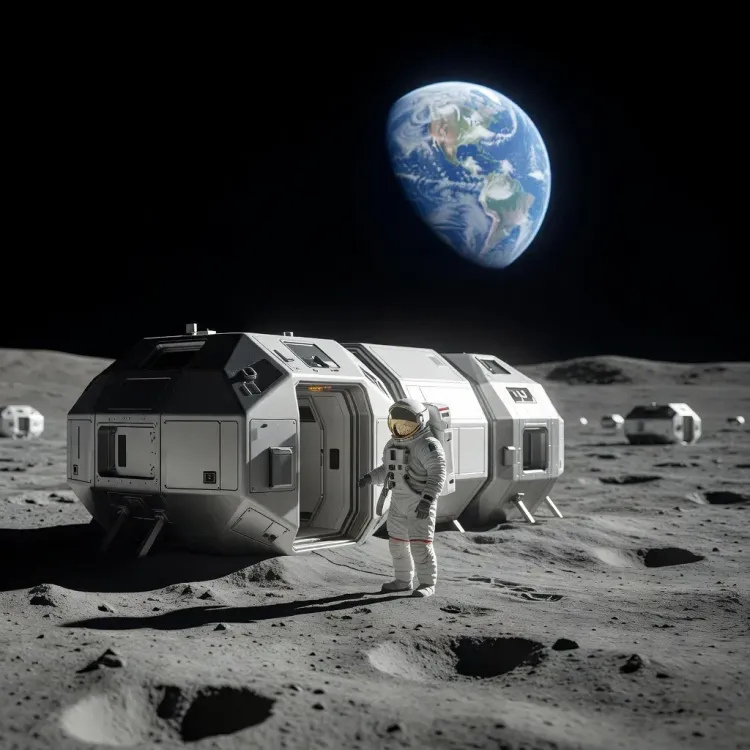
The phrase is doing enormous work. A permanent lunar presence goes far beyond planting a flag or conducting a short surface excursion — it implies infrastructure: habitats, power systems, communications relays, and the sustained ability to keep human beings alive and productive on another world. No nation has achieved this. The announcement signals that the United States intends to be the first.
The Moon sits roughly 384,000 kilometres from Earth, a distance that makes resupply and rescue fundamentally different challenges from anything faced on the International Space Station. A permanent base would likely require in-situ resource utilisation — mining lunar ice at the poles for water and rocket propellant — turning the Moon from a destination into a staging post.
The Geopolitical Stakes of Lunar Real Estate
The timing of this declaration matters. A race for strategic position on the Moon — particularly near the lunar south pole, where water-ice deposits are concentrated — is already under way between the United States and China, with several other space agencies also in the mix. A permanent American presence, if realised, would anchor US influence over the norms, access rules, and resource frameworks that will govern the Moon for decades.
The Artemis Accords, a US-led framework signed by dozens of nations, already attempts to set ground rules for lunar activity. A physical, enduring American foothold would give those accords teeth — and give Washington considerably more leverage in any future negotiation over who gets to operate where on the lunar surface.
From Apollo's Footprints to a Permanent Address
The last humans to walk on the Moon were Apollo 17 astronauts in December 1972 — over half a century ago. Every mission since has been robotic. The aspiration now is categorically different: not a visit measured in days, but a settlement measured in years. If the United States follows through, the Moon stops being a place humanity went to and becomes a place humanity lives.
The gap between declaration and delivery is vast — in funding, technology, and political will across administrations. But the ambition, stated plainly by the official voice of the Executive Office of the President, is now on the record.
Point of View
Which suggests this is a deliberate policy signal as much as an aspiration. For India, which is a partner in the Artemis Accords and has its own expanding lunar programme following Chandrayaan-3's south-pole landing in 2023, a permanent American base reshapes the partnership calculus: cooperation opportunities grow, but so does the asymmetry of presence. The declaration also accelerates an already competitive dynamic with China, whose lunar programme targets a crewed landing by 2030, meaning the race for the south pole's ice deposits is no longer hypothetical. How Washington backs this declaration with budgets and timelines will be the real test of whether this is strategy or theatre.
NationPress
9 Oct 2026
Frequently Asked Questions
What does it mean for the US to have a permanent presence on the Moon?
It means the United States aims to build and maintain a long-term lunar base — with habitats, power systems, and the ability to keep people on the Moon for extended periods — rather than conducting short-duration visit missions.
When did the White House announce a permanent US Moon base?
The White House made the announcement on October 8, 2026 , via its official communications on X.
Which part of the Moon is the US targeting for a permanent base?
The lunar south pole is the most strategically significant target because it contains confirmed deposits of water-ice, which can be converted into drinking water and rocket propellant.
How does this affect the US-China space competition?
A permanent American lunar base would directly challenge China's own goal of a crewed Moon landing by 2030 and anchor US influence over access norms and resource rules for the lunar south pole.
What is India's connection to US lunar plans?
India is a signatory to the Artemis Accords , the US-led framework governing lunar activity, and following Chandrayaan-3's 2023 south-pole landing, India has an active stake in how permanent lunar presence rules are shaped.