New Legislation Aims for Permanent Moon Base by 2030

Synopsis
A US Congressman has introduced a bill directing NASA to establish a permanent lunar outpost by 2030, emphasizing its importance for America’s leadership in space amid rising competition from China. This initiative is expected to drive economic growth and innovation in space technologies.
Key Takeaways
Legislation aims for a permanent lunar base by 2030.
Lunar south pole identified as a key strategic location.
Economic growth and job creation expected from lunar initiatives.
Competition with China is a driving force behind the proposal.
NASA's Artemis II mission sets the stage for future lunar exploration.
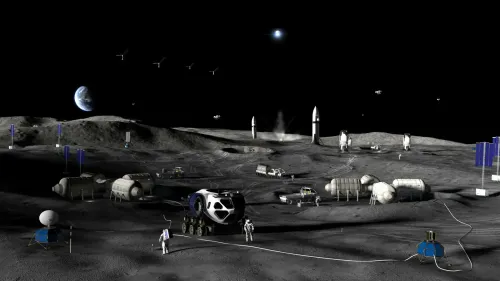
Washington, April 3 (NationPress) - A US Congressman has proposed new legislation aimed at instructing NASA to set up the foundational components of a lasting lunar base by 2030. This initiative is deemed essential for maintaining American dominance in space as competition from China intensifies.
Congressman Keith Self introduced the bill shortly after the Artemis II mission successfully launched, representing the first crewed flight to lunar orbit in over fifty years. This legislation seeks to modify current US space policies and establishes a target date of December 31, 2030, for the establishment of the initial outpost.
“Last night, America showcased its prowess as the foremost spacefaring nation,” Self stated. “However, celebrating past achievements is not a strategy. To genuinely uphold American leadership in space, we must have a permanent presence on the Moon. This legislation is a call to action.”
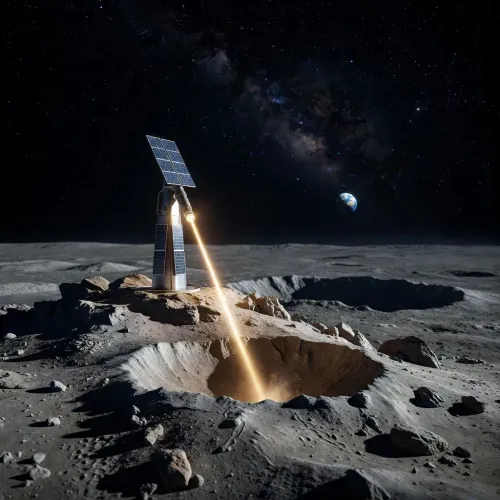
The bill instructs the NASA Administrator to initiate the development of essential infrastructure at the lunar south pole, a region considered strategically valuable due to the presence of water ice, which can be transformed into rocket fuel, as well as deposits of helium-3 and rare earth minerals.
Self emphasized that the lunar initiative is both an economic and strategic necessity. “The Moon represents not merely a destination but the cornerstone of a new American industrial frontier,” he remarked. “Resources from the Moon will catalyze the next wave of space manufacturing, mining, and construction.”
He also noted that American companies are already innovating in relevant technologies but need ongoing government support and a steadfast presence on the lunar surface.
This legislation emerges in the context of escalating rivalry with the China National Space Administration, which has publicly disclosed ambitions to create a lunar research facility in the same area by the decade's end.
“The Chinese Communist Party is not a collaborator in space. They are a competitor, and they aim to win,” Self expressed. “The legal framework surrounding lunar resources is still in flux. The country that establishes a physical presence on the Moon will set the rules for all others.”
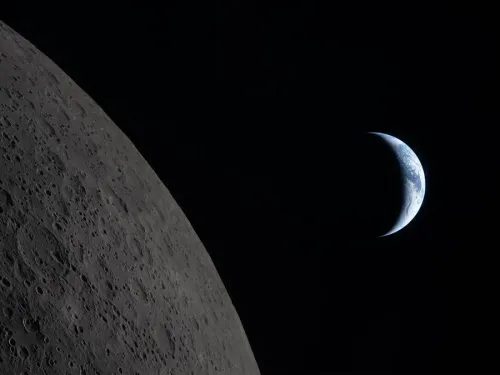
The Artemis II mission, launched by NASA, is transporting four astronauts on a lunar flyby aboard the Orion spacecraft, marking the first crewed deep-space journey since 1972.
Self argued that a permanent lunar base would yield economic benefits domestically. “Establishing a lunar outpost translates to American jobs, ingenuity, and a clear symbol of our presence on the Moon,” he stated. “We must seize this opportunity and ensure we lead.”
This proposal was initially part of the NASA Reauthorization Act and passed through committee in February before being reintroduced as a separate bill.
Point of View
This legislation represents a significant step for the United States in maintaining its leadership in space exploration. It underscores the urgency of establishing a permanent presence on the Moon, especially in light of growing competition from other nations.
NationPress
5 Oct 2026
Frequently Asked Questions
What is the purpose of the proposed legislation?
The legislation aims to direct NASA to establish the foundational elements of a permanent lunar outpost by 2030 to ensure American leadership in space.
Why is the lunar south pole significant?
The lunar south pole is strategically important due to the presence of water ice that can be converted into rocket fuel, along with deposits of helium-3 and rare earth elements.
What recent mission is linked to this legislation?
The legislation was introduced shortly after NASA's Artemis II mission, which marked the first crewed flight to lunar orbit in over fifty years.
How does this initiative impact the economy?
The establishment of a lunar outpost is expected to generate American jobs and foster innovation in space manufacturing and construction.
What are the international implications of this bill?
The legislation highlights the competitive landscape in space exploration, particularly with China's plans for a lunar research station, underscoring the importance of establishing rules for lunar resource utilization.