China expanding Indo-Pacific influence ops, 220M US voter files stolen: Report

Synopsis
A new report in The Diplomat maps China's expanding election interference playbook across the Indo-Pacific — from meme campaigns in Japan's February vote to the alleged theft of 220 million US voter files in 2020. With the Philippines already probing Chinese ops in its 2025 elections and the Solomon Islands flooded with anti-US disinformation, the pattern points to a coordinated, multi-decade strategy rather than opportunistic meddling.
Key Takeaways
China ran influence operations during Japan's February 2025 House of Representatives election , using simplified Chinese-linked memes on X to promote anti-Takaichi and pro-Beijing narratives.
US President Donald Trump on 16 July alleged China stole 220 million US voter files in what he called the largest election data compromise in history.
Chinese disinformation has targeted elections in Taiwan in 2018 , 2022 , and 2024 , focusing on DPP members critical of Beijing.
Philippine security authorities found China-backed groups operated during the 2025 midterm elections ; President Ferdinand Marcos Jr has ordered a probe.
Disinformation alleging US election meddling has circulated in the Solomon Islands since 2023 , alongside claims targeting the pro-China prime minister.
The report, authored by Osawa Jun of the Nakasone Peace Institute , flags the 2028 Philippine presidential election as a key future target.
China is systematically broadening its influence operations across the Indo-Pacific region, targeting elections in Japan, Taiwan, Australia, the Philippines, and Pacific island nations, according to an analysis published in The Diplomat by Osawa Jun, a Senior Fellow at Tokyo's Nakasone Peace Institute. The report details a pattern of coordinated disinformation campaigns spanning the better part of a decade, with operations growing in scale and geographic reach.
Japan's Election Targeted by Meme Campaigns
During Japan's House of Representatives election in February this year, posts circulated on X promoted narratives such as 'Prime Minister Takaichi Sanae is a militarist' and 'Japan cannot win in a Taiwan contingency.' Osawa noted that the Japanese-language posts contained traces of simplified Chinese script — the character set used in mainland China, not Japan — and that several meme images bore resemblance to those used by Chinese government-affiliated media. The narratives, he wrote, aligned closely with official Beijing talking points on regional security.
Taiwan and the US: A Decade of Documented Interference
The report traces Chinese influence operations in Taiwan back to local elections in 2018 and 2022. During the 2024 Taiwanese presidential election, disinformation specifically targeted members of the Democratic Progressive Party (DPP) who had been distancing themselves from China.
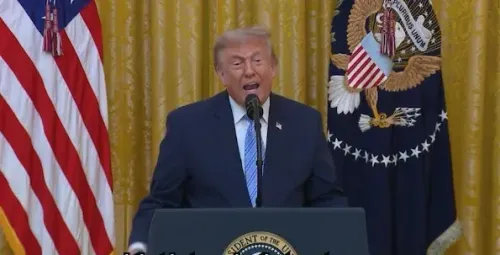
In the United States, US President Donald Trump on 16 July released a trove of intelligence documents, alleging that China carried out what he described as 'the largest compromise of election data in history' — the illicit acquisition of 220 million US voter files during the 2020 presidential election cycle. According to Trump, the stolen data included names, addresses, phone numbers, and political party affiliations.
'This data loss presents an unprecedented election security nightmare,' Trump said in his address. He further alleged that elements within US intelligence agencies had actively worked to suppress and downplay information about the extent of China's alleged interference, shielding both the president and the public from its full scope. US spy agencies, he said, began uncovering the voter data compromise in 2020, when it emerged that tens of millions of voter records had been bought, stolen, or hacked by China.
Philippines, Australia, and the Pacific Under Pressure
China has also been accused of conducting influence operations in Australia since the mid-2020s. In the Philippines, security authorities reported that China-backed groups ran influence operations during the 2025 midterm and local elections, prompting President Ferdinand Marcos Jr to order a detailed investigation. Analysts cited in the report warn that these efforts could intensify ahead of the 2028 Philippine presidential election, with the aim of securing a win for a pro-China candidate.
In the Solomon Islands, disinformation alleged that the United States was meddling in the country's 2024 elections, and claims that the US sought to eliminate the pro-China prime minister have reportedly circulated repeatedly since 2023. The report flags the South Pacific island nations as a growing arena for Chinese information warfare.
The Broader Pattern
Taken together, the documented operations point to a structured, multi-country strategy rather than isolated incidents. This comes amid growing concern among democratic governments in the Indo-Pacific about the integrity of their electoral processes. Notably, the operations appear calibrated to local political fault lines — exploiting existing tensions over militarism in Japan, cross-strait relations in Taiwan, and US presence in the Pacific. How democracies in the region build resilience against such campaigns is expected to be a central focus of upcoming security dialogues.
Point of View
From Japan's pacifism debate to Philippine sovereignty anxieties to Pacific island patronage politics. The 220-million voter-file claim, if verified, would represent a qualitative leap from narrative manipulation to infrastructure-level interference. Yet the most underreported element may be the alleged suppression of findings within US intelligence — if true, it suggests the threat was not just external but compounded by institutional failure. Democratic governments in the Indo-Pacific have been slow to build public inoculation frameworks; the window to do so before the 2028 Philippine election is narrowing.
NationPress
25 Aug 2026
Frequently Asked Questions
What are China's influence operations in the Indo-Pacific?
These are coordinated campaigns — using disinformation, social media memes, and fabricated narratives — allegedly orchestrated by China to shape electoral outcomes and public opinion across countries including Japan, Taiwan, the Philippines, Australia, and Pacific island nations. According to a report in The Diplomat, these operations have been active since at least 2018 and are growing in scale.
What happened during Japan's 2025 election?
During Japan's House of Representatives election in February 2025, posts on X circulated memes pushing narratives such as 'Prime Minister Takaichi Sanae is a militarist' and 'Japan cannot win in a Taiwan contingency.' Researcher Osawa Jun found that the posts contained traces of simplified Chinese and that the meme imagery resembled content used by Chinese government-affiliated media.
What did Trump allege about China and the 2020 US election?
On 16 July, President Donald Trump released intelligence documents alleging that China stole 220 million US voter files — including names, addresses, phone numbers, and party affiliations — during the 2020 election cycle, calling it the largest election data compromise in history. He also alleged that US intelligence officials suppressed information about the extent of this interference.
Which other countries have been targeted by Chinese influence operations?
Beyond Japan and the US, the report documents Chinese influence operations in Taiwan (2018, 2022, 2024 elections), Australia (since the mid-2020s), the Philippines (2025 midterm elections), and the Solomon Islands (since 2023). The Philippines has launched a formal investigation, and analysts warn China may escalate operations ahead of the 2028 Philippine presidential election.
Who authored the report and where was it published?
The analysis was written by Osawa Jun, a Senior Fellow at Tokyo's Nakasone Peace Institute, and published in The Diplomat. It synthesises documented cases of Chinese disinformation across multiple Indo-Pacific democracies over several election cycles.