Japan rejects China-Russia 'remilitarisation' claims as 'entirely unfounded'
Synopsis
China and Russia formally labelled Japan a regional security threat in a joint statement — and Tokyo fired back within days. Japan's Deputy Chief Cabinet Secretary called the remilitarisation charge 'entirely unfounded', while citing Beijing's USD 17 billion arms export record and Moscow's Ukraine war as the real causes for concern. The exchange signals a hardening of fault lines in Asia's security architecture.
Key Takeaways
Deputy Chief Cabinet Secretary Masanao Ozaki rejected China and Russia's 'remilitarisation' claims on 21 May , calling them 'entirely unfounded.' Xi Jinping and Vladimir Putin jointly described Japan's defence trajectory as 'a serious threat' to regional peace in a post-summit statement.
The joint statement also flagged concerns over Japan's 'right-wing forces' pushing to revise the country's three nuclear principles .
Tensions escalated after PM Sanae Takaichi suggested in November 2025 that a Chinese attack on Taiwan could trigger a JSDF response.
Defence Minister Shinjiro Koizumi cited SIPRI data showing China's arms exports at USD 17 billion (2015–2024), ranking it the fourth-largest arms exporter globally.
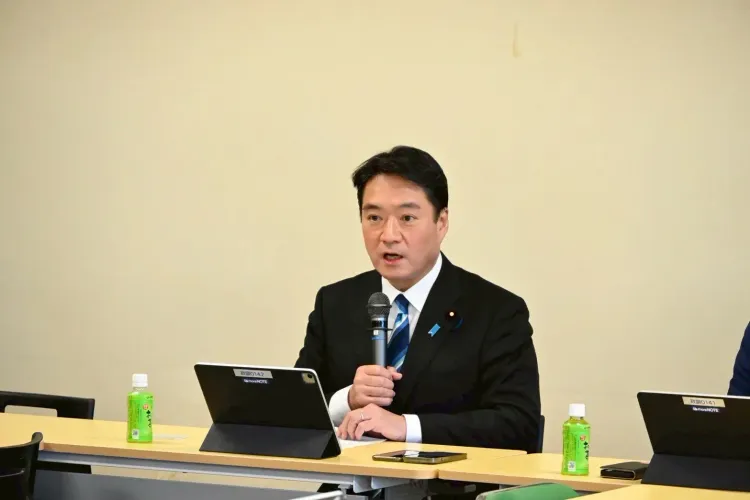
Japan's Deputy Chief Cabinet Secretary Masanao Ozaki on Thursday, 21 May firmly rejected joint criticism from China and Russia over what they termed Japan's 'remilitarisation', calling the allegations 'entirely unfounded.' Speaking at a press conference in Tokyo, Ozaki also called on both nations to 'change their behaviour' — citing Beijing's military activities and Moscow's ongoing war against Ukraine as matters of serious international concern.
What Ozaki Said
Addressing reporters, Ozaki stated: 'Japan has consistently upheld the values of freedom, democracy, and the rule of law since the end of World War II and contributed to the prosperity not only of Asia but also of the world.' He emphasised that Japan's 'exclusively defence-oriented' policy remains unchanged, pushing back against the narrative advanced by Beijing and Moscow.
The Xi-Putin Joint Statement That Triggered the Response
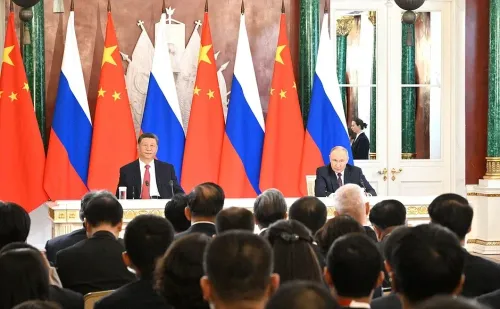
The remarks came in direct response to a joint statement issued by Chinese President Xi Jinping and Russian President Vladimir Putin following a bilateral meeting, in which both leaders condemned Japan's 'current course toward accelerated remilitarisation' and described it as posing 'a serious threat' to regional peace and stability. The statement also raised concerns about 'extreme provocations' by Japan's 'right-wing forces', including moves to revisit the country's three nuclear principles — which prohibit Japan from possessing, producing, or permitting the introduction of nuclear weapons.
Background: Rising Tensions Over Taiwan and Defence Policy
Relations between China and Japan have been under sustained strain. In November 2025, Japanese Prime Minister Sanae Takaichi suggested in parliament that a Chinese attack on Taiwan could trigger a response by Japan's Self-Defence Forces (JSDF). China, which considers Taiwan part of its territory and has not ruled out using force for reunification, reacted sharply to those remarks.
Earlier, in February, Defence Minister Shinjiro Koizumi had already hit back at Chinese criticism, accusing Beijing of 'waging a propaganda campaign' against Japan. Koizumi was responding to Tokyo's push to expand defence equipment transfers for five non-combat purposes: rescue, transport, warning, surveillance, and minesweeping.
Japan's Defence Posture: The Numbers
Koizumi cited data from the Stockholm International Peace Research Institute (SIPRI) to contextualise the security environment, noting that China's arms exports between 2015 and 2024 were valued at approximately USD 17 billion, making it the fourth-largest arms exporter in the world. By contrast, Japan does not rank in the top 50. 'In the current security situation, it is essential for us to develop our own defence capabilities without counting on a particular country,' Koizumi said. The remarks underscore Tokyo's broader push for strategic autonomy in defence procurement.
What Comes Next
The exchange marks a new low in Japan's diplomatic relations with both China and Russia, coming at a time when Tokyo is actively expanding its defence budget and doctrine. With the JSDF's role under renewed public and parliamentary debate, and Beijing-Moscow coordination on Japan-related messaging now formalised in a joint statement, the pressure on Tokyo to articulate its security posture more precisely is likely to intensify in the months ahead.
Point of View
A framing Japan has never accepted. What mainstream coverage underplays is that the 'remilitarisation' label is doing political work: it conflates Japan's non-combat equipment transfers and modest JSDF upgrades with historical militarism, a conflation Tokyo has spent eight decades trying to separate. The more significant pressure point is the nuclear principles debate — if Japan's domestic politics moves even marginally in that direction, the regional calculus changes entirely. Beijing and Moscow know this, and the joint statement is as much a warning to Japan's domestic audience as it is a diplomatic salvo.
NationPress
6 Oct 2026
Frequently Asked Questions
Why did Japan reject China and Russia's remilitarisation claims?
Japan's Deputy Chief Cabinet Secretary Masanao Ozaki called the claims 'entirely unfounded' on 21 May, asserting that Japan has maintained an 'exclusively defence-oriented' policy since World War II. He also called on China and Russia to change their own behaviour, citing Beijing's military activities and Moscow's war in Ukraine.
What did the Xi-Putin joint statement say about Japan?
The joint statement, released after a meeting between Chinese President Xi Jinping and Russian President Vladimir Putin, accused Japan of pursuing 'accelerated remilitarisation' and described it as posing 'a serious threat' to regional peace and stability. It also raised concerns about Japan's right-wing forces pushing to revise the country's three nuclear principles.
What are Japan's three nuclear principles?
Japan's three nuclear principles prohibit the country from possessing, producing, or permitting the introduction of nuclear weapons onto its territory. They have been a cornerstone of Japan's post-war security doctrine, and any move to revise them would represent a significant policy shift.
How did Japan-China relations deteriorate ahead of this dispute?
Relations worsened notably after Prime Minister Sanae Takaichi suggested in parliament in November 2025 that a Chinese attack on Taiwan could trigger a response by Japan's Self-Defence Forces. China, which claims Taiwan as its territory, reacted sharply to those remarks.
What is Japan's defence posture compared to China's?
Defence Minister Shinjiro Koizumi cited SIPRI data showing China's arms exports from 2015 to 2024 were worth approximately USD 17 billion, making it the fourth-largest arms exporter globally, while Japan does not rank in the top 50. Koizumi used the comparison to justify Japan's push to develop independent defence capabilities.