European leaders slam Russia's Oreshnik missile strike on Ukraine
Synopsis
France and Germany have condemned Russia's latest strike on Ukraine, specifically calling out the Oreshnik hypersonic missile — a weapon Putin described in 2024 as having 'no equivalents in the world.' The coordinated European rebuke, with both Macron and Merz posting on X, signals a hardening Western stance as Moscow deploys its most advanced arsenal against Ukrainian targets.
Key Takeaways
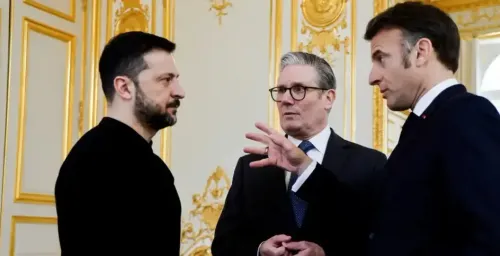
French President Emmanuel Macron and German Chancellor Friedrich Merz condemned Russia's attack on Ukraine on Sunday, 25 May 2025 .
Both leaders specifically called out the use of the Oreshnik hypersonic ballistic missile, describing it as a 'reckless escalation.' The Russian Defence Ministry said strikes targeted Ukrainian military infrastructure and command posts, denying any civilian targeting.
The Oreshnik travels at Mach 10 (nearly 3 km per second ) and can reach impact temperatures of 4,000 degrees Celsius , according to President Putin's own 2024 description.
Both Macron and Merz reaffirmed their countries' commitment to supporting Ukraine and strengthening European security.
French President Emmanuel Macron and German Chancellor Friedrich Merz on Sunday, 25 May 2025, jointly condemned Russia's latest large-scale attack on Ukraine, with both leaders singling out the deployment of the Oreshnik hypersonic ballistic missile as a dangerous escalation in an already devastating war. The condemnations came hours after the Russian Defence Ministry confirmed the missile's use against Ukrainian military targets.
What Macron Said
Macron posted his response on X, calling the strike a sign of Russia's strategic desperation. 'France condemns this attack and the use of the Oreshnik ballistic missile, which above all signals a kind of headlong rush and the impasse of Russia's war of aggression,' he wrote. He added that 'Russian strikes continue to target civilian objectives in Ukraine, as they did again this night,' and pledged that France's 'determination to continue supporting Ukraine, to do everything possible for a just and lasting peace, and to strengthen Europe's security is only reinforced.'
Germany's Strong Rebuke
Chancellor Merz was equally direct in his condemnation, also posting on X. 'Last night, Russia launched a massive attack on civilian targets in Ukraine. Once again, the Oreshnik missile system was used. The German government strongly condemns this reckless escalation. Germany remains firmly at Ukraine's side,' he wrote. The statement underscored Berlin's continued commitment to Kyiv despite ongoing domestic debates over defence spending and military aid.
Russia's Account of the Strike
The Russian Defence Ministry stated that the Oreshnik missiles were used to target 'Ukrainian defence industry, military infrastructure, as well as command posts of the General Command of the Ukrainian Ground Forces, the Main Directorate of Intelligence of Ukraine's Ministry of Defence, and other command posts of the Armed Forces of Ukraine.' Moscow explicitly maintained that 'no strikes were planned or carried out against the civilian infrastructure of Ukraine' — a claim that directly contradicts the assessments of both Macron and Merz.
What Is the Oreshnik Missile
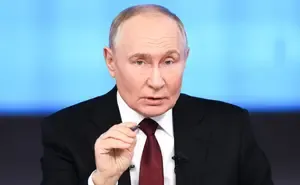
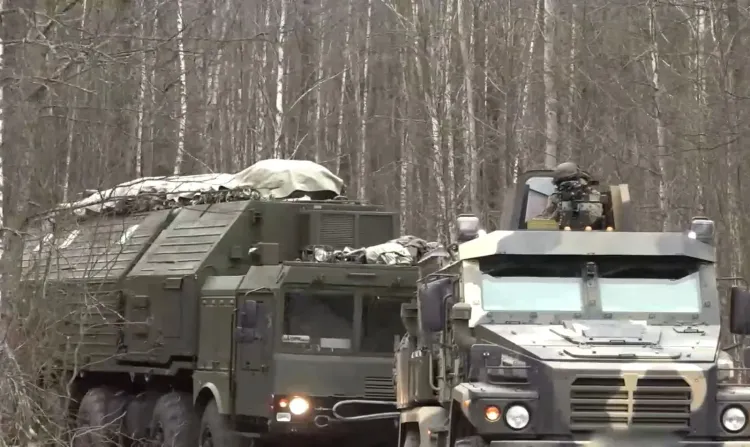
The Oreshnik is a Russian medium-range hypersonic ballistic missile, according to Russia's state media. In a 2024 address to the Collective Security Treaty Organisation (CSTO), President Vladimir Putin described its capabilities in stark terms: 'The system deploys dozens of homing warheads that strike the target at a velocity of Mach 10, equivalent to nearly three kilometres per second. The temperature of the impact elements reaches 4,000 degrees Celsius — nearing the surface temperature of the sun.' Putin also claimed the missile 'is capable of destroying even heavily fortified structures and those located at significant depths,' and declared, 'The Oreshnik system, of course, has no equivalents in the world.'
Broader Implications
Notably, this is not the first time the Oreshnik has been deployed in the conflict — its repeated use signals a deliberate Russian strategy to test the limits of Western deterrence. The latest strikes come amid stalled ceasefire negotiations and renewed European discussions on long-range weapons supply to Kyiv. The coordinated response from Paris and Berlin suggests a hardening of the European position, with both capitals framing continued support for Ukraine as a matter of continental security rather than bilateral aid.
Point of View
Aimed as much at European capitals as at Ukrainian targets. Moscow is stress-testing Western resolve at a moment when ceasefire talks are fragile and European defence budgets are under political strain. The coordinated Macron-Merz response is notable, but condemnations without a corresponding escalation in military support risk becoming routine. The real question is whether Europe's rhetorical hardening translates into accelerated weapons delivery — or whether the Oreshnik becomes yet another red line absorbed without consequence.
NationPress
20 Sept 2026
Frequently Asked Questions
What is the Oreshnik missile used by Russia in Ukraine?
The Oreshnik is a Russian medium-range hypersonic ballistic missile capable of striking targets at Mach 10, or nearly 3 kilometres per second. According to President Putin's 2024 description, it deploys dozens of homing warheads and can destroy heavily fortified structures, with impact temperatures reaching 4,000 degrees Celsius.
Why did Macron and Merz condemn the Russian strike?
Both leaders condemned the attack as a reckless escalation targeting civilian objectives in Ukraine, specifically objecting to the use of the Oreshnik missile. They reaffirmed their countries' commitment to supporting Ukraine and strengthening European security.
What did Russia say about the strike?
The Russian Defence Ministry said the Oreshnik missiles targeted Ukrainian military infrastructure, defence industry facilities, and command posts — and explicitly denied striking civilian infrastructure. This account directly contradicts the assessments made by Macron and Merz.
Has the Oreshnik been used before in the Ukraine conflict?
Yes, the latest attack is not the first known deployment of the Oreshnik in the conflict. Its repeated use suggests a deliberate Russian strategy to demonstrate advanced weapons capability and test Western deterrence thresholds.
What is Europe's position following the strike?
France and Germany have both pledged continued and reinforced support for Ukraine. The coordinated condemnations from Paris and Berlin indicate a hardening European stance, framing Ukrainian support as a matter of continental security rather than bilateral assistance.