Shekhawat meets Qatar Tourism chief at WTM London 2026
Synopsis
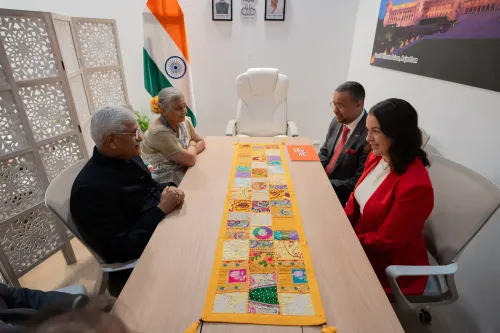
Union Culture and Tourism Minister Gajendra Singh Shekhawat held a bilateral meeting with Qatar Tourism Chairman H.E. Saad bin Ali Al Kharji at WTM London 2026, focusing on tourist exchanges, connectivity, and cultural and heritage tourism collaboration between India and Qatar.
Key Takeaways
Gajendra Singh Shekhawat met Qatar Tourism Chairman Saad bin Ali Al Kharji at World Travel Market 2026 in London on 4 November 2026 .
Discussions covered strengthening India-Qatar tourism cooperation , boosting tourist exchanges, and enhancing air and travel connectivity.
Both sides explored collaboration in cultural, heritage and experiential tourism — the fastest-growing global segments.
India-Qatar diplomatic ties date to 1973 , underpinned by one of the Gulf's largest Indian diaspora communities.
India has been actively pursuing tourism diplomacy with Gulf partners to increase inbound arrivals and improve connectivity.
Potential follow-ups include new flight routes, joint marketing campaigns, or an MoU at upcoming bilateral engagements.
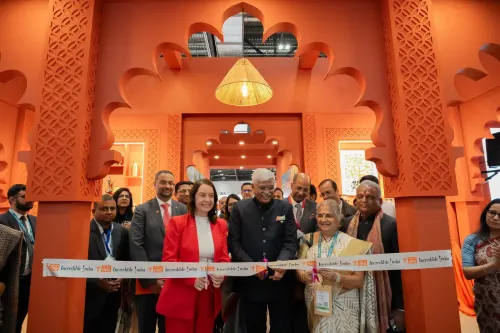
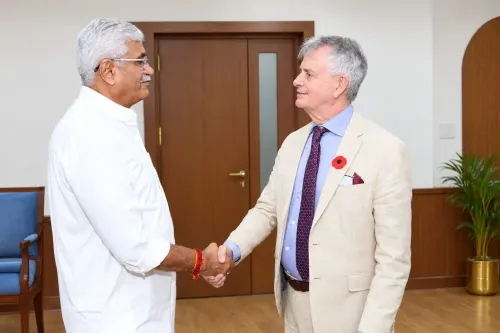
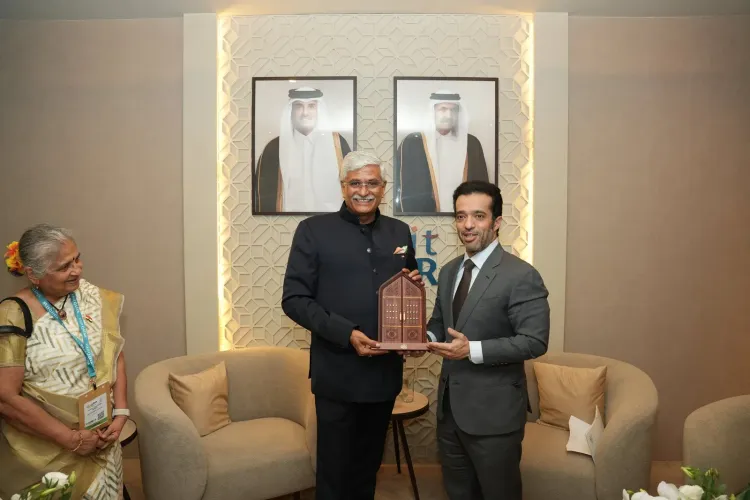
On the sidelines of one of the world's most consequential travel trade gatherings, Union Culture and Tourism Minister Gajendra Singh Shekhawat sat down on Wednesday, 4 November 2026 with H.E. Saad bin Ali Al Kharji, Chairman of Qatar Tourism, at the World Travel Market (WTM) 2026 in London — signalling India's intent to deepen its tourism footprint across the Gulf.
What was on the table in London
The two officials discussed strengthening India-Qatar tourism cooperation, promoting greater tourist exchanges, and enhancing connectivity. They also explored 'new avenues for collaboration in cultural, heritage and experiential tourism' — the fastest-growing segments globally and ones where both nations hold significant natural advantages.
Shekhawat noted that India and Qatar share strong people-to-people ties, calling them a foundation for 'immense potential to deepen our partnership and create new opportunities for tourism growth.'
Why the India-Qatar tourism corridor matters
India and Qatar have maintained diplomatic relations since 1973, and over the decades that formal relationship has been underpinned by one of the largest Indian diaspora communities in the Gulf — a natural engine for two-way travel demand. Direct flights already link Doha to multiple Indian cities, but tourism strategists argue that connectivity and joint marketing remain underleveraged compared to the size of the people-to-people base.
India has in recent years actively pursued tourism diplomacy with Gulf partners, using high-profile trade forums to negotiate inbound arrival targets, co-branded heritage itineraries, and improved air-access frameworks. The Gulf corridor is seen as among the most responsive to such outreach, given the large resident Indian workforce and growing Qatari middle-class appetite for outbound leisure travel.
WTM London as a diplomatic stage
World Travel Market — held annually in London — functions as much as a diplomatic arena as it does a commercial marketplace. Senior tourism ministers from across the world use its sidelines to hold focused bilateral meetings that rarely happen in formal embassy settings. For India, it has become a reliable venue to stack multiple tourism-track engagements into a single high-visibility week.
Shekhawat's office tagged @PMOIndia, @MEAIndia, @qatartourism, @tourismgoi, @IndEmbDoha, and @HCI_London in the post — a deliberate signal that the meeting carries weight beyond the tourism ministry alone and feeds into the wider India-Qatar bilateral relationship.
What comes next for the partnership
No specific outcomes — new flight routes, joint marketing campaigns, or formal agreements — have been confirmed from this meeting. The natural next milestones to watch are follow-up engagements at upcoming tourism fairs or during high-level state visits, where such ministerial meetings typically crystallise into signed frameworks or bilateral tourism targets. If previous India-Gulf tourism diplomacy is any guide, an MoU or joint action plan could be the next concrete marker.
India is gunning to position itself as a top-five global tourism destination this decade. Every bilateral meeting at a forum like WTM is a building block — small on its own, significant in the aggregate.
Point of View
Not merely a commerce-ministry sideshow. The emphasis on 'cultural, heritage and experiential tourism' also reflects a push to diversify India's tourism pitch beyond the traditional Taj Mahal circuit. Watch for whether this meeting generates a measurable outcome — an MoU, a joint campaign, or a new route announcement — which would distinguish it from the routine ministerial meet-and-greet circuit.
NationPress
4 Nov 2026
Frequently Asked Questions
What did Gajendra Singh Shekhawat discuss with Qatar Tourism at WTM London 2026?
Shekhawat met Qatar Tourism Chairman Saad bin Ali Al Kharji at WTM London 2026 to discuss strengthening India-Qatar tourism cooperation, greater tourist exchanges, improved connectivity, and new collaboration in cultural, heritage and experiential tourism.
What is World Travel Market (WTM) London?
World Travel Market is an annual international travel trade exhibition held in London, used by tourism ministers and industry leaders worldwide for bilateral meetings, deal-making and policy discussions.
Why is the India-Qatar tourism relationship significant?
India and Qatar have diplomatic ties dating to 1973 and share one of the Gulf's largest Indian diaspora communities, creating a strong base for two-way travel. India has been actively pursuing tourism diplomacy with Gulf partners to increase inbound tourist arrivals and improve air connectivity.
What are the next expected outcomes from India-Qatar tourism talks?
Potential follow-ups include new flight routes, joint marketing campaigns, or a formal MoU, which are typically announced at subsequent tourism fairs or during high-level bilateral state visits.
Who is Saad bin Ali Al Kharji?
Saad bin Ali Al Kharji is the Chairman of Qatar Tourism, the national authority responsible for promoting Qatar as a global travel and tourism destination.