Shekhawat Meets Canada High Commissioner, Eyes Tourism Boost
Synopsis
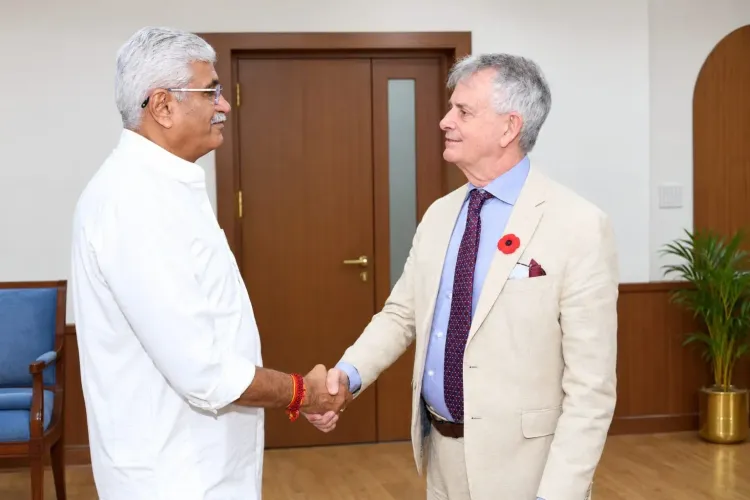
Union Culture and Tourism Minister Gajendra Singh Shekhawat met Canadian High Commissioner Chris Cooter in New Delhi on October 22, 2026, to discuss strengthening India-Canada ties across tourism, cultural exchanges, trade, investment, energy, and education, signalling renewed bilateral momentum.
Key Takeaways
Gajendra Singh Shekhawat hosted Canadian High Commissioner Chris Cooter at his New Delhi office on October 22, 2026 .
The agenda spanned six sectors: tourism, cultural exchanges, trade, investment, energy, and education.
Tourism was flagged as a key vehicle for people-to-people ties and cultural heritage promotion between the two countries.
India and Canada launched CEPA negotiations in 2010 ; periodic high-level bilateral mechanisms have continued since.
Shekhawat tagged PMO India, MEA India , and tourism and culture ministries, indicating inter-ministerial engagement.
Both sides characterised the meeting as carrying 'renewed momentum' — language that signals an intentional diplomatic reset.
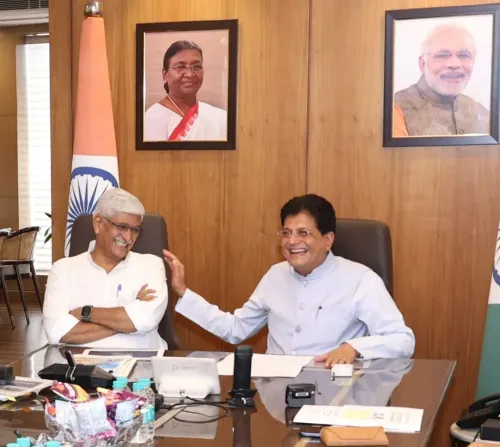
A diplomatic meeting in New Delhi on Thursday, October 22, 2026 signalled a deliberate push to reset and deepen one of South Asia's most consequential bilateral partnerships. Union Culture and Tourism Minister Gajendra Singh Shekhawat hosted Chris Cooter, High Commissioner of Canada to India, for a wide-ranging discussion at his office, with tourism, cultural exchanges, trade, investment, energy, and education all on the table.
What the two sides put on the table
Shekhawat described the engagement as 'constructive,' with both sides exploring avenues to 'deepen cooperation' across six distinct sectors — a breadth that signals this was no courtesy call. Tourism emerged as a centrepiece: the minister specifically framed people-to-people connectivity through travel as a way to 'showcase rich cultural heritage and create new opportunities for collaboration.' With India and Canada home to large, intertwined diaspora communities, the logic is straightforward — more tourists, more bridges.
The meeting comes against a backdrop of renewed bilateral momentum. India and Canada have maintained periodic high-level mechanisms on trade, education, and culture since at least the 2010s, including the launch of Comprehensive Economic Partnership Agreement (CEPA) negotiations in 2010 — a process that has moved in fits and starts over the years. A senior minister-level meeting focused explicitly on sectoral cooperation suggests both capitals are looking to move from conversation to delivery.
Why tourism is the chosen bridge
Shekhawat's ministry has made outbound and inbound tourism promotion a visible priority, and Canada is a natural counterpart: it hosts one of the world's largest Indian diaspora populations, generating substantial two-way travel demand. Cultural exchange programmes, heritage tourism circuits, and student mobility all sit at the intersection of the portfolios in the room — Culture, Tourism, and the High Commission's remit over education and trade ties. Threading them together into a single bilateral agenda is a strategic framing choice.
Shekhawat tagged @PMOIndia, @MinOfCultureGoI, @tourismgoi, and @MEAIndia in his post, signalling that the conversation has inter-ministerial weight and is not confined to a single departmental lane. Energy investment and trade — the other agenda items — fall squarely in that broader government-to-government register.
The road India and Canada are choosing to walk
Bilateral ties between the two democracies have had their share of turbulence in recent years, making a 'renewed momentum' framing by the minister all the more pointed. The explicit language of 'mutual trust and shared aspirations' is diplomat-speak for an intentional reset — a signal to both domestic and international audiences that the relationship is being actively managed at the political level.
Watch for follow-up on tourism promotion agreements or education mobility pacts as the most likely near-term deliverables from this engagement.
One meeting does not rebuild a relationship. But it is always how rebuilding begins.
Point of View
Not a departmental courtesy call. The CEPA thread, dormant for stretches since 2010, gives any concrete follow-up — even a tourism promotion MoU — symbolic weight beyond its immediate scope. For the BJP government, visible diplomatic momentum with a major Western democracy also carries domestic optics value.
NationPress
22 Oct 2026
Frequently Asked Questions
Why did Gajendra Singh Shekhawat meet the Canadian High Commissioner?
Shekhawat met Canadian High Commissioner Chris Cooter on October 22, 2026, for a 'constructive discussion' on strengthening India-Canada relations, covering tourism, cultural exchanges, trade, investment, energy, and education.
Who is Chris Cooter?
Chris Cooter is the High Commissioner of Canada to India, the senior Canadian diplomatic representative in New Delhi.
What is the current state of India-Canada bilateral relations?
India and Canada have long-standing ties in trade, education, and culture. Both sides have described the current phase as carrying 'renewed momentum,' suggesting an effort to move past previous diplomatic tensions and build a forward-looking partnership.
What is the India-Canada CEPA?
The India-Canada Comprehensive Economic Partnership Agreement (CEPA) is a trade deal whose negotiations were launched in 2010. The process has progressed in stages over the years as part of efforts to deepen bilateral economic engagement.
What outcomes could follow from the Shekhawat-Cooter meeting?
While no specific agreements were announced, the areas discussed — particularly tourism and education — point toward possible follow-up on tourism promotion agreements or education and student mobility pacts in upcoming bilateral consultations.