CM Samrat Choudhary Shares Modi's India-Poland Defence, Space & Nuclear Push
Synopsis
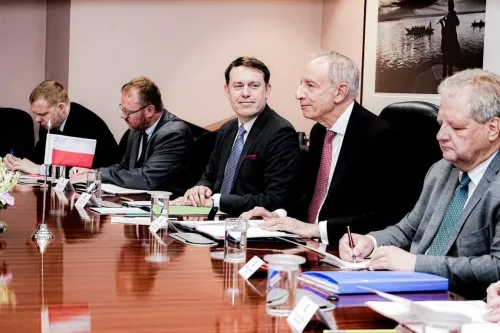
PM Modi has announced India-Poland agreements on co-development and co-production in defence, space, and nuclear energy, inviting Polish companies into India's strategic manufacturing ecosystem. Bihar CM Samrat Choudhary amplified the message on X, marking a qualitative leap in a bilateral relationship dating to the 1950s.
Key Takeaways
PM Narendra Modi announced on 22 October 2026 that India and Poland have agreed to deepen ties in defence, space, and nuclear energy .
India has formally invited Polish companies to enter co-development and co-production arrangements in all three strategic sectors.
The co-production framework aligns with India's Atmanirbhar Bharat indigenisation policy, which has governed defence procurement since 2016 .
Poland is a NATO and EU member with a rapidly expanding defence industrial base, making it a capable mid-sized European partner for India.
India-Poland diplomatic relations date to the 1950s , but this marks the first explicit, multi-sector strategic industrial invitation.
Possible next steps include joint working groups or MoUs at the next India-Poland bilateral mechanism meeting.
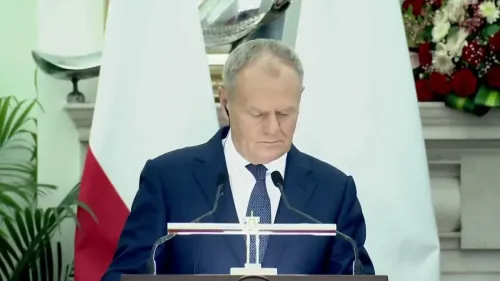
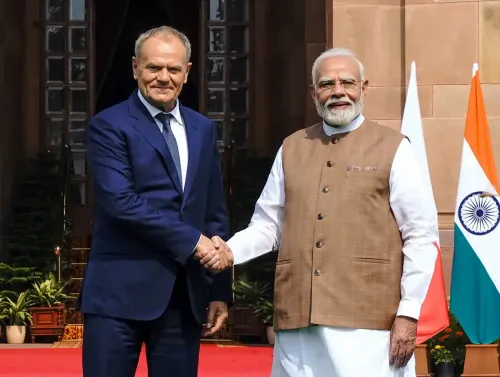
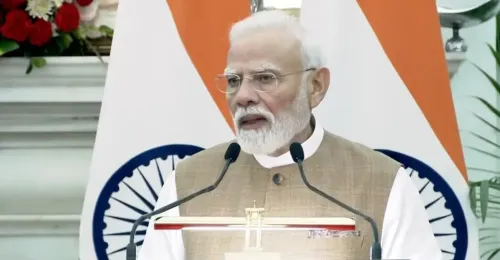
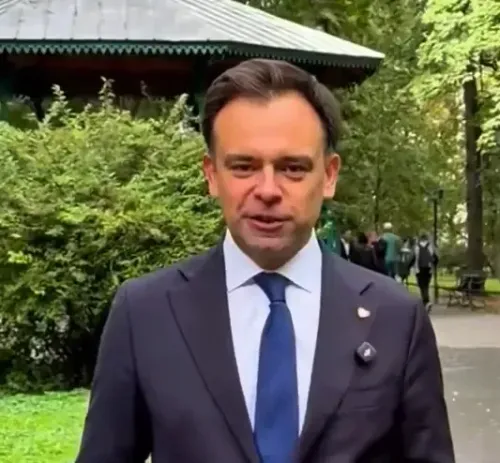
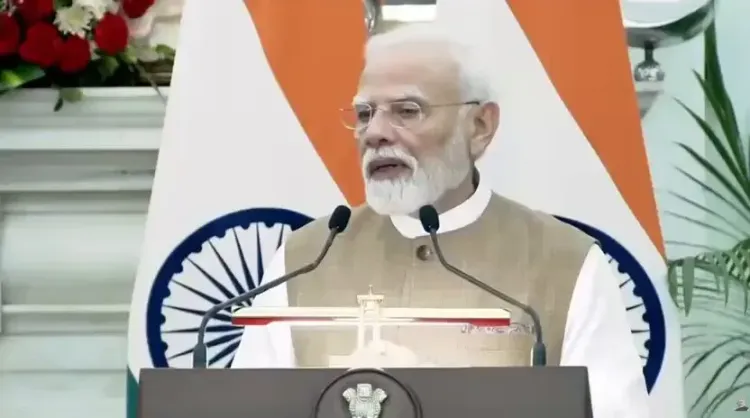
Prime Minister Narendra Modi has announced that India and Poland have agreed to deepen ties across three of the most strategically sensitive domains — defence, space, and nuclear energy — with New Delhi formally inviting Polish companies to enter co-development and co-production arrangements with Indian partners. Bihar Chief Minister Samrat Choudhary amplified the message on X on Thursday, 22 October 2026, quoting the Prime Minister's words directly.
What Modi said — and what it means
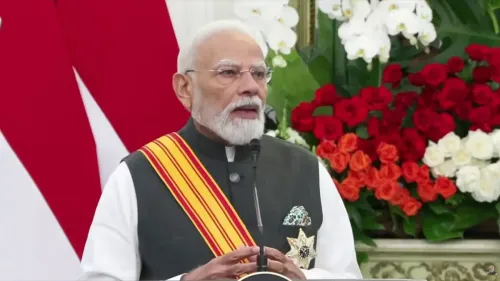
The Prime Minister's statement, quoted by CM Choudhary, was unambiguous: 'aaj humne defence, space aur nuclear energy mein sambandhon ko pragadh karne par sahmatii banaai hai' — 'today we have reached agreement on deepening relations in defence, space and nuclear energy.' The explicit invitation for Polish companies to co-develop and co-produce in all three sectors signals a formal, government-to-government opening rather than a vague aspiration.
The phrase 'co-development and co-production' carries precise policy weight in India. Since successive Defence Procurement Procedure revisions from 2016 onward, these terms have been the operative language for bringing foreign industrial partners inside India's manufacturing ecosystem — not just selling hardware to India, but building it here.
Poland's place in India's European strategy
Poland is a NATO member and EU state with a defence industrial base that has expanded sharply since Russia's 2022 invasion of Ukraine, making Warsaw one of Europe's fastest-growing military spenders and producers. For India, that makes Poland an unusually capable mid-sized partner — a country with real manufacturing depth in armoured vehicles, artillery, and aerospace components, not merely a diplomatic relationship on paper.
India's bilateral ties with Poland date to the 1950s, but the strategic dimension has historically been thin. Framing the relationship around defence, space, and nuclear energy simultaneously is a qualitative leap — and it echoes the template India has applied with France, Italy, and other European economies in recent years as it deliberately diversifies away from dependence on any single supplier bloc.
The Atmanirbhar Bharat thread
The co-production invitation is not just about acquiring technology — it is about anchoring it on Indian soil. The Atmanirbhar Bharat framework, which governs India's defence indigenisation push, requires foreign partners to transfer know-how and manufacture domestically to qualify for major contracts. Inviting Poland into this architecture in nuclear energy and space — two domains still largely insulated from private foreign partnerships — suggests the government is prepared to move the boundary further than before.
What to watch next: whether this agreement crystallises into specific joint working groups or memoranda of understanding at the next formal India-Poland bilateral mechanism meeting, and which Indian public-sector giants — HAL, ISRO, or the Department of Atomic Energy — emerge as the institutional anchors for these new corridors.
Three strategic sectors, one bilateral relationship, and a clear direction of travel — India is methodically building the industrial partnerships that could define its next decade of self-reliance.
Point of View
Space, and nuclear energy reflects a deliberate strategy of multi-polar industrial alignment — reducing single-supplier dependence while deepening ties with NATO-adjacent European economies that carry both technological depth and geopolitical credibility. The explicit 'co-development and co-production' language positions Warsaw not as a vendor but as a manufacturing partner inside India's Atmanirbhar ecosystem, a distinction that matters enormously for technology transfer. Extending this framework to nuclear energy and space — traditionally more insulated domains — signals a willingness to move the strategic boundary further than past agreements. If specific MoUs follow, it would represent one of the more consequential upgrades to India's European partnership architecture in recent years.
NationPress
22 Oct 2026
Frequently Asked Questions
What did PM Modi agree with Poland on defence and space?
PM Modi announced that India and Poland have agreed to deepen relations in defence, space, and nuclear energy, with India inviting Polish companies to enter co-development and co-production partnerships in all three sectors.
What does co-development and co-production with India mean for Polish companies?
Under India's defence and strategic sector framework, co-development and co-production means foreign companies manufacture products jointly in India, transferring technology and building local industrial capacity rather than simply exporting finished goods.
Why is Poland important for India's defence strategy?
Poland is a NATO and EU member with one of Europe's fastest-growing defence industries, giving it real manufacturing depth in armoured vehicles, artillery, and aerospace — making it a capable mid-sized partner for India's diversification strategy.
How does this India-Poland deal connect to Atmanirbhar Bharat?
The Atmanirbhar Bharat framework requires foreign defence and strategic sector partners to manufacture domestically and transfer know-how. The India-Poland co-production invitation fits directly into this policy architecture.
Why did Bihar CM Samrat Choudhary post about India-Poland relations?
As a senior BJP leader, CM Samrat Choudhary amplified PM Modi's foreign policy statement on X, a common practice among BJP-aligned leaders to broaden the reach of central government messaging.