PM Modi pitches India-Poland co-production in defence, space, nuclear
Synopsis
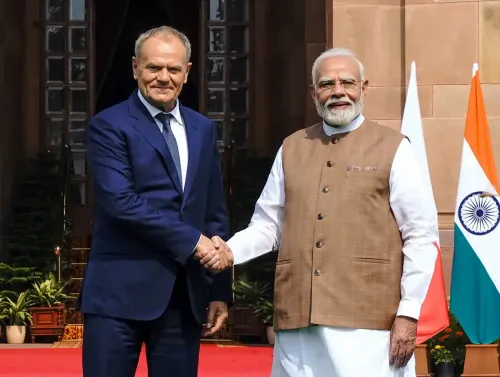
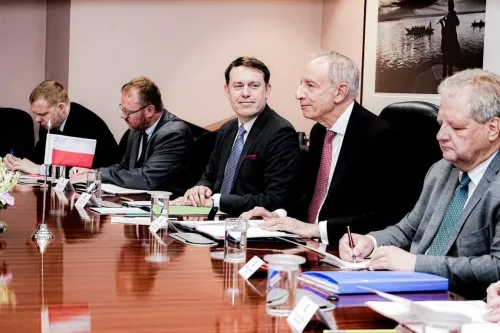
Prime Minister Narendra Modi, during bilateral engagements with Poland on 22 October 2026, announced consensus on deepening cooperation in defence, space, and nuclear energy, inviting Polish companies to pursue co-development and co-production with Indian partners — marking a significant expansion of India's European strategic partnerships.
Key Takeaways
PM Narendra Modi announced on 22 October 2026 that India and Poland have agreed to deepen ties in defence, space, and nuclear energy .
Indian leadership has formally invited Polish companies to enter co-development and co-production arrangements with Indian counterparts.
Poland is a NATO and EU member state with a substantial defence and aerospace industrial base, making it a strategically relevant partner.
Institutional follow-through may involve DRDO, ISRO, and NPCIL in project proposals with Polish firms.
The move is part of India's broader strategy to diversify strategic supply chains and build indigenous capabilities through European partnerships.
Union Minister Kiren Rijiju amplified the Prime Minister's statement, signalling government-wide messaging around the #IndiaPolandFriendship initiative.
In a significant step to deepen strategic ties with a NATO ally, Prime Minister Narendra Modi on Thursday, 22 October 2026, announced that India and Poland have reached consensus on strengthening cooperation across defence, space, and nuclear energy — three of the most sensitive and consequential sectors in modern geopolitics — and extended a formal invitation to Polish companies to co-develop and co-produce with Indian partners.
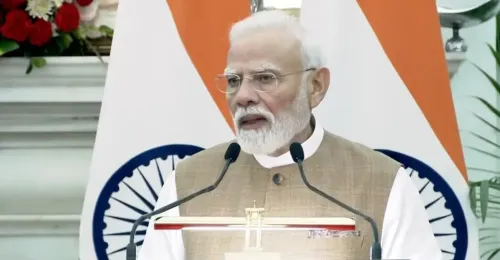
Union Parliamentary Affairs Minister Kiren Rijiju shared the Prime Minister's statement on X, quoting Modi directly: 'आज हमने Defence, Space और Nuclear Energy के संबंधों को प्रगाढ़ करने पर सहमति बनाई है' — 'Today we have agreed to deepen cooperation in Defence, Space and Nuclear Energy. In all these strategic sectors, we invite Poland's companies to undertake Co-Development and Co-Production with India.'
Why Poland, and why now
Poland is not a name that typically tops India's list of strategic partners — but it should be on that list. A full NATO and European Union member, Poland carries one of the continent's most serious defence-industrial footprints, sharpened by years of proximity to geopolitical turbulence on its eastern border. Its aerospace and defence manufacturing sector has expanded substantially, and its appetite for technology partnerships aligns neatly with India's own ambitions.
For India, the logic is clear: diversify. New Delhi has spent years building a framework of co-production agreements — primarily with the United States, France, and Israel — to reduce dependence on single-source suppliers and to build genuine indigenous capability. Extending that web into Central Europe, through a country that is simultaneously a NATO insider and an EU market gateway, represents a calibrated next move.
Defence, space, nuclear — the three pillars India just put on the table
The breadth of sectors named is deliberate and striking. Defence co-production — already a pillar of India's Make-in-India push — now explicitly includes a Polish dimension, potentially drawing on Poland's armoured vehicle, artillery, and electronics industries. Space cooperation signals a role for Poland in India's rapidly expanding civilian and dual-use space economy, an arena where ISRO and a growing private sector are actively seeking global technology partners. And nuclear energy — historically among India's most guarded strategic domains — being placed on the co-production table marks a maturation of the bilateral relationship that few would have anticipated even a few years ago.
Agencies such as DRDO, ISRO, and NPCIL are the natural institutional homes where follow-up project proposals would take shape. The invitation is now public. What follows — specific MoUs, joint working groups, and named company partnerships — will determine whether this consensus becomes hardware.
India's European strategic pivot gathers pace
This engagement fits a broader pattern. India has been methodically building bilateral strategic architecture with EU member states — from France on defence and space, to Germany on green hydrogen and advanced manufacturing, to smaller but capable partners like Poland. Each partnership chips away at the old paradigm of India buying finished systems and replaces it with something harder to walk back: shared production lines, intertwined supply chains, and aligned strategic interests.
The hashtag #IndiaPolandFriendship may be diplomatic boilerplate, but the sectors underneath it are anything but ceremonial. When a Prime Minister puts nuclear energy on a bilateral co-production agenda, he is betting on a relationship that will last decades.
Point of View
Not just a diplomatic courtesy — it indicates New Delhi's confidence in the bilateral relationship's maturity. Poland's NATO membership gives any technology partnership a built-in geopolitical buffer, reducing the diplomatic friction that can accompany similar deals with non-aligned or adversarial states. For India, this engagement accelerates the shift from buyer to partner in its European defence diplomacy, a transition that carries long-term implications for indigenous capability-building. The real test will be whether the consensus announced on 22 October translates into named projects and signed agreements in the months ahead.
NationPress
22 Oct 2026
Frequently Asked Questions
What did PM Modi agree with Poland on 22 October 2026?
PM Modi announced that India and Poland reached consensus on deepening cooperation in defence, space, and nuclear energy, with Indian leadership inviting Polish companies to pursue co-development and co-production with Indian partners.
Why is India partnering with Poland in defence and space?
Poland is a NATO and EU member with a significant defence and aerospace industrial base. India is diversifying its strategic supply chains beyond traditional partners, and Poland's capabilities and geopolitical position make it a relevant new partner.
Which Indian agencies could collaborate with Poland under this agreement?
Based on the sectors named — defence, space, and nuclear energy — agencies such as DRDO, ISRO, and NPCIL are the most likely institutional homes for follow-up project proposals and partnerships with Polish companies.
What is India's co-development and co-production strategy?
India has been building co-production frameworks with select partners — including the US, France, and Israel — to develop indigenous capabilities and reduce dependence on finished foreign systems. The Poland initiative extends this strategy into Central Europe.
Who is Kiren Rijiju and why did he post this?
Kiren Rijiju is India's Union Minister of Parliamentary Affairs and Minority Affairs, a senior BJP leader from Arunachal Pradesh. He shared PM Modi's statement on X as part of the government's broader communication around the India-Poland bilateral engagement.