CM Pema Khandu releases poetry book on Arunachal's culture
Synopsis
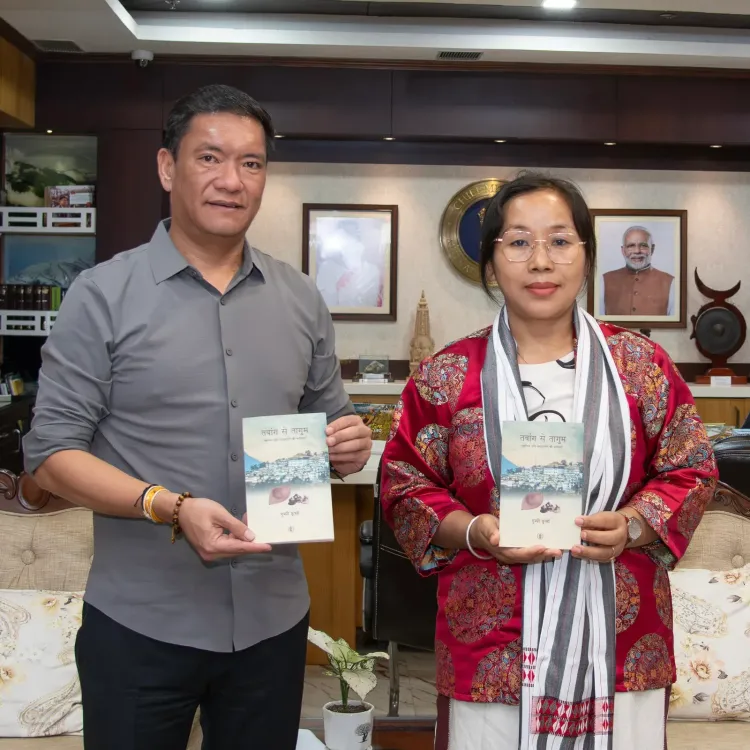
Arunachal Pradesh Chief Minister Pema Khandu released 'Tawang Se Tagum,' a Hindi poetry collection by Dr. Gumpi Nguso, Hindi Officer at Rajiv Gandhi University, celebrating the state's landscapes, tribal traditions, and everyday life.
Key Takeaways
CM Pema Khandu released the poetry book Tawang Se Tagum on 22 October 2026 .
The book is authored by Dr.
Gumpi Nguso , Hindi Officer at Rajiv Gandhi University , Arunachal Pradesh.
The poems document the beauty, traditions, cultures, and everyday life of Arunachal Pradesh .
Tawang , a district renowned for its Tibetan Buddhist heritage, forms a key thematic setting of the collection.
Rajiv Gandhi University is a central university in Arunachal Pradesh established in 1984 .
The release aligns with broader state-level efforts to document and promote Arunachal's diverse tribal literary heritage.
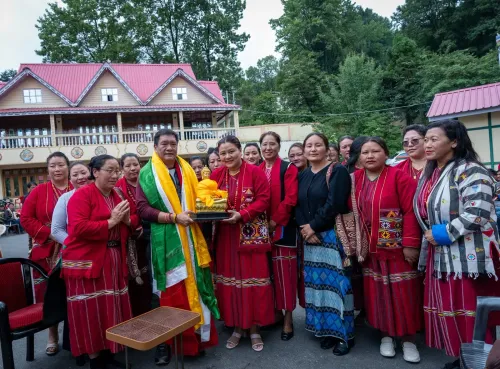
A poetry collection that travels from the mist-draped monasteries of Tawang to the everyday rhythms of Arunachal Pradesh's diverse communities found its public launch on Thursday, 22 October 2026, when Arunachal Pradesh Chief Minister Pema Khandu released Tawang Se Tagum, a new Hindi-language work by Dr. Gumpi Nguso, Hindi Officer at Rajiv Gandhi University.
Sharing the occasion on social media, CM Khandu described the release as 'a pleasure,' saying Dr. Gumpi's poems 'capture the beauty of Arunachal Pradesh, its rich traditions, diverse cultures and the everyday experiences of our people.' He extended his congratulations and wished her success in 'bringing Arunachal's stories and culture to a wider audience.'
Verse rooted in Tawang's Buddhist landscape
Tawang, a district in western Arunachal Pradesh, is among the state's most culturally layered geographies — home to one of the largest Tibetan Buddhist monasteries outside Tibet, and to communities whose oral and written traditions stretch back centuries. Dr. Gumpi draws on this landscape as the thematic spine of Tawang Se Tagum, using Hindi verse to translate lived Arunachali experience for readers beyond the state's borders.
The choice of Hindi as the medium is significant. As Hindi Officer at Rajiv Gandhi University — a central university in the state established in 1984 — Dr. Gumpi occupies a role that sits precisely at the intersection of language outreach and cultural documentation, making the collection a natural extension of her institutional work.
Arunachal's quiet literary tradition and who it reaches
Arunachal Pradesh is home to well over two dozen distinct tribal groups, each carrying its own oral heritage, folklore, and narrative tradition. The challenge of documenting and transmitting that diversity in accessible written form is one state leaders and cultural institutions return to regularly. Book launches, literary festivals, and state-supported cultural events have served as recurring platforms for that effort.
Chief Minister Khandu's personal participation in the release — rather than a departmental delegation — signals the symbolic weight attached to such cultural moments. Writers like Dr. Gumpi who render local experience in a widely spoken language effectively build a bridge between a geographically remote, richly diverse state and the broader national reading public.
For a state whose identity is frequently framed in geopolitical or administrative terms, a poetry collection insisting on its people's everyday humanity is its own kind of statement. Dr. Gumpi Nguso has made that statement in verse — and now it has an audience.
Frequently Asked Questions
What is the book 'Tawang Se Tagum' about?
'Tawang Se Tagum' is a Hindi poetry collection by Dr. Gumpi Nguso that captures the beauty, rich traditions, diverse cultures, and everyday experiences of the people of Arunachal Pradesh, with Tawang as a central thematic setting.
Who is Dr. Gumpi Nguso?
Dr. Gumpi Nguso is the Hindi Officer at Rajiv Gandhi University, a central university in Arunachal Pradesh established in 1984, and the author of the poetry collection 'Tawang Se Tagum'.
Who released the book 'Tawang Se Tagum'?
Arunachal Pradesh Chief Minister Pema Khandu released the book on 22 October 2026.
What is Rajiv Gandhi University known for?
Rajiv Gandhi University is a central university located in Arunachal Pradesh, established in 1984, and serves as a key institution for higher education and language outreach in the state.
Why is Tawang culturally significant in Arunachal Pradesh?
Tawang is a district in western Arunachal Pradesh renowned for its Tibetan Buddhist heritage, historic monasteries, and diverse communities with centuries-old oral and written traditions.