CM Pema Khandu Meets Kitpi Block Panchayat Leaders
Synopsis
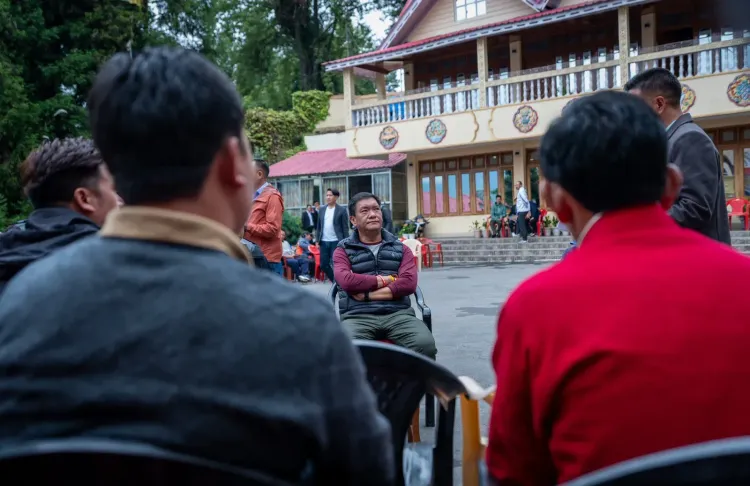
Arunachal Pradesh Chief Minister Pema Khandu on June 23, 2026, met Gram Panchayat Chairpersons and Gaon Burahs of Kitpi Block in Tawang district to exchange views on grassroots governance, development, and community aspirations, with ZPM Tenzin Monpa in attendance.
Key Takeaways
Chief Minister Pema Khandu held a grassroots outreach meeting with Gram Panchayat Chairpersons and Gaon Burahs of Kitpi Block on June 23, 2026 .
ZPM Tenzin Monpa was present, reflecting multi-tier local governance coordination in Tawang district .
The meeting addressed grassroots governance, development priorities, and community aspirations in a strategically sensitive border area.
Arunachal Pradesh operates a dual local governance structure — elected panchayats under the Panchayati Raj Act, 1997 and the customary Gaon Burah system — both engaged at the meeting.
The outreach aligns with the BJP -led state government's broader strategy of integrating traditional institutions with formal governance for effective scheme delivery in tribal districts.
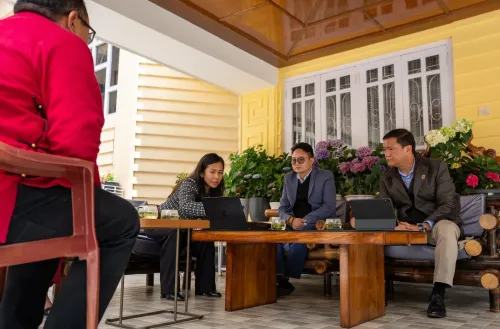
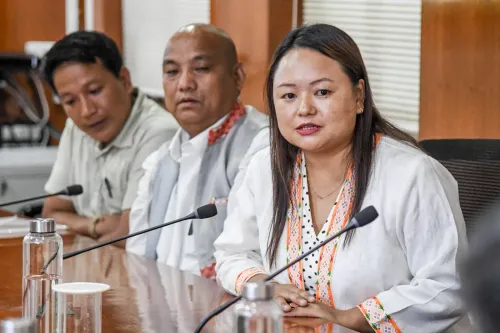
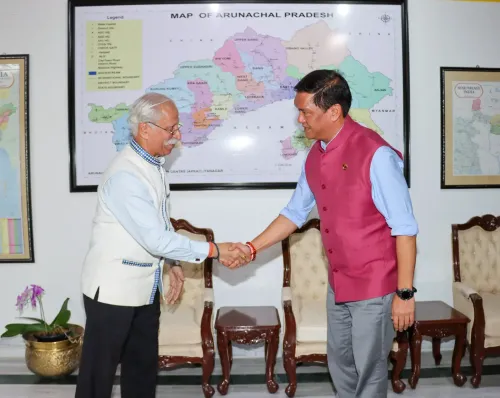
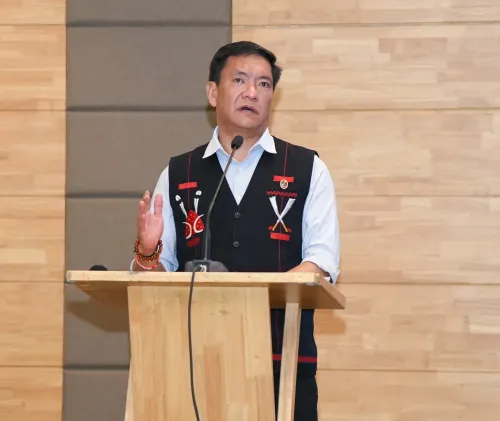
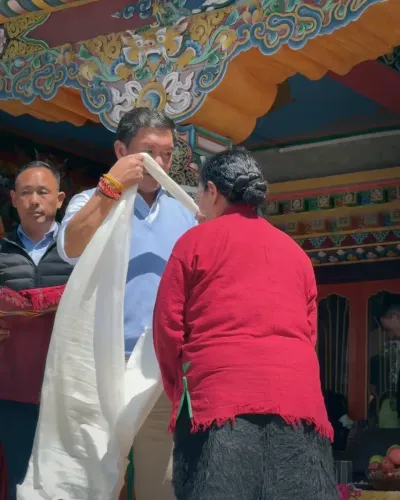
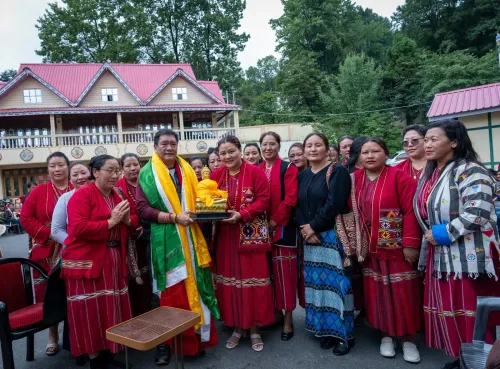
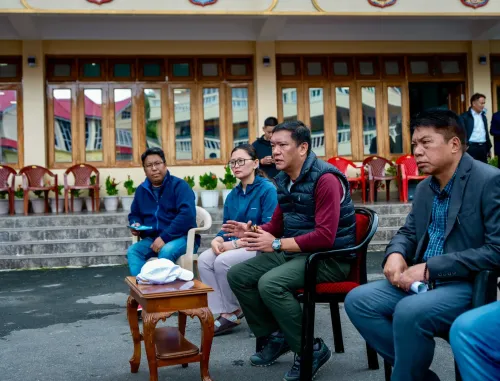
Arunachal Pradesh Chief Minister Pema Khandu on Tuesday, June 23, 2026, held a grassroots outreach meeting with Gram Panchayat Chairpersons (GPCs) and Gaon Burahs (GBs) of Kitpi Block, with Zilla Parishad Member (ZPM) Tenzin Monpa also present. The interaction focused on grassroots governance, development priorities, and community aspirations in the border district.
Context
Chief Minister Khandu described the meeting as 'an enriching interaction,' saying 'the pulse of the people is best understood by those who serve them every day.' The session brought together two distinct but complementary pillars of local governance in Arunachal Pradesh — elected panchayat representatives and traditional Gaon Burahs, the customary village headmen whose authority is rooted in tribal custom and practice.
Kitpi Block falls within Tawang district, a strategically sensitive and predominantly tribal border area. The presence of ZPM Tenzin Monpa at the meeting signalled coordination across multiple tiers of the state's local governance structure.
Policy Backdrop
The dual governance framework — formal panchayats alongside the Gaon Burah system — has deep legislative roots in Arunachal Pradesh. The Arunachal Pradesh Panchayati Raj Act, 1997 established elected gram panchayats in the state, coinciding with the extension of the 73rd Constitutional Amendment to Arunachal Pradesh in the same year, which formalised three-tier panchayati raj institutions.
Crucially, the legislation preserved the parallel customary authority of Gaon Burahs, recognising their deep legitimacy in tribal communities. This dual structure means effective grassroots governance in the state requires engaging both elected and traditional leaders simultaneously — precisely the approach demonstrated at the Kitpi Block meeting.
Stakeholders and Impact
For rural communities in Tawang district, interactions of this kind serve as a direct channel to communicate local needs — from road connectivity and water supply to livelihoods and border-area entitlements — to the state's highest executive. Gram Panchayat Chairpersons are the formal conduit for scheme delivery under central and state rural development programmes, while Gaon Burahs retain social authority that often determines community acceptance of government initiatives.
The BJP-led state government has consistently pursued a strategy of integrating customary institutions with formal governance structures across the Northeast, viewing it as essential for last-mile delivery of welfare schemes in geographically challenging and culturally distinct tribal districts.
What's Next
The feedback gathered from GPCs and Gaon Burahs of Kitpi Block is expected to inform block- and district-level coordination on rural development scheme implementation in Tawang. Observers will watch whether the outreach translates into specific administrative follow-ups — such as accelerated fund releases or targeted infrastructure projects for the block.
As Arunachal Pradesh continues to receive heightened national attention due to its border geography, sustained engagement between the Chief Minister and grassroots leaders in frontier districts signals that local governance and community trust remain central to the state's broader development and security calculus.
Point of View
Not merely a ceremonial visit. By simultaneously addressing formal and traditional authority structures, the state government is attempting to close the feedback loop between policy intent and community reality in a geographically remote and culturally distinct border district. This dual-track outreach has become a signature of the BJP's approach to tribal governance in the Northeast, where customary institutions often command greater grassroots legitimacy than elected bodies alone. The frequency of such engagements will be a key indicator of whether the state can translate political outreach into measurable development outcomes in frontier areas like Tawang.
NationPress
22 Sept 2026
Frequently Asked Questions
Who are Gaon Burahs in Arunachal Pradesh?
Gaon Burahs are traditional village headmen in Arunachal Pradesh whose authority is rooted in customary tribal laws. They are formally recognised alongside elected Gram Panchayat representatives and play a key role in community governance and scheme acceptance at the village level.
What is Kitpi Block and where is it located?
Kitpi Block is an administrative block in Tawang district, Arunachal Pradesh, situated in a border area with significant tribal populations. It falls under one of the state's most strategically sensitive frontier regions.
Why did CM Pema Khandu meet Gram Panchayat Chairpersons?
Chief Minister Pema Khandu met Gram Panchayat Chairpersons and Gaon Burahs of Kitpi Block on June 23, 2026, to exchange views on grassroots governance, local development priorities, and community aspirations in the Tawang district.
What is the Arunachal Pradesh Panchayati Raj Act 1997?
The Arunachal Pradesh Panchayati Raj Act, 1997 formalised three-tier elected panchayat institutions in the state following the extension of the 73rd Constitutional Amendment. It also preserved the parallel customary authority of Gaon Burahs, creating a dual local governance structure unique to the state.
What is ZPM in Arunachal Pradesh?
ZPM stands for Zilla Parishad Member, an elected representative at the district-level tier of the Panchayati Raj system in Arunachal Pradesh. ZPM Tenzin Monpa attended the Kitpi Block meeting alongside Chief Minister Pema Khandu.