CM Pema Khandu Meets Pangin Zilla Parishad Members
Synopsis
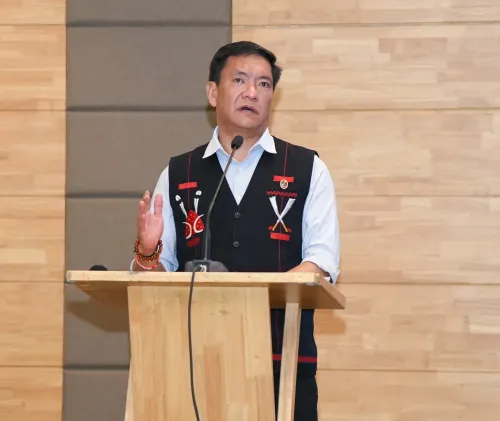
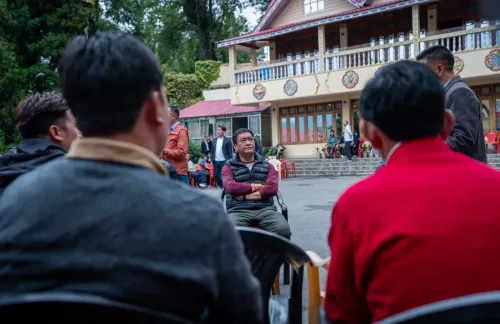
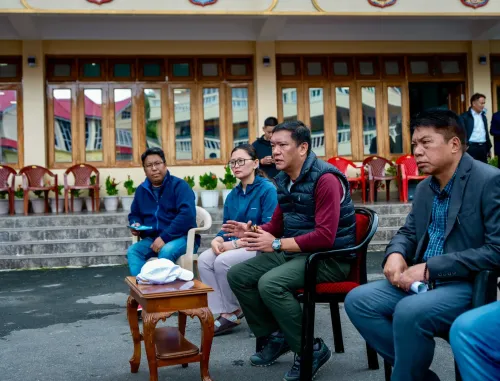
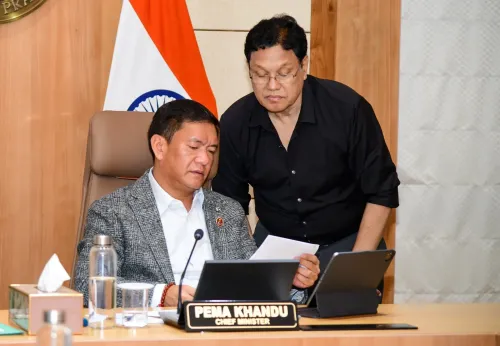
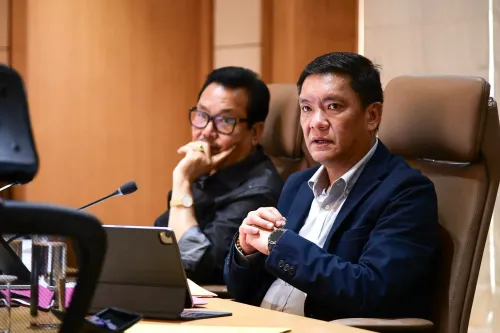
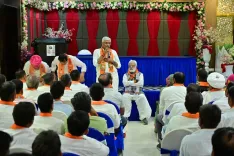
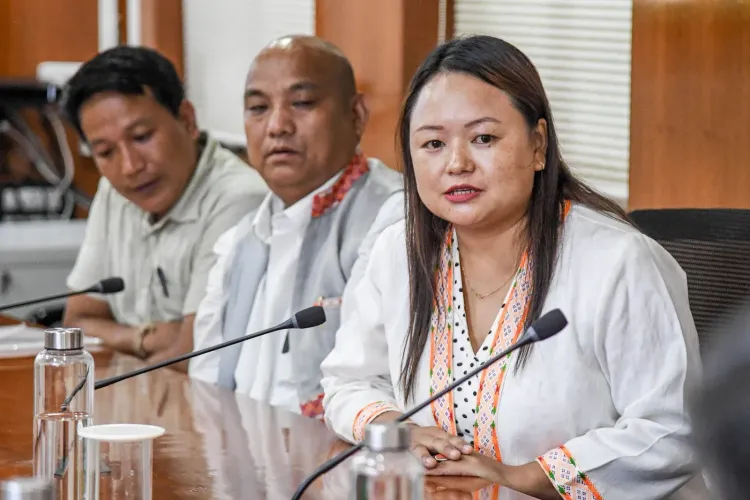
Arunachal Pradesh Chief Minister Pema Khandu on 20 July 2026 held a detailed interaction with Zilla Parishad Members from Pangin constituency, hearing their developmental concerns and priorities — a grassroots governance exercise in a strategically significant border state.
Key Takeaways
CM Pema Khandu personally met Zilla Parishad Members from Pangin constituency on 20 July 2026 .
The meeting focused on developmental concerns, suggestions, and priorities raised by elected local-body representatives.
Pangin is an assembly constituency in East Siang district , a remote region of Arunachal Pradesh with significant infrastructure needs.
Zilla Parishads are constitutionally mandated district-level bodies under the 73rd Constitutional Amendment of 1992 .
Follow-up inclusion of the shared priorities in district development plans or the state budget will be the key measure of the meeting's impact.
Arunachal Pradesh Chief Minister Pema Khandu on Monday, 20 July 2026, held a structured interaction with Zilla Parishad Members from the Pangin constituency, listening to their developmental concerns and suggestions in detail. The meeting underscores the state government's stated commitment to channelling grassroots inputs into governance decisions for the East Siang district region.
Context
Posting on X, Chief Minister Khandu wrote: 'When elected representatives speak for their people, it is the government's responsibility to listen. The concerns, suggestions, and developmental priorities shared by the Zilla Parishad Members from Pangin constituency were heard in detail.' The statement positions the meeting as a formal accountability exercise rather than a ceremonial visit, with the Chief Minister personally receiving the inputs.
Pangin is an assembly constituency situated in East Siang district of Arunachal Pradesh, a border state characterised by dispersed tribal populations and ongoing infrastructure challenges. Zilla Parishad Members represent the district tier of the Panchayati Raj system and are constitutionally empowered to articulate local development needs.
Policy Backdrop
India's 73rd Constitutional Amendment of 1992 inserted Part IX into the Constitution, mandating a three-tier Panchayati Raj structure — gram panchayat, panchayat samiti, and Zilla Parishad — across states. The Zilla Parishad functions as the apex district-level body within this framework, making its members key interlocutors between rural communities and state governments.
Arunachal Pradesh has historically applied this decentralised planning mechanism with particular emphasis given its strategic border location and the need to address connectivity and infrastructure gaps across difficult terrain. Structured interactions between the state executive and elected panchayat representatives form a standard instrument of decentralised governance planning across Indian states.
Stakeholders and Impact
The direct stakeholders of this engagement are the Zilla Parishad Members of Pangin constituency and the rural communities they represent in East Siang district. By bringing developmental priorities directly to the Chief Minister, the interaction bypasses multiple bureaucratic layers, potentially accelerating the translation of local needs into policy or budgetary allocations.
For tribal and rural populations in the region, such engagements represent one of the few formal mechanisms through which local priorities can reach the highest level of the state executive. CM Khandu, who has led Arunachal Pradesh since 2016, has regularly used direct outreach as a governance tool in a state where geographic remoteness can otherwise insulate decision-making from ground realities.
What's Next
The practical test of this interaction will lie in whether the developmental priorities raised by the Pangin Zilla Parishad Members find reflection in Arunachal Pradesh's upcoming district development plans or annual budget allocations. Analysts and local representatives will watch for specific scheme announcements or infrastructure project clearances tied to East Siang district in the months ahead.
If the inputs are formally incorporated into planning documents, the meeting could serve as a replicable model for other constituencies across the state, strengthening the institutional role of Zilla Parishads as a genuine input channel rather than a consultative formality.
Point of View
Strategically sensitive border state. By framing the meeting in terms of governmental responsibility to listen, Khandu signals that such interactions are not discretionary but institutional — a posture that aligns with the BJP's broader national narrative of 'Sabka Saath, Sabka Vikas' translated into state-level practice. The real political and administrative test, however, is downstream: whether the inputs from Pangin's Zilla Parishad Members materially shape budget lines or project approvals, or remain consultative exercises. In a state where local elections and tribal community trust are central to political durability, converting such interactions into visible outcomes carries significant electoral weight.
NationPress
20 Oct 2026
Frequently Asked Questions
Who are Zilla Parishad Members and what do they do?
Zilla Parishad Members are elected representatives at the district tier of India's three-tier Panchayati Raj system, established under the 73rd Constitutional Amendment of 1992 . They represent rural constituencies and are empowered to voice local developmental needs, oversee district-level schemes, and serve as a link between grassroots communities and the state government.
Where is Pangin constituency located?
Pangin is an assembly constituency in East Siang district of Arunachal Pradesh , situated in the northeastern border region of India.
Why did CM Pema Khandu meet Zilla Parishad Members from Pangin?
CM Pema Khandu met Zilla Parishad Members from Pangin constituency on 20 July 2026 to hear their developmental concerns, suggestions, and priorities — part of a structured grassroots consultation exercise aimed at informing state governance and planning decisions.
How long has Pema Khandu been Chief Minister of Arunachal Pradesh?
Pema Khandu has served as Chief Minister of Arunachal Pradesh since 2016 , making him one of the longer-serving state chief ministers in the northeastern region.
What is the significance of Panchayati Raj bodies in Arunachal Pradesh?
In Arunachal Pradesh , Panchayati Raj bodies including Zilla Parishads play a critical role in decentralised governance given the state's dispersed tribal populations, difficult terrain, and border-state infrastructure challenges. They serve as one of the primary formal channels through which rural communities can communicate development needs to the state executive.