CM Pema Khandu Hails Launch of Drowa Zangmo Cooperative
Synopsis
Arunachal Pradesh CM Pema Khandu has hailed the formation of the Drowa Zangmo Cooperative Society, created by federating 116 Self-Help Groups from Tawang and Kitpi blocks. He called it a model of inclusive, self-reliant development and urged communities across the state to embrace the cooperative movement.
Key Takeaways
116 Self-Help Groups — 71 from Tawang Block and 45 from Kitpi Block — have federated to form the Drowa Zangmo Cooperative Society in Tawang district, Arunachal Pradesh .
Chief Minister Pema Khandu welcomed the development on 23 June 2026 , calling it the 'kind of transformation we want to see.' The cooperative model is aligned with the National Rural Livelihoods Mission (NRLM) , which has promoted SHG federations into cooperatives since 2011 .
The society is expected to improve market access, credit linkages, and collective bargaining power for rural tribal communities in the remote Tawang region.
CM Khandu called on other communities across Arunachal Pradesh to replicate the cooperative model for inclusive and sustainable development.
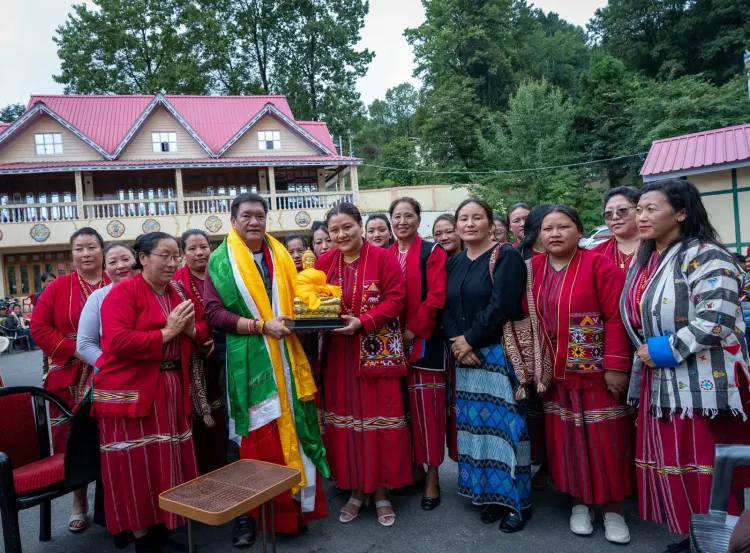
Arunachal Pradesh Chief Minister Pema Khandu on Tuesday, 23 June 2026, welcomed the formation of the Drowa Zangmo Cooperative Society, a new collective born out of the federation of 71 Self-Help Groups from Tawang Block and 45 Self-Help Groups from Kitpi Block in Tawang district. The Chief Minister described the development as precisely the kind of grassroots transformation his government seeks to encourage across the state.
Context
In his post, CM Khandu stated: 'SHGs growing into Cooperatives, creating bigger opportunities, stronger livelihoods, and a more self-reliant Arunachal Pradesh.' He extended his best wishes to all members of the Drowa Zangmo Cooperative Society and expressed hope that the initiative would inspire similar movements across the state. The society draws its membership from rural tribal communities in two administrative blocks of Tawang district, a remote border region with significant Buddhist cultural heritage.
The federation of smaller Self-Help Groups into a single cooperative structure is designed to pool resources, improve market access, and create stronger credit linkages for member households — benefits that individual SHGs operating in isolation are often unable to achieve.
Policy Backdrop
The formation of the Drowa Zangmo Cooperative Society aligns with the framework established under the National Rural Livelihoods Mission (NRLM), launched in 2011, which has actively promoted the progressive federation of Self-Help Groups into producer cooperatives and higher-level collectives across India. The NRLM model recognises that scaling SHGs into cooperatives significantly improves bargaining power and access to institutional credit for rural households.
Arunachal Pradesh has pursued similar federation models in tribal districts to address the twin challenges of geographic isolation and limited private-sector presence. The cooperative approach mirrors national efforts in recent years to strengthen the sector through dedicated institutional mechanisms, giving communities in remote areas a structured pathway to economic participation.
Stakeholders and Impact
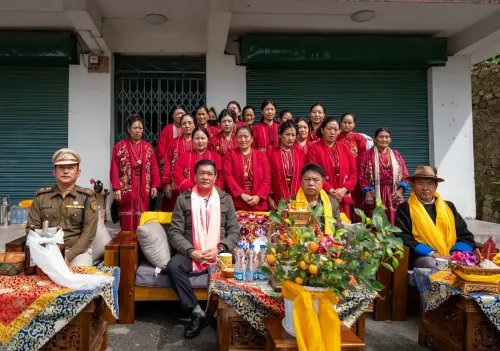
The primary beneficiaries of the Drowa Zangmo Cooperative Society are the women members of the 116 Self-Help Groups from Tawang Block and Kitpi Block who have come together under the new umbrella. For communities in these remote tribal areas, cooperative membership can mean access to bulk procurement, collective marketing, and formal financial services that were previously out of reach.
The development also carries broader significance for Arunachal Pradesh's rural economy, where geographic barriers have historically limited economic integration. A functioning cooperative society can serve as a platform for value-chain development in locally produced goods, from agricultural produce to handicrafts, and can act as a conduit for government welfare schemes targeting rural livelihoods.
What's Next
CM Khandu explicitly called on 'many more communities across Arunachal to embrace the cooperative movement for inclusive and sustainable development,' signalling that the state government views the Drowa Zangmo Cooperative Society as a replicable model. Observers will watch whether the state follows up with targeted policy measures — including credit support, skills training, and market linkage programmes — to help the newly formed society achieve operational scale.
The rollout of additional SHG-to-cooperative federations in other blocks across Arunachal Pradesh will be a key indicator of how far the cooperative movement can extend into the state's more remote and underserved communities in the months ahead.
Point of View
Publicly championing this federation serves a dual purpose: it reinforces the BJP government's rural welfare narrative ahead of any future electoral cycle, and it positions Arunachal as a proactive adopter of the national cooperative-strengthening agenda. The Tawang district's location on a sensitive international border also gives cooperative-led economic development a strategic dimension, as livelihood security in border communities has long been a policy priority for the central government. Whether the state follows through with tangible credit and market-linkage support will determine if this remains a symbolic moment or becomes a genuine policy inflection point.
NationPress
22 Sept 2026
Frequently Asked Questions
What is the Drowa Zangmo Cooperative Society?
The Drowa Zangmo Cooperative Society is a newly formed cooperative in Tawang district, Arunachal Pradesh, created by federating 71 Self-Help Groups from Tawang Block and 45 Self-Help Groups from Kitpi Block into a single collective body.
Why did Pema Khandu praise the Drowa Zangmo Cooperative Society?
CM Pema Khandu praised the society because it represents the kind of grassroots economic transformation his government promotes — Self-Help Groups scaling up into cooperatives to create stronger livelihoods and a more self-reliant Arunachal Pradesh.
How many SHGs formed the Drowa Zangmo Cooperative Society?
A total of 116 Self-Help Groups formed the society — 71 from Tawang Block and 45 from Kitpi Block in Tawang district.
What is the National Rural Livelihoods Mission and how is it related?
The National Rural Livelihoods Mission (NRLM), launched in 2011, is a central government programme that promotes the federation of Self-Help Groups into cooperatives and producer collectives. The Drowa Zangmo Cooperative Society follows this model of SHG federations to improve rural livelihoods.
What does this cooperative mean for Tawang's rural communities?
For rural tribal communities in the remote Tawang region, the cooperative can provide access to collective marketing, bulk procurement, and formal credit linkages that individual SHGs operating alone typically cannot access.